2239 – Nelson

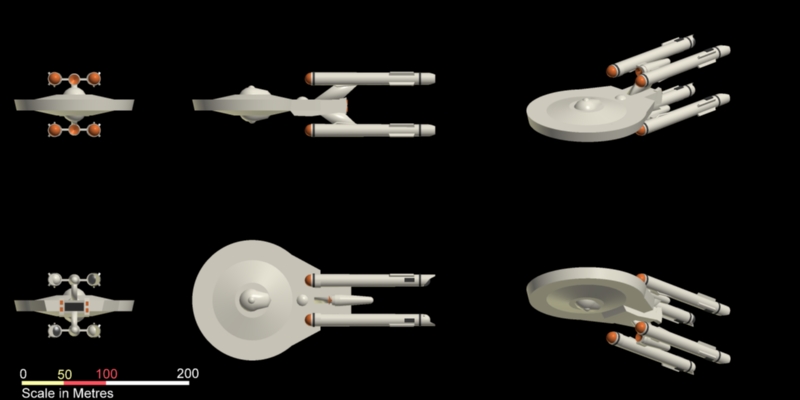
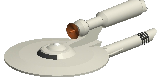
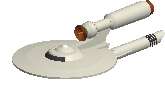
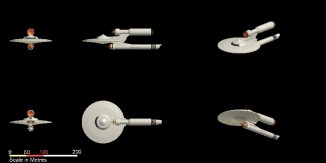
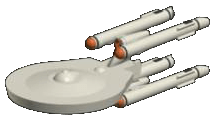
Starfleet commissioned the USS Nelson (NX1432) in 2239 as an experimental design, being the first mainstream starship design to mount four warp nacelles since the Yorktown of almost 80 years earlier.

The ship performed well in trials in the designed role as a long range explorer, and was put into service for a test 5 year mission commencing in 2240. The Nelson failed to complete her mission, having encountered warp field balance problems after the ship had been in service for a period. Starfleet Corps of Engineers (SCE) assessed the ship and determined that the warp field needed a full rebalance after every 100 hours of warp flight until more advanced computers became available to manage the field more efficiently. As a result the Nelson was decommissioned and put into service as a static Engineering training ship as the overall technology was representative of current classes despite the unusual configuration

The Class name was reused in 2243 for the Nelson class scout.

In 2254, given early losses in the four years war, Starfleet was desperately short of cruisers, and SCE staff assessed a large number of mothballed and decommissioned ships which could be returned to service, amongst these was the Nelson which was rapidly re-equipped with an M1 computer which largely resolved the warp balance issues. Unusually, but owing to a superstitious Admiral, the old Nelson was not renamed, leading to Starfleet possessing two USS Nelsons at once. The old Nelson was deployed near Tholian space taking the place of newer ships deployed to the Klingon border.

In 2254, the Nelson was part of a task force of Starfleet ships patrolling the disputed border of Tholian Assembly space. The task force, led by the USS Enterprise, picked up a distress call from the Federation Theta Kalyb colony and went to investigate but were attacked by a Chakuun war fleet. The Nelson and the Enterprise were the only Starfleet ships to survive, but the Nelson’s senior staff were killed during the battle. (Nelson mission details from Memory Beta).

Repaired and with a minor refit, Nelson re-entered service in 2255, and remained in service until 2259 when she was lent to the AOFW to supplement their fleet. She was returned to Starfleet in 2265 but did not recommission, and once again become a static engineering training ship until she was donated to the AOFW in 2272.

The Nelson, although a one off, did lead to a number of other four engine ships, the five ships of the Twin Wayfarer exploration cruiser class of 2245 being the first, and these were followed by the Iron Duke of 2256, the Cheetah class of 2273 and  the Constellation class of 2275. In 2277, when the last Twin Wayfarer (USS Sojourner) was to be retired to the Starfleet Museum, the AOFWS Nelson provided an escort for her in the company of the USS Stargazer and USS Cheetah to provide a rare site of four different four nacelle ships in flight together. On that final flight for the Sojourner, the four ships flew past the Iron Duke in its storage berth while she was held in reserve, and thence past the UES Saratoga at the Starfleet Museum.

The Nelson continues in AOFW service.

Class: XII Year: 2239
Ship Source: Star Trek: The Early Voyages Ship Datasheet: Coming Soon

proto_constellation_100


2205 – Modified Einstein

The Einstein class entered service in small numbers in 2196, unlike most single nacelle designs the Einstein had a secondary hull mounted atop the primary hull, with the single warp nacelle mounted ventrally. The secondary hull was based on the design used on the Horizon class of Heavy Cruiser of 2190.

The selection of a single engine design for long range independent exploration and survey work was controversial, but the proponents of the class felt that the greater efficiency and resultant increase in range that the use of a single nacelle gave was a compelling reason for the construction of the class. The ships of the class were rebuilt between 2205 and 2210 with improved drive systems and the addition of an enlarged hangar deck at the rear of the secondary hull.

Compared to its contemporaries, the use of the single nacelle was rare, but the class did demonstrate many of the benefits anticipated with the addition of improved manoeuvrability. However the class did suffer from some instances of stranding following engine failure, fortunately never on any long range missions. The overall success of the design led to the single engine Destroyer and Scout designs of the mid 23rd Century.

All 16 ships of the class were decommissioned or retired by 2233, the last in service the USS Kelvin NCC-514 was retired to the Starfleet Museum after a successful long range exploration mission under the legendary Captain Robau, and his first officer George Kirk.

Unusually after the retirement of the class their registry range was reused for the similar Saladin design – it is believed that this was done in part to make it appear the new Saladin class destroyers were actually rebuilt explorers.


Class: IX Year: 2205 (Modified Version)
Ship Source: Based on design from Star Trek (2009) Ship Datasheet: Coming Soon

Refit Configuration:kelvin1a

2196 – Einstein

The Einstein class entered service in small numbers in 2196, unlike most single nacelle designs the Einstein had a secondary hull mounted atop the primary hull, with the single warp nacelle mounted ventrally. The secondary hull was based on the design used on the Horizon class of Heavy Cruiser of 2190.

The selection of a single engine design for long range independent exploration and survey work was controversial, but the proponents of the class felt that the greater efficiency and resultant increase in range that the use of a single nacelle gave was a compelling reason for the construction of the class. The ships of the class were rebuilt between 2205 and 2210 with improved drive systems and the addition of an enlarged hangar deck at the rear of the secondary hull.

Compared to its contemporaries, the use of the single nacelle was rare, but the class did demonstrate many of the benefits anticipated with the addition of improved manoeuvrability. However the class did suffer from some instances of stranding following engine failure, fortunately never on any long range missions. The overall success of the design led to the single engine Destroyer and Scout designs of the mid 23rd Century.

All 16 ships of the class were decommissioned or retired by 2233, the last in service the USS Kelvin NCC-514 was retired to the Starfleet Museum after a successful long range exploration mission under the legendary Captain Robau, and his first officer George Kirk.

Unusually after the retirement of the class their registry range was reused for the similar Saladin design – it is believed that this was done in part to make it appear the new Saladin class destroyers were actually rebuilt explorers.


Class: IX Year: 2196
Ship Source: Based on design from Star Trek (2009) Ship Datasheet: Coming Soon

Original Configuration:kelvin1

Refit Configuration:kelvin1a