2158 – Comet

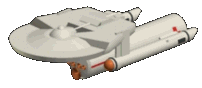
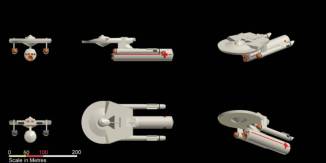
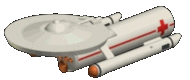
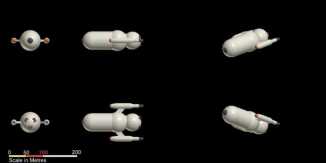
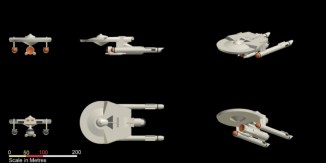
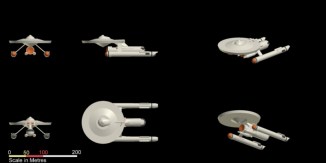
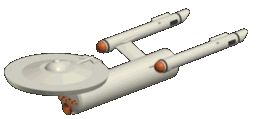
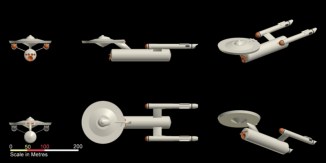
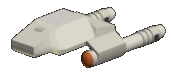
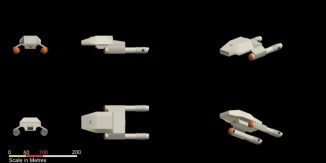
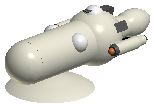
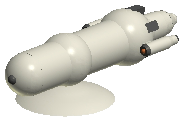
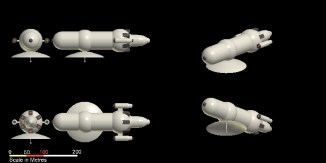
Following the successful tests of the Fireball class, the UESN made plans for introducing the design into military service to boost the war effort. The Only changes made to the excellent Fireball design were addition of weapons, and the upgrading of the shields to FDS-2.

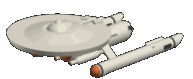
The Comet class light cruiser began to enter service in October 2158. They were amongst the fastest ships of the Romulan war and saw extensive service as scouts and light strike cruisers. Originally 50 of the class were been ordered, but the end of the war saw the final 25 cancelled in favor of 25 of the Comet derived Daedalus class exploratory cruisers. 23 Comet class ships survived the war, and were allocated to Starfleet, where they served until 2192.

The Comet class cruiser USS Meteor is now on display at the Starfleet Museum.

The Experimental NG (New Generation) engines and shield systems were redesignated as part of the Federation Designation System in 2161.

  • Class: V
  • Year: 2158
  • Ship Source: Starfleet Museum
  • Ship Datasheet: Download PDF

comet_side_large

Commissioned Ships (UESN)

UES Comet CLM-102
UES Meteor CLM-103
UES Aurora CLM-104
UES Nova CLM-105
UES Pulsar CLM-106
UES Nebula CLM-107
UES Quasar CLM-108
UES Eclipse CLM-109
UES Equinox CLM-110
UES Solstice CLM-111
UES Corona CLM-112
UES Constellation CLM-113
UES Galaxy CLM-114
UES Flare CLM-115
UES Proxima CLM-116
UES Polaris CLM-117
UES Zodiac CLM-118
UES Mercury CLM-119
UES Venus CLM-120
UES Luna CLM-121
UES Mars CLM-122
UES Jupiter CLM-123
UES Saturn CLM-124
UES Uranus CLM-125
UES Neptune CLM-126

2255 – Kildare

With the outbreak of the four years war, the need for more medical ships became apparent. Four Dollond, and two Doppler class transports were taken up from mercantile service and converted to Kildare standards. The modifications were similar to those that created the Nightingale class, namely improved shields and interior modifications.

Compared to the early Nightingale, the Kildare has far superior hangar facilities. As a result the Nightingale is used primarily as a hospital ship, ferrying wounded back from the war zones to the home planets of the Federation, while the Kildare is used more often in a casualty receiving role, or as rescue vessel.

The Kildares were retained in the fleet post war in a humanitarian and rescue role.


Class: VII Year: 2255
Ship Source: General Plans and Specifications – Dollond Class MK-VIC Heavy Transport Patrick Lichty & Associates Ship Datasheet: Coming Soon

kildare-70

2242 – Nightingale

Based on the ubiquitous Ptolemy Class Transport Hull, the Nightingale entered service in 2242 replacing the obsolete Mercy class. Compared to a standard Ptolemy, the class has improved shielding and internal modifications to make the class more suitable for the medical role. Due to these modifications Nightingale class ships are rarely used in standard transport duties, and are virtually permanently attached to their medical pod. The two Mk 1 Nightingales are based on the Ptolemy hull and systems, the single Mk 2 is based on a Keppler hull.

With the outbreak of the four years war, five Ptolemy’s taken up from mercantile service were also modified to Nightingale standards, as Mk 3s. The other three ships were also modified to this common standard.


Class: VII Year: 2242
Ship Source: Based on Ptolemy class from Star Fleet Technical Manual Ship Datasheet: Coming Soon

nightingale-70

2158 – Mercy

The Olympus Mons family of ships was developed from the Bison class. The Olympus Mons class was an armed Assault transport, The Reid Fleming class was a Deuterium Tanker, and the Mercy class was Starfleet’s primary Medical ship type for many years.

Class: XVII Year: 2158
Ship Source: The Starfleet Museum Ship Datasheet: Download PDF

mercy_large

Commissioned Ships

  • UES Mercy AHM-4
  • UES Solace AHM-5
  • UES Comfort AHM-6
  • UES Sanctuary AHM-7
  • UES Consolation AHM-8
  • UES Refuge AHM-9
  • UES Hope AHM-10
  • UES Tranquility AHM-11

.


2254 – Tikopai

The Four Years War saw the need for large number of escort cruisers to be quickly commissioned. The Achernar and Tikopai classes of supplemental cruisers met this need. The Achernar class was adapted from the mark two versions of the standard Ptolemy (Achernar Mark 1) and Keppler (Achernar Mark 2) classes of Transport Tug. The Tikopai class was adapted from the mark two versions of the Dollond (Tikopai Mark 1) and Doppler (Tikopai Mark 2) classes. All four of these tug classes were in both Starfleet and Civilian service, and ships originally destined for civilian lines were diverted to this program.

The supplemental cruisers were created by the addition of a specialist pod with a hanger, enhanced sensors and weapons. The mother ship itself was unchanged, except for the impulse drive if it required upgrading and retained its own light weapons fit. This solution meant large numbers of the supplemental cruisers could be built quickly, as the Tugs were already mass produced in civil yards, and the weapons hull could be easily built by the smaller warship builders. These ships, although underpowered, were an invaluable asset in convoy escort duties throughout the war. Post-war these ships were all swiftly de-commisioned and converted to standard tug configuration, and then either sold off for commercial transport use, or used to replace wartime tug losses in the fleet.

The weapon pod contained 8 FL-4 Lasers in 4 banks, with 2 banks covering each arc of fire, a pair of FAC-3 accelerator cannons was positioned on the sides of the pod to fire forward. These ships provided a valuable role escorting convoys, often hiding amongst innocent looking standard configuration tugs to lure attackers in. The main criticism that could be levelled at both of the classes was the weak shielding systems, but the adoption of more advanced shielding systems would have prevented the construction of the ships in civilian yards.

Class: V-VI Year: 2253
Ship Source: Franz Joseph Designs/FASA Ship Datasheet: Download PDF
 The design is based on the FJ tugs, the name is from FASA to provide a way for these classes to serve in the four years war prior to the commissioning of the heavy cruisers.

tikopai_ii_100

2253 – Achernar

The Four Years War saw the need for large number of escort cruisers to be quickly commissioned. The Achernar and Tikopai classes of supplemental cruisers met this need. The Achernar class was adapted from the mark two versions of the standard Ptolemy (Achernar Mark 1) and Keppler (Achernar Mark 2) classes of Transport Tug. The Tikopai class was adapted from the mark two versions of the Dollond (Tikopai Mark 1) and Doppler (Tikopai Mark 2) classes. All four of these tug classes were in both Starfleet and Civilian service, and ships originally destined for civilian lines were diverted to this program.

The supplemental cruisers were created by the addition of a specialist pod with a hanger, enhanced sensors and weapons. The mother ship itself was unchanged, except for the impulse drive if it required upgrading and retained its own light weapons fit. This solution meant large numbers of the supplemental cruisers could be built quickly, as the Tugs were already mass produced in civil yards, and the weapons hull could be easily built by the smaller warship builders. These ships, although underpowered, were an invaluable asset in convoy escort duties throughout the war. Post-war these ships were all swiftly de-commisioned and converted to standard tug configuration, and then either sold off for commercial transport use, or used to replace wartime tug losses in the fleet.

The weapon pod contained 8 FL-4 Lasers in 4 banks, with 2 banks covering each arc of fire, a pair of FAC-3 accelerator cannons was positioned on the sides of the pod to fire forward. These ships provided a valuable role escorting convoys, often hiding amongst innocent looking standard configuration tugs to lure attackers in. The main criticism that could be levelled at both of the classes was the weak shielding systems, but the adoption of more advanced shielding systems would have prevented the construction of the ships in civilian yards.

Class: V-VI Year: 2253
Ship Source: Franz Joseph Designs/FASA Ship Datasheet: Download PDF
 The design is based on the FJ tugs, the name is from FASA to provide a way for these classes to serve in the four years war prior to the commissioning of the heavy cruisers.

achernar_ii_100

2255 – Copperhead

The Copperhead was a one off command cruiser, created from a Class I primary hull, coupled to a specially converted shipping container coupled to warp drives.

The design was conceived to meet an urgent need for a command ship capable of controlling operations across a broad battlefield. The single Copperhead, with a strategic operations crew of almost 400 could easily coordinate hundreds of ships across the entire battle space.

The end of the war in 2256 meant the Copperhead was left with a mission, as the peacetime Starfleet could ill afford the level of resources required. The sensor and communications equipment was still of use, so the ship was redeployed to fill a role providing intelligence around the Romulan Neutral zone.

copperhead_100