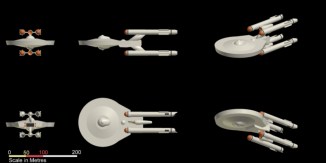
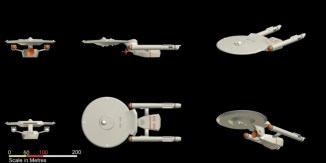
2241 – Wayfarer (Pathfinder refit)

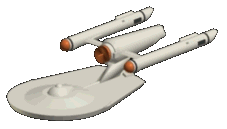
The Wayfarer class  cruisers built upon the lessons of the Antares class, providing an affordable cruiser design which was well suited for independent patrol and exploration duties.

The design by the independent designer, P.T.Riley was a compact looking ship with a deflector mounted in a recess in the front of the saucer section, with a tapering elongated primary hull with upward swept nacelle supports.

Compared to the Antares class it was far more warp dynamic, giving much better cruising range despite utilising the same power plant.

In 2241  USS Pathfinder (NCC-1541) had its nacelle mounts flipped over as part of trials which led to the Anton, Tyrannis, Surya and Coventry classes. Pathfinder retained these mounts until 2245

wayfarer_l

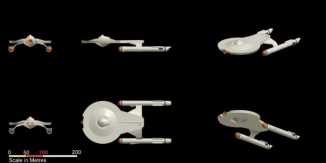
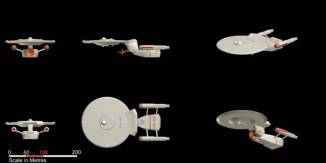
2238 – Wayfarer (Wanderer Refit)

The Wayfarer class  cruisers built upon the lessons of the Antares class, providing an affordable cruiser design which was well suited for independent patrol and exploration duties.

The design by the independent designer, P.T.Riley was a compact looking ship with a deflector mounted in a recess in the front of the saucer section, with a tapering elongated primary hull with upward swept nacelle supports.

Compared to the Antares class it was far more warp dynamic, giving much better cruising range despite utilising the same power plant.

In 2238  USS Wanderer (NCC-1512) was fitted with a secondary hull in the dorsal position for use in trials of the design intended for the Vagabond class, the ship retained this hull until she was lost without trace in 2253

wanderer

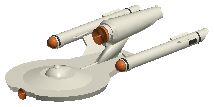
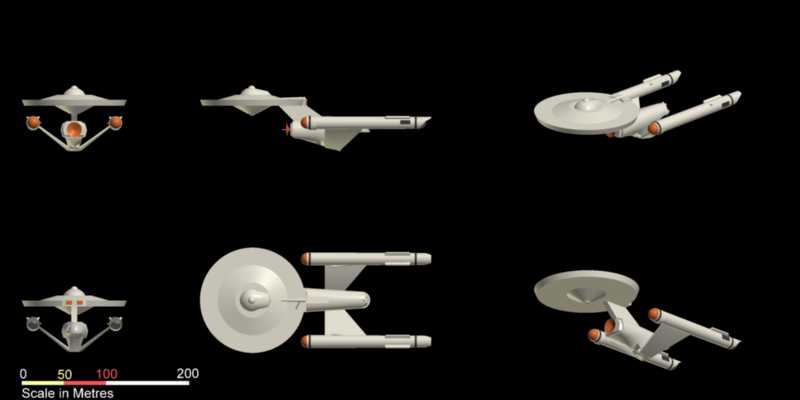
2235 – Wayfarer

The Wayfarer class  cruisers built upon the lessons of the Antares class, providing an affordable cruiser design which was well suited for independent patrol and exploration duties.

The design by the independent designer, P.T.Riley was a compact looking ship with a deflector mounted in a recess in the front of the saucer section, with a tapering elongated primary hull with upward swept nacelle supports.

Compared to the Antares class it was far more warp dynamic, giving much better cruising range despite utilising the same power plant.

USS Wayfarer commissioned as NCC-1535 as the ranges of construction contract numbers were spread across four yards, meaning the highest numbered batch actually commissioned first.

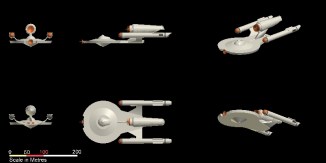
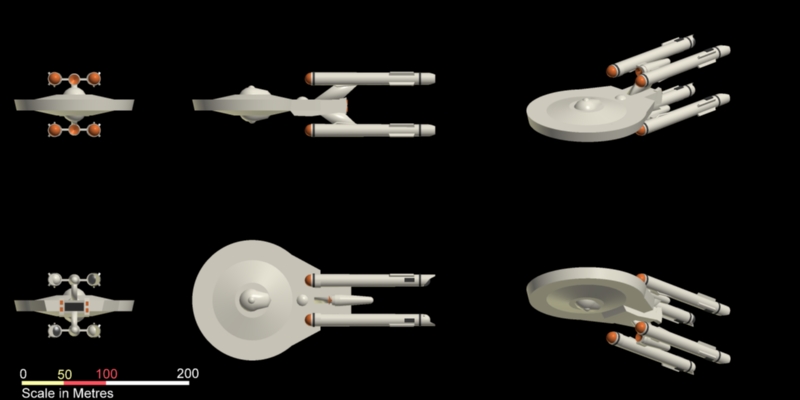
The Wayfarer was notable for a wide range of variations of the design:

2238 – USS Wanderer (NCC-1512) was fitted with a secondary hull in the dorsal position for use in trials of the design intended for the Vagabond class, the ship retained this hull until she was lost without trace in 2253

2241 – USS Pathfinder (NCC-1541) had its nacelle mounts flipped over as part of trials which led to the Anton, Tyrannis, Surya and Coventry classes. Pathfinder retained these mounts until 2245

2245 – USS Pathfinder had additional hybrid nacelles mounts added to produce a four engine variation of the class,  following the trials of the USS Nelson Four additional craft were converted to the configuration for use as long range exploration cruisers.

wayfarer


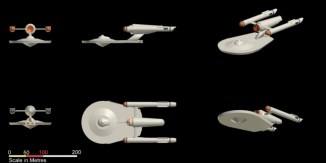
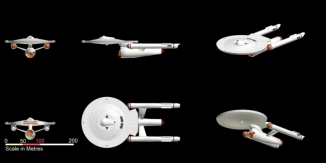
2240 – Vagabond

The Vagabond design shared many concepts with the later Constitution class, they were designed in tandem, but the Vagabond entered service first due to the use of lower risk components in the design, where the Constitution pushed the envelope of many of the technologies. The secondary hull of the Vagabond was tested on the USS Wanderer of the earlier Wayfarer class (also designed by P.T.Riley).

The elongated saucer of the Vagabond was utilised for laboratories and an enhanced planetary sensor suite. In service the Vagabond proved useful, and when pressed into combat was manoueverable and a useful addition to the fleet. However the elongated saucer was found to be prone to stress around the primary hull connector owing to the stresses caused by the propulsion system being dependent on the same connector unlike the configuration of the Wanderer.

  • Class: X
  • Year: 2240
  • Ship Source: Riley Dynamics
  • Ship Datasheet: Coming Soon

100vagabond

Commissioned Ships (include)

  • USS Vagabond NCC-1671
  • USS Gypsy NCC-1672

2222 – Valiant

The Valiant-class starship was a type of Federation heavy cruiser created by Starfleet. The prototype, USS Valiant was launched in 2222.

Six of these were built, weighing in Class XII they were larger than their contemporaries, each with a crew of 440. The vessels measured 21 decks in height, 303 meters in length, had a maximum cruising speed of warp 5.6 and were armed with two torpedo launchers and 4 phaser emitters

The Ships were refitted in 2253 to increase their combat capabilities during the Four Years War, after this refit they were deployed as part of the defensive fleet protecting the Core worlds. After the war all surviving units were continued in Service, Beagle was lost in action.

Two ships (Adamant and Valiant) received Linear warp drives in 2279, but their sister ships retained the older style drives until they were decommissioned in 2281. Adamant was lost in action in 2284, while Valiant finally decommissioned in 2287.

valiant_100

Commissioned Ships

  • USS Valiant NX-1288
  • USS Delphi NCC-1295
  • USS Yamato NCC-1305
  • USS Adamant NCC-1315
  • USS Expedient NCC-1307
  • USS Beagle NCC-1291


2239 – Nelson

Starfleet commissioned the USS Nelson (NX1432) in 2239 as an experimental design, being the first mainstream starship design to mount four warp nacelles since the Yorktown of almost 80 years earlier.

The ship performed well in trials in the designed role as a long range explorer, and was put into service for a test 5 year mission commencing in 2240. The Nelson failed to complete her mission, having encountered warp field balance problems after the ship had been in service for a period. Starfleet Corps of Engineers (SCE) assessed the ship and determined that the warp field needed a full rebalance after every 100 hours of warp flight until more advanced computers became available to manage the field more efficiently. As a result the Nelson was decommissioned and put into service as a static Engineering training ship as the overall technology was representative of current classes despite the unusual configuration

The Class name was reused in 2243 for the Nelson class scout.

In 2254, given early losses in the four years war, Starfleet was desperately short of cruisers, and SCE staff assessed a large number of mothballed and decommissioned ships which could be returned to service, amongst these was the Nelson which was rapidly re-equipped with an M1 computer which largely resolved the warp balance issues. Unusually, but owing to a superstitious Admiral, the old Nelson was not renamed, leading to Starfleet possessing two USS Nelsons at once. The old Nelson was deployed near Tholian space taking the place of newer ships deployed to the Klingon border.

In 2254, the Nelson was part of a task force of Starfleet ships patrolling the disputed border of Tholian Assembly space. The task force, led by the USS Enterprise, picked up a distress call from the Federation Theta Kalyb colony and went to investigate but were attacked by a Chakuun war fleet. The Nelson and the Enterprise were the only Starfleet ships to survive, but the Nelson’s senior staff were killed during the battle. (Nelson mission details from Memory Beta).

Repaired and with a minor refit, Nelson re-entered service in 2255, and remained in service until 2259 when she was lent to the AOFW to supplement their fleet. She was returned to Starfleet in 2265 but did not recommission, and once again become a static engineering training ship until she was donated to the AOFW in 2272.

The Nelson, although a one off, did lead to a number of other four engine ships, the five ships of the Twin Wayfarer exploration cruiser class of 2245 being the first, and these were followed by the Iron Duke of 2256, the Cheetah class of 2273 and  the Constellation class of 2275. In 2277, when the last Twin Wayfarer (USS Sojourner) was to be retired to the Starfleet Museum, the AOFWS Nelson provided an escort for her in the company of the USS Stargazer and USS Cheetah to provide a rare site of four different four nacelle ships in flight together. On that final flight for the Sojourner, the four ships flew past the Iron Duke in its storage berth while she was held in reserve, and thence past the UES Saratoga at the Starfleet Museum.

The Nelson continues in AOFW service.

Class: XII Year: 2239
Ship Source: Star Trek: The Early Voyages Ship Datasheet: Coming Soon

proto_constellation_100


2254 – Britannia

“The USS Moscow and the other ships of this class were the one of the last major classes without dilithium. The immediate predecessor to the Constitution class, the Baton Rouge class exhibited the distinct separated living disc and engine modules so familiar now. Up-rated in the 2250s, these ships have only recently completed their commissioned usefulness as interstellar carriers.”

The uprating was due to delays in the Constitution program, and introduced new warp engines, impulse engines, weapons and shields. In this configuration the ships gave valuable service in the four years war.

The Mark 1 Baton Rouge class entered UFP service in 2225 and were the last major cruiser class built with non dilithium energised engines, in total an impressive 86 Mk1 ships was built over 18 years. A modification program in the 2240’s saw 40 of these ships re-equipped with new M- 1 computers, enhanced weaponry and unary shield generators to become Mk2s, a further 14 ships were built as new to compensate for delays in the Constitution programme. This modification meant that the ships remained a useful element of the fleet despite their low top speed compared to newer design.

In 2254 the damaged Mk2 USS Britannia was refitted to Mk4* standards at Utopia Planitia. The secondary hull of the Britannia was damaged beyond repair, and it was decided to use a secondary hull from a written off Heston Class Cruiser. The refit was based on the standard Mk4 for spares support reasons, except the heavy FAC-4 replaced the FAC-3, one pair of these were mounted in the traditional location on the saucer below the bridge, and a second pair atop the secondary hull. The resulting ship was designated a special type and entered service providing heavy support to the 35th Cruiser Squadron (which consisted of Mk3/4 Baton Rouges). Further production of the Mk4* was not authorised as the type’s range was reduced compared to that of the standard Baton Rouge, and the cost of the refit in time and resources was deemed prohibitive compared to the Mark3/4 refits.

In 2256 the Britannia was ambushed while protecting a convoy of troopships in supposedly safe territory. She single handledly managed to hold off three D-10 cruisers while the convoy escaped to safety escorted by another pair of ships from the 35th CS. In total the convoy was carrying over 100,000 troops and Captain Kelsey of the Britannia felt that it was more important for the two other cruisers to safeguard the convoy then to help hold off the D-10s. Miraculously 150 of the Britannia’s crew, including Captain Kelsey, managed to survive the battle, and all three D-10s were crippled or rendered ineffective.

Britannia’s battle was not yet over though, a trio of Orion Pirate vessels attracted by the potential for booty and salvage moved into attack. The crew aboard the damaged Britannia managed to get their accelerator cannons online, and when the lead Orion vessel, a captured D7, moved into the arc of fire they hit it with all four cannons destroying the Orion Vessel, the resultant explosion damaged the second Orion cruiser, but also mortally damaged the unshielded Britannia. The third Orion vessel was destroyed when the command pod of one of the D-10s separated and rammed it’s warp nacelle. The crew of Britannia were forced to abandon their ship as the damage sustained in this final battle caused a catastrophic impulse reactor explosion. The surviving crew members being rescued by the Klingons who they had been fighting just an hour earlier. Aboard the Klingon vessels the survivors were welcomed as warriors with honour, it was not lost on the Klingon commander, Gorkon, that the Britannia could have evaded combat and left the Klingons at the mercy of the Orions.

Class: X Year: 2254
Ship Source: Space Flight Chronology/ FASA Ship Datasheet: Download PDF

britannia-100t

2253 – Baton Rouge Refit

“The USS Moscow and the other ships of this class were the one of the last major classes without dilithium. The immediate predecessor to the Constitution class, the Baton Rouge class exhibited the distinct separated living disc and engine modules so familiar now. Up-rated in the 2250s, these ships have only recently completed their commissioned usefulness as interstellar carriers.”

The uprating was due to delays in the Constitution program, and introduced new warp engines, impulse engines, weapons and shields. In this configuration the ships gave valuable service in the four years war.

The Mark 1 Baton Rouge class entered UFP service in 2225 and were the last major cruiser class built with non dilithium energised engines, in total an impressive 86 Mk1 ships was built over 18 years. A modification program in the 2240’s saw 40 of these ships re-equipped with new M- 1 computers, enhanced weaponry and unary shield generators to become Mk2s, a further 14 ships were built as new to compensate for delays in the Constitution programme. This modification meant that the ships remained a useful element of the fleet despite their low top speed compared to newer designs

In 2249 the availability of suitable dilithium based engines in the form of FWE-1 meant that these ships could again be modified to Mk3 standards. This refit was controversial as although speed increased from Warp 4.2 to Warp 8.7, available power dropped by more than 33%. At the outbreak of the four years war in 2253 the New New Aberdeen shipyards in the AOFW were contracted to refit existing UFP Baton Rouge class ships with these new systems due to the Yard’s recent experience with the class (it had license built ships for the AOFW). The refit they designed was based upon the Mk3, but made use of the new FWE-2 warp drive, this however required a change of main computer. The desperate need for ships meant that refits to both Mk3 and Mk4 were carried out during the war . The Mark 4 being a more capable vessel, but the refit took six months compared to three for the Mk3. Mk 3 production totalled 26 ships (12 converted Mk2s and 14 Converted Mk1s), while Mk4 production totalled 25 ships (9 converted Mk2s and 16 Converted Mk1s).

Some unmodified Mk2 ships also served throughout the war as convoy escorts, it being felt that their low speed was not an issue when escorting slow moving freighters, indeed the additional power was seen as an asset. In one famous incident, a trio of 30-year-old Baton Rouges fought off a squadron of D7As without a single ship being lost in the convoy they were escorting.

12 Mk2s survived the war, and 6 of these were later converted to Mk5 standards, along with 12 each of the Mk3 and Mk4 ships making 30 in total. Mk5 introduced photon torpedoes and phasers to the venerable design, the first ship commissioned in 2260, and it is intended that these ships will serve in some capacity until the 2280s.

21 ships of various marks have been donated to, or purchased by friendly powers. Chief amongst these is the AOFW which has acquired 10 ships over the years, and built under license an additional four ships in the shipyard at New New Aberdeen. Currently the AOFW retains 6 ships in operation, in a version corresponding to the UFP Mk5. The former USS Aberdeen is currently being refitted to a more advanced standard with FP4 torpedoes in an installation based upon that on the late USS Britannia.

A number of Baton Rouge class ships are preserved at various sites around the Federation, as well as a single vessel preserved in the AOFW, but the ships that are still in service some 60 years after the design was conceived are the most telling proof of the excellence of the design and memorial to those who have gone before.

Class: IX Year: 2253
Ship Source: Space Flight Chronology/ FASA Ship Datasheet: Download PDF

br-new-02-100

2225 – Baton Rouge

“The USS Moscow and the other ships of this class were the one of the last major classes without dilithium. The immediate predecessor to the Constitution class, the Baton Rouge class exhibited the distinct separated living disc and engine modules so familiar now. Up-rated in the 2240s, these ships have only recently completed their commissioned usefulness as interstellar carriers.”

The Mark 1 Baton Rouge class entered UFP service in 2225 and were the last major cruiser class built with non dilithium energised engines, in total an impressive 86 Mk1 ships was built over 18 years. A modification program in the 2240’s saw 40 of these ships re-equipped with new M- 1 computers, enhanced weaponry and unary shield generators to become Mk2s, a further 14 ships were built as new to compensate for delays in the Constitution programme. This modification meant that the ships remained a useful element of the fleet despite their low top speed compared to newer designs.

Some unmodified Mk2 ships also served throughout the four years war as convoy escorts, it being felt that their low speed was not an issue when escorting slow moving freighters, indeed the additional power was seen as an asset. In one famous incident, a trio of 30-year-old Baton Rouges fought off a squadron of D7As without a single ship being lost in the convoy they were escorting.

12 Mk2s survived the war, and 6 of these were later converted to Mk5 standards.

A number of Baton Rouge class ships are preserved at various sites around the Federation, as well as a single vessel preserved in the AOFW, but the ships that are still in service some 60 years after the design was conceived are the most telling proof of the excellence of the design and memorial to those who have gone before.

Class: VII Year: 2225
Ship Source: Space Flight Chronology/ Rick Sternbach Ship Datasheet: Download PDF

br-new-01-70