2154 – Marshall

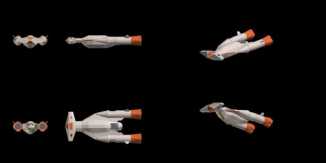
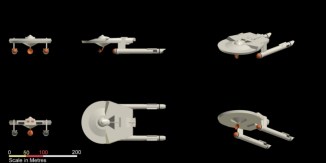
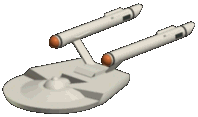
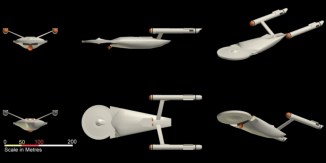
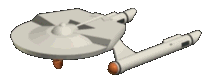
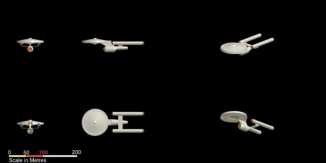
“The ambush and loss of the UES Patton began the Romulan War. The Marshall class was the Earth’s staunchest line of defence, and these ships’ superior performance and firepower provided a crucial tactical edge. In fact, the class supposed to succeed it could not better its specifications and so was never built, the reason why the Marshall class had the longest commissioned lifespan in interstellar history (at that time).”

The Marshall class destroyer was produced in vast numbers during the Romulan War. It was not the most powerful ship of its type, but it was easy and quick to produce at a time when every ship that could be built was a valuable addition to the Fleet. It was generally used as a convoy escort and patrol vessel. The USS Patton of this class has the dubious distinction of being the first ship destroyed in the Romulan War

Class: III Year: 2154
Ship Source: Space Flight Chronology Ship Datasheet: Download PDF

marshall_sharp

2141 – Cavalry

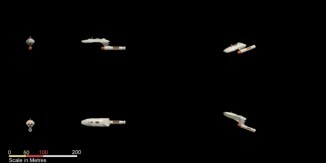
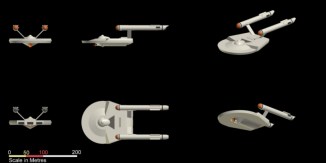
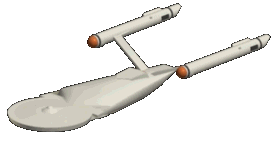
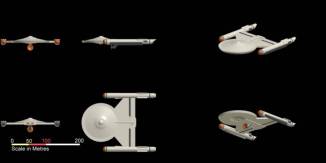
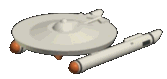
“The Cavalry Class entered service in 2141, and was the main Destroyer class in service until the advent of the Marshall Class. These ships gave sterling service, but have been overshadowed in history by the prolific Marshall Class. In terms of basic layout, these ships can be considered the precursor of later Destroyers and Scouts of the Saladin Class family.”

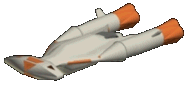
The Cavalry Class entered service in 2141 as the UESN’s primary destroyer type. Visually very distinctive with its boat like hull and single underslung warp nacelle, the class was a very familiar site throughout the period 2140s and 50s. The Class did have some notable advances, it was one of the first designed to have routinely jettisonable/reattachable warp nacelle, which meant that major work on the nacelle could be undertaken by simply swapping the nacelle assembly. As a design created during the ‘peaceful’ 2140s, despite its destroyer nomenclature, the class was used primarily for policing and customs work.

A limited upgrade in 2151, following encounters with the Klingons, equipped the ships with a lighter improved warp drive (still fusion based) and a modest increase in weapon capacity. The main improvement resulting from these changes was 50% reduction in energy cost during manouevering, allowing more power to be used for shields and weapons.

Heightening tensions with the Romulans led to a final upgrade in 2156, when one of the first mass produced M/AM powerplants replaced the fusion systems. This gave the ships space for further weapons upgrades, and a another 50% cut in maneouevering energy costs. The downside of the changes was that the shield had to be downgraded to an EDS-M to keep the class in its mass limits, however given the limited power available for shields, the effect of this change was minimal.

During the war, these ships were employed in second line roles, given the emergence of the far more powerful Torsk and Marshall clases, but they did as a result provide a valuable role in allowing the more modern classes to be directed to the front lines. All Cavalry class ships were retired at the end of the war, and as such none saw service in the UFP Starfleet.

Class: II Year: 2141
Ship Source: Image based on FASA design  (labelled as Marshall Class).
Stats by David Gaba
Ship Datasheet: Download PDF

cavalry_b_100


2243 – Cassard

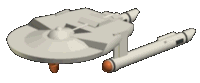
The Cassard class Missile Destroyer was designed in 2242 to provide the fleet with accelerator cannon support.

The USS Cassard commissioned in mid 2243, and made use of the recently introduced M-1 control computer.

The Cassard served well in the skirmishes and conflicts with the Klingon Empire over the from 2243 until 2288. The first time they were really tried in combat was in 2248. In this encounter near Federation Outpost 1 a Klingon task force of three D-7A’s and six D-16’s  attacked six ships from the 6th fleet. Four Cassard class ships led a counter attack by eight other ships of the 6th fleet, making full use of their accelerator cannons. The Klingon flagship was destroyers by the opening volleys, and the Cassards then continued to attack the other ships in turn. The battle ended 30 minutes later with the loss of three Federation vessels, while the Klingons all but three of the D-16’s. The Cassards  continued to perform well in fleet actions when used in concert with other starships providing beam weapon suppor, but when used without such support they were found to be extremely vulnerable. As a result the Cassard class was redeployed  from independent patrol duties and mainly assigned to fleet support duties..

In 2258 the MK II version was introduced, this version mounted the new Photon Torpedoes, but the beam weapons remained weak. It was not until 2268 when the MK III version entered service that the beam weapons were finally upgraded. Until the class left service it retained the ‘classic’ design and PB series circumferential warp nacelles.

Starfleet decommissioned the last units of the Cassard class in 2288, when the remaining ships where mothballed.  26  of these ships were sold to the Affiliation of Outer Free Worlds in 2304. The USS Cassard was placed into the Starfleet museum in 2305.

Class: VI Year: 2243
Ship Source: Bill Colley Ship Datasheet: Available at tacticalstarshipcombat.com

cassard_side

2251 – Coventry

The Coventry differed from the Surya by having an extended rear edge to the primary hull to house extended hangar decks. These hangars often carried Attack ships as well as the more usual shuttles. Some ships of this class served 50 years in the fleet.

Class: X Year: 2251
Ship Source: Ships of the Starfleet Volume 1 Ship Datasheet: Download PDF

coventry_side

2266 – Sheffield

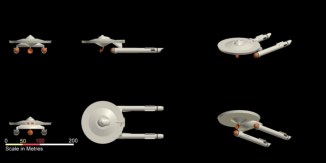
The Sheffield Class was built in very small numbers as it was a victim of technical progress.

Intended to supplement the Surya and Coventry class Frigates, the USS Sheffield Commissioned in October 2266, and a class of 30 ships was envisaged to allow the replacement of the remaining Asia class ships. However while the Sheffield was being tested Starfleet started to bring Linear warp drives into the inventory. The Sheffield’s design was assessed and it was found that the changes from the standard Coventry class design made the ship less suitable for use with the linear drive nacelles and warp core.

As a result only 7 further Sheffields were completed, the remaining 22 were cancelled in favour of additional ships of the new Babcock class.

Class: X Year: 2266
Ship Source: Based on Early Paramount design for Miranda Class Ship Datasheet: Coming Soon

ff-01-100

2249 – Delta

The Delta Class was an off shoot from the Perimeter Action Ship program, initially designed n response to the requirement that led to the building of the Kiaga class PA, the design was put into limited production as a light frigate. The Delta was a relatively small vessel, with a very flat side profile which was intended to increase the stealthiness of the design. Only 12 Deltas were built, but they were intended for gathering intelligence in locations were the use of a specialist intelligence gathering ship was not possible for political or tactical reasons.

  • Class:TBC
  • Year:2249
  • Ship Source:Steve Bacon,
  • Ship Datasheet:Coming Soon

pa4-70

2247 – Surya

The Surya class was designed as a Frigate counterpart for the the Constitution class. The ships had useful hanger capacity in the rear of the primary hull, and, along with the Miranda class, set the basics for classes to follow from the Coventry through to the Avenger/Reliant.

Class: IX Year: 2247
Ship Source: Ships of the Starfleet Volume 1 Ship Datasheet: Download PDF

surya_large

2219 – Mercury

The Mercury Class frigate was based on the Asia class design. It was used almost exclusively as a deep space explorer, far beyond the Federation treaty zone. With the introduction of more capable ships such as the Constitution class the ships were later used on more short range missions. The last ships of the class decommissioned as late as 2279.

mercury_large