2249 – Diligent

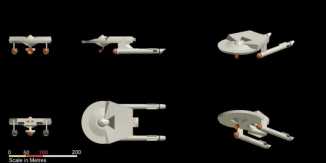
The Diligent Class Combat Support Tender commissioned in 2249, the ships were intended to provide frontline support to damaged ships, towing them out of the battlefield with the powerful tractors, then assisting them with repairs.

The Class was based on the Coventry Class hull, but with a vertically enlarged rear hull which housed the massive spare part storage bins and the enlarged hanger bays. The Twin FTB-1 Tractors (also fitted in the aft hull) could each haul 300,000 mt. The maximum mass that the Mark 1 could haul was 330,250mt (this covered all class 14 ships, and some class 15), where as the later Mark 2 could haul 480,250mt (including all ships up to class 17, and the majority of class 18 ships as well).

The ships were armed with 4 FL-6 lasers which were meant to give a measure of self defence, in fact coupled with the state of the art shielding the Diligent was a surprisingly capable combat vessel, capable of a very robust defence. With the advent of the four years war these ships were plunged into action. They were initially used in there intended role of recovering crippled Federation ships, but their role developed as the war continued.

In 2255 the USS Stevenson and USS Brunel were employed in a most unorthodox operation, a Klingon Z-3 Station had been placed in a position where it could easily monitor Starfleet Traffic. All previous attacks on a Z-3 had failed as insufficient ships were available locally to push home the attack. The two Diligent class ships were tasked to pull the Z-3 out of its stable orbit and start it moving down towards the planet’s surface, a a Federation Task group was simultaneously attacking the station to prevent it diverting power to its station keeping thrusters. The operation succeeded, but the losses on the Federation side were such that the exercise was not repeated, the losses included the USS Brunel.

2256 saw a more daring but more conventional mission, Starfleet Intelligence learnt of a crippled Klingon D-10 with only a skeleton crew aboard in the vicinity of ‘Malta Station’ within Klingon controlled space that was awaiting recovery. The USS Diligent, the USS Sir Lancelot (an Eagle class Troop ship) and an escort squadron of Baton Rouge class cruisers crossed into Klingon space and successfully captured the vessel, then towed it back to the Federation at the painful speed of warp six. This was the first intact D-10 captured by the Federation and was the source of much valuable intelligence. In all 8 ships of this class were lost or destroyed during the war, but they recovered an estimated 4.5 million mt worth of ships from the battlefields to fight another day.

Class: VIII Year: 2249
Ship Source: Steve Bacon, based on Coventry from Ships of the Starfleet. Ship Datasheet: Download PDF

diligent_large

2256 – Derf

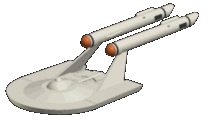
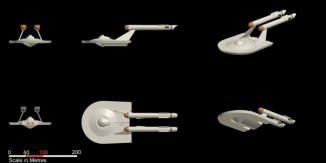
The early history of the Derf Class is an amazing story of near abandonment. The Derf was designed as a destroyer leader (Daring class), but improvements in small ship sensor technology during the Four Years War rendered this type of ship obsolete. It was then re-roled as an exploration cruiser (Derf class), but the decision to produce further ships of the Constitution and Anton classes meant that it could not fulfill that role either. Finally the USS Derf was borrowed for a demonstration of the buoy tender concept. This demonstration was so successful that serial production of the Derf was ordered immediately and eventually totaled 600 vessels over a period of 35 years. Few vessels in Starfleet history have achieved either that level or longevity of production and it is certain that had the class been adopted in either of the other two intended roles it would not have gotten anywhere near either figure.

The Derf class tender has been operational in Starfleet for more than 25 years. When it entered service in July of 2256 (1/9807), the Derf class marked a new concept in navigational beacon repair. Before its introduction, marker buoys and navigational beacons had to be retrieved and returned to a repair facility to be serviced. Derf class tenders eliminated this need because they carried repair facilities on board.

When a Derf arrives at a malfunctioning beacon’s location, a shuttle uses a tractor beam on the beacon and tows it into the lower hull, which is the tender’s main repair facility. The beacon is then placed on an assembly line and repaired robotically. When the work is finished, the shuttle tows the beacon back into the spacelanes, and the Derf moves on.

Although the Derf is not designed as a fighting vessel, it is capable of aggressive defense. Most repair missions take place along the borders between the major powers, where the chances of encountering enemy ships is very high. Because of this high risk, the Derf is armed with medium-range phasers.

This protection does not prevent them from falling prey to enemy ships. In February 2263 (2/0702), the USS Acropolis responded to signals from a malfunctioning marker buoy. As its shuttle neared the beacon, a Klingon warship appeared and opened fire before defensive action could be taken. The volley crippled the Acropolis’ engines, and the tender was boarded and towed into Klingon territory.

Intelligence later discovered that the beacon had been planted by Klingon operatives to entrap the repair tender. It is theorized that the Klingons gained technical information concerning robotics and repair techniques that they lacked, but it is not known just what gain this action brought them in the overall situation. Some analysts believe that study of the robotic repair systems will make it possible for Klingons to alter the functioning of navigation beacons robotically, creating potential havoc in border spacelanes. However, a crash program of buoy upgrading and fitting of encryption systems, which occupied the entire fleet of Derf’s and many other ships, prevented this from happening.

The design of the Derf evolved over a number of Marks. The Mk II would have offered improved impulse and warp drives compared to the Mk I, but a further improved Mk III was designed while the early Mk IIs were being tested. All Mk IIs were updated to Mk III specifications to keep the number of variations within the fleet as low as possible.

In 2285 (2/22), a number of Derfs were taken in hand for conversion to a new Mk V standard. The increase in tensions on the Klingon frontier meant that Derfs now required an armed escort in order to operate safely. The Mk V refit introduced improved shields and enhanced weapons in order to allow the ship to operate without escort in most situations. Not all ships have been refitted to this standard, but all new production was to this standard until production ceased. The Derf class was built at Merak by Chandley Works, Ltd. Buoy maintenance is now carried out by civilian ships in most areas of the Federation, but Starfleet maintains a fleet of Derfs in both active service and reserve to maintain those in more dangerous areas.

The Derf class is now a surprisingly sought after posting amongst many young officers. The reasons for this are varied. All active ships are assigned to border areas, so there is a chance to see the “enemy” in the flesh, it (in Mk V form) is a tough ship to best in combat, and perhaps most importantly it is one of the few classes still in service from the “classic” era of starship technology.

Of the 691 Derfs built, 8 Mk Is, 351 Mk IIIs, 61 Mk IVs and 72 Mk Vs remain in active service, and 38 Mk Is and 25 Mk IIIs are in reserve fleets. Two Mk Is, 2 Mk IIIs and 2 Mk IVs are used by Starfleet Training Command; 12 Mk Is, 8 Mk IIIs and 2 Mk IVs have been destroyed; 1 Mk III has been captured by the Klingons; 1 Mk I, 3 Mk IIIs and 1 Mk V are listed as missing; 4 Mk Is, 4 Mk IIIs, 3 Mk IVs and 2 Mk Vs have been scrapped; and 2 Mk Is and 1 Mk III have been sold to the private sector.

Class: IX Year: 2256
Ship Source: FASA Original/ Additional material by Lee Wood/Steve Bacon Ship Datasheet: Download PDF

derf_side