2174 – Wasp I

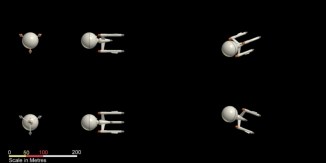
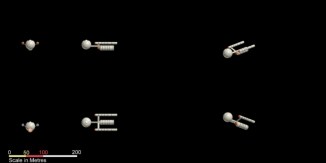
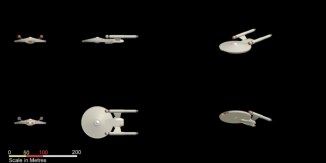
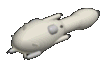
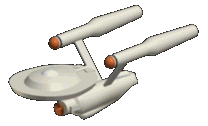
The Wasp was intended as a successor to the Daedauls class. The lead ship of the new class, USS Wasp, was launched in December 2173 and commissioned in November 2174.

The large primary hull of the Wasp class, and the overall increase in size over the Daedalus class was intended to improve the range and habitablility of the design when compared to its predecessor. Another intention was to provide greater crew safety than on previous designs. This increased safety was demonstrated in 2177 when the USS Cumberland suffered a warp core containment breach while on a survey mission. The secondary hull was evacuated, and the primary hull was then successfully detached and maneuvered to a safe distance by the time the warp core exploded. No casualties were sustained during evacuation and separation. The command hull of Cumberland (which had been christened “The Deathstar” by the crew) entered orbit around Theta Draconis VII 5 months later. She was subsequently towed to spacedock, where a new engineering hull was attached, and the ship was relaunched 14 months after the accident.

The warp performance of the Wasp class was worse than expected. This was due to two causes, firstly owing to production delays the first eight ships were forced to use three FFTL- 2A warp engines rather than two of the more powerful FFTL-3A warp engines as had been intended. Although in trials the three engine fit was successful, in active service the Warp fields proved hard to keep aligned. When the FFTL-3A engined ships finally appeared they were found to be only marginally more capable. As a result the last 5 ships in the projected 20 ship class were canceled after construction had already begun. All 8 Mk 1 ships built were converted to the Mk 2 standard as it was a more reliable and simpler to maintain engine installation.

Of the 15 ships built, 3 were lost in the line of duty and 1 is overdue and presumed lost. Five ships were later sold to commercial concerns and converted to starliners or transports. After being decommissioned in 2217, USS Kearsage was restored to her original three-nacelle configuration and is now on display at the Starfleet Museum.

Class: VI Year: 2174
Ship Source: Starfleet Museum Ship Datasheet: Download PDF

wasp_1_large_side

Commissioned Ships (Mk 1)

USS Wasp NCC-223
USS Decatur NCC-224
USS Ranger NCC-225
USS Kearsarge NCC-226
USS Jupiter NCC-227
USS Ericsson NCC-228
USS Cumberland NCC-229
USS Mars NCC-230

2160 – Daedalus

Compared to the Comet class that it was developed from, the Daedalus was a far lighter vessel. The Mk 1, which the first 25 ships were built as was designed as an exploration vessel, hence the relatively weak armanent. The 25 Mk 2 ships were intended as mixed use Cruisers, so were more heavily armed.

The Daedalus had many changes to its structure, equipment, and drive system compared to the Comet. These included simplifying the spaceframe, reducing offensive and defensive weaponry, moving the shuttle bay to the rear of the secondary hull, adding scientific facilities, enhancing the sensor suite and increasing the ship’s range. In addition, for the first time, the bridge was placed atop the command hull.
The UES Daedalus joined the fleet in September 2160, just 1 month before the end of the war. Due to their exploration mission profile these ships cruisers were used on scientific missions far from the front line. On these internal missions, the class served admirably without major malfunctions or system failures.

In a formal ceremony held on October 14, 2161 UES Daedalus (CCM-127) was struck from the UESN list and recommissioned as the Federation Starfleet’s first cruiser, USS Daedalus (NCC-150). Although the Deadalus class ships were not the fastest, largest, or most powerful explorers, they made first contact with more civilizations and mapped more star systems at the greatest risk to their crews than any other explorer type of their generation.

USS Carolina, a Mk1 Daedalus Class is now on display in the Starfleet Museum

Class: IV Year: 2160
Ship Source: Starfleet Museum Ship Datasheet: Download PDF

daedalus_large_side

Commissioned Ships (UESN/UFP)

UES/USS Daedalus CLM-127/NCC-150
UES/USS Icarus CLM-128/NCC-151
UES/USS Phoenix CLM-129/NCC-152
UES/USS Valiant CLM-130/NCC-153
UES/USS Clarke CLM-131/NCC-154
UES/USS Dakota CLM-132/NCC-155
UES/USS Proteus CLM-133/NCC-156
UES/USS Voyager CLM-134/NCC-157
UES/USS Columbus CLM-135/NCC-158
UES/USS Diana CLM-136/NCC-159
UES/USS Carolina CLM-137/NCC-160
UES/USS Soyuz CLM-138/NCC-161
UES/USS Apollo CLM-139/NCC-162
UES/USS Louisiana CLM-140/NCC-163
UES/USS Torvaldson CLM-141/NCC-164
UES/USS Sputnik CLM-142/NCC-165
UES/USS Jefferson CLM-143/NCC-166
UES/USS Tokyo CLM-144/NCC-167
UES/USS Arronax CLM-145/NCC-168
UES/USS Mir CLM-146/NCC-169
UES/USS Bowman CLM-147/NCC-170
UES/USS Roosevelt CLM-148/NCC-171
UES/USS Dolphin CLM-149/NCC-172
UES/USS Essex CLM-150/NCC-173
UES/USS Robinson CLM-151/NCC-174
USS Frontier NCC-175
USS Horizon NCC-176
USS Liberty NCC-177
USS Asimov NCC-178
USS Zond NCC-179
USS Marco Polo NCC-180
USS Spaulding NCC-181
USS Lincoln NCC-182
USS Maury NCC-183
USS Viking NCC-184
USS Johnson NCC-185
USS Shenandoah NCC-186
USS Nelson NCC-187
USS Independence NCC-188
USS Archon NCC-189
USS Columbia NCC-190
USS Challenger NCC-191
USS Discovery NCC-192
USS Atlantis NCC-193
USS Endeavor NCC-194
USS Gaines NCC-195
USS Venera NCC-196
USS Buena Vista NCC-197
USS Cassini NCC-198
USS Cochrane NCC-199


2158 – Comet

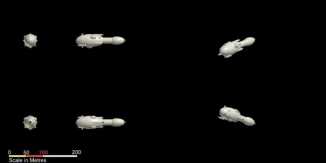
Following the successful tests of the Fireball class, the UESN made plans for introducing the design into military service to boost the war effort. The Only changes made to the excellent Fireball design were addition of weapons, and the upgrading of the shields to FDS-2.

The Comet class light cruiser began to enter service in October 2158. They were amongst the fastest ships of the Romulan war and saw extensive service as scouts and light strike cruisers. Originally 50 of the class were been ordered, but the end of the war saw the final 25 cancelled in favor of 25 of the Comet derived Daedalus class exploratory cruisers. 23 Comet class ships survived the war, and were allocated to Starfleet, where they served until 2192.

The Comet class cruiser USS Meteor is now on display at the Starfleet Museum.

The Experimental NG (New Generation) engines and shield systems were redesignated as part of the Federation Designation System in 2161.

  • Class: V
  • Year: 2158
  • Ship Source: Starfleet Museum
  • Ship Datasheet: Download PDF

comet_side_large

Commissioned Ships (UESN)

UES Comet CLM-102
UES Meteor CLM-103
UES Aurora CLM-104
UES Nova CLM-105
UES Pulsar CLM-106
UES Nebula CLM-107
UES Quasar CLM-108
UES Eclipse CLM-109
UES Equinox CLM-110
UES Solstice CLM-111
UES Corona CLM-112
UES Constellation CLM-113
UES Galaxy CLM-114
UES Flare CLM-115
UES Proxima CLM-116
UES Polaris CLM-117
UES Zodiac CLM-118
UES Mercury CLM-119
UES Venus CLM-120
UES Luna CLM-121
UES Mars CLM-122
UES Jupiter CLM-123
UES Saturn CLM-124
UES Uranus CLM-125
UES Neptune CLM-126

2158 – Mercy

The Olympus Mons family of ships was developed from the Bison class. The Olympus Mons class was an armed Assault transport, The Reid Fleming class was a Deuterium Tanker, and the Mercy class was Starfleet’s primary Medical ship type for many years.

Class: XVII Year: 2158
Ship Source: The Starfleet Museum Ship Datasheet: Download PDF

mercy_large

Commissioned Ships

  • UES Mercy AHM-4
  • UES Solace AHM-5
  • UES Comfort AHM-6
  • UES Sanctuary AHM-7
  • UES Consolation AHM-8
  • UES Refuge AHM-9
  • UES Hope AHM-10
  • UES Tranquility AHM-11

.


2156 – Columbia

From Memory Beta:

The Columbia-class was born out of the existing, and proven, NX-class design, and included retrofitted ships such as the  SS Enterprise and the USS Endeavour. It was named, at the insistence of Admiral Jonathan Archer, after the first vessel of the NX-class to be lost in action, the Columbia.

As well as the refitted ships, eight new Columbia-class vessels were slated for construction: USS Buran,  USS Shenlong, USS Apollo, USS Soyuz, USS Ares, USS Charybdis, USS Phoenix and USS Valiant.

The most noticeable difference between the NX and Columbia classes was the addition of a secondary hull which was slung underneath the  primary hull. The secondary hull included a new navigational deflector, and also a new large warp core which allowed speeds over warp 6. The room in the primary hull released by the removal of main engineering allowed for improvements in crew accommodation, although the connection of the secondary hull did result in the loss of the main shuttle bay in favour of smaller drop bays.

2158 – Powhatan

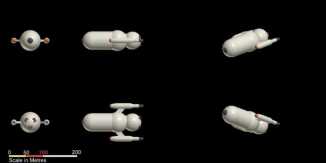
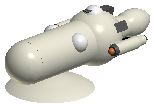
The Powhatan class ships were intended to serve as escorts for Yorktown class carriers on strike missions. Since the carriers carried only short-range area defense missiles, they were considered vulnerable to attack by smaller, more maneuverable vessels. If a carrier was accompanied by one or more smaller, heavily armed ships, the mission could be performed with a much lower risk of interference by enemy ships. Even before the launch of the EFTL-5 powered UES Krechet, engineers had begun developing a series of compact reactors for smaller ships. The first to enter service was the EFTL-6 in the Torsk class. Although smaller and lighter than it was also slightly less powerful. This was considered acceptable for border patrol ships, which were expected to operate in a limited geographic area. However, escorts for carriers had to be capable of sustained operations at high speeds for month-long missions into enemy territory.

The EFTL-8 was smaller and lighter but provided higher peak output levels for longer periods of time. Compared to earlier cruisers, Powhatan could be considerably smaller than earlier cruisers but have significantly improved performance, also the sleek lines were also strikingly different, she was long and thin where Krechet had been fat and round. Powhatan mounted a four nacelle system to improve maneuverability, and also used the new J-4A computer, which was a special version of the J-4 for smaller ships.
No carriers under their protection were lost to enemy action in the last 15 months of the war.

The long range, high speeds, and heavy weaponry of the class also made it useful in a wide range of other roles. By early 2159, Powhatans had largely superseded all other small cruisers in the roles of escorts, destroyers, scouts, and cruisers. Several ships were modified to perform intelligence missions deep within enemy territory. Even after the introduction of the Comet class in October 2158, the superior firepower of the Powhatans ensured that they continued in front line service. However, when peace came, a lack of space for scientific facilities meant that Powhatans had only limited use in the new Starfleet. They were replaced in 2185 by the more versatile Moskva class cruisers.

The POWHATAN-class escort USS PHAETON (CEM-18) is now on display at the Starfleet Museum.


Class: VI Year: 2158
Ship Source: The Starfleet Museum Ship Datasheet: Download PDF

powhatan_large


2151 – NX

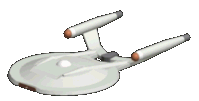
The NX class Cruiser is often neglected by history, as the ships which followed it into service gained fame in the Romulan War. The NX class introduced the Matter/Antimatter powered drive system into service, however experience with the class in operational situations, the cost of the drive system and problems with mass production led the high command to decide to revert to mature technology that fusion power represented for the next designs to enter service.

  • Class: VI
  • Year: 2151
  • Ship Source: Paramount Pictures
  • Ship Datasheet: Download PDF

rescale_nx_large

Commissioned Ships

  • Enterprise (NX-01),
  • Columbia (NX-02),
  • Challenger (NX-03),
  • Discovery (NX-04),
  • Atlantis (NX-05),
  • Endeavour (NX-06),
  • Intrepid (NX-07)
  • Avenger (NX-09)
  • Defiant
  • Lexington
  • Akagi
  • Broadsword
  • Interceptor
  • Dauntless
  • Bismarck
  • Currie (NX-16)

2166 – Bonaventure I

The Bonaventure was the first Federation Designed Warp Powered ship, all other designs had been underway before the foundation of the Federation. An experimental vessel, the Bonaventure was used as a showpiece for Federation technology, and was one of the first vessels sent on long duration exploratory missions. She was designed as a smaller counterpart to the Battle Cruiser Prototype. Tragically she was lost on her third mission, although the USS Enterprise located her in 2269, and it was established she had been pulled into a parallel universe of some type.

Only the Bonaventure was built, partly due to her unexplained loss, and partly because Starfleet felt that a larger number of smaller vessels could perform the exploration role more effectively. This position did not change until the Klingons became a greater threat in the early 23rd century.

  • Class: XII
  • Year: 2166
  • Ship Source: Star Trek The Animated Series
  •  Datasheet: Download PDF