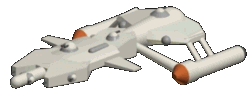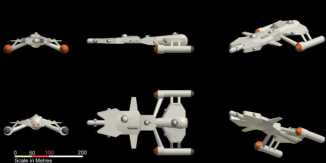

2157 – Krechet

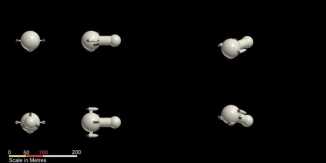
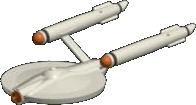
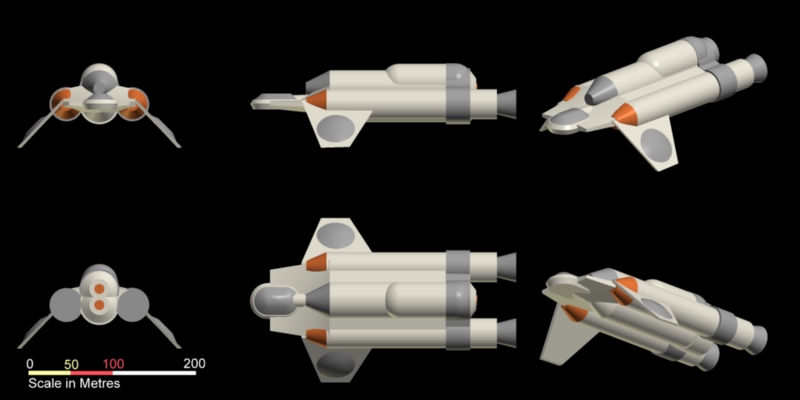
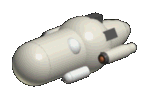
The Krechet class, with its matter/antimatter power plant, added range to the admirable qualities of the earlier Amarillo class. Additionally the class was the first since the experimental NX class to use matter/antimatter propulsion.

The first Krechet class ships entered service in 2157. They were the first ships to serve in the fleet with matter/antimatter reactors since the experimental (and expensive) NX class of 6 years earlier. The reversion to matter/antimatter reactors was caused by the need to give combat vessels a far greater range as a result of the need to undertake offensive rather than defensive operations. The Krechet class had a range of 1000 hours at warp, 5 times that of the Amarillo. Otherwise performance was similar to the earlier class, although total power and speed were slightly higher

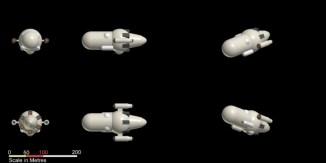
The command hull was based on that of the Amarillo, the main structural change being the relocation of the Warp nacelles to front of the vessel in an attempt to improve warp field dynamics and efficiency

August 2157, UES Krechet and UES Bowen, were on patrol in sector 23, 10 light years from the nearest starbase or outpost. Because of their longer ranges and higher speeds, the Krechet class was able to monitor what had previously been a potential route of invasion. On August 23, UES Bowen detected a high interstellar deuterium concentration. The cruisers tracked the deuterium to three Romulan tankers. Remaining out of sensor range to avoid alerting the tankers, they fired a message torpedo towards starbase 44 then continued along the tanker’s projected course until they found the Romulan invasion fleet 1 light year inside UE Alliance space. After reinforcements, including Tannhauser class heavy cruisers, arrived and engaged the Romulans near Hell’s Gate, the remnants of the badly mauled and surrounded invasion fleet self-destructed to avoid capture.

In all just eight Krechet class ships were built, of which only two were lost. Although the Krechet class was a transitional design that was not effective across the entire performance spectrum, it did allow the fleet to gain valuable experience in maintaining and operating M/AM powered vessels under wartime conditions. As the UE Alliance went on the offensive in mid- 2158, Krechets were largely relegated to secondary roles by the newer and more capable Conqueror and Powhatan classes.

The KRECHET-class cruiser UES FEUERSTEIN (CCM-4) is now on display at the Starfleet Museum.

Class: IX Year: 2157
Ship Source: The Starfleet Museum Ship Datasheet: Download PDF

krechet_large

Commissioned Ships

  • UES Krechet CCM-1
  • UES Bowen CCM-2 **
  • UES Rattler CCM-3
  • UES Feuerstein CCM-4
  • UES Panther CCM-5
  • UES Blazer CCM-6
  • UES Shturmovikh CCM-7
  • UES Oguma CCM-8 **** denotes lost or missing ships

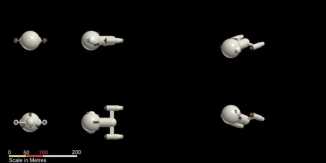
2152 – Amarillo

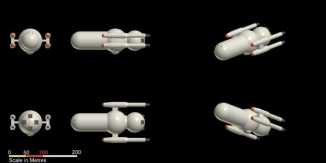
The Amarillo Class fusion powered Heavy cruiser served in the Fleet at the outbreak of the Romulan War. Although eclipsed by the far larger battle cruisers that served during the war, it can be argued that the Amarillo class marked the start of the proud tradition of Starfleet Heavy Cruisers.

The first 5 Amarillo Class ships entered service in 2152. At the time of the outbreak of the Romulan War they were still the most advanced Cruiser Class in service.

The ships compared well to the far larger Pioneer Class they served alongside, they had a similar power output and were far easier to handle in combat due to their smaller size. The Amarillo having similar firepower, but less combat persistence due to its limited number of missile relaods.

As with all ships of the period the Spherical Command hull held virtually all of the ship’s vital functions and crewed areas. The Design was also notable for starting the tradition, long maintained by Federation ships of mounting all of its weapons to cover the forward firing arcs.

Technically the only real flaw with the design lay in its power generation system. The ship was powered by Fusion reactors, although this did not generate less power than later Matter/Antimatter reactors it did use far more fuel, hence the operational range of these ships was only 100 hours at warp speed.

Despite this the class took the brunt of the early fighting in the Romulan War, and served alongside the later Krechet class (which basically added an antimatter generator to the same basic design) until finally replaced in 2158 by the Powhatan, Torsk and Conqueror classes. In all 16 of the 25 ships of this class were lost in action during the conflict, this should not be taken as a failure on the part of the design, more as a failure of Earth’s defensive preparations. The class performed as well as any could have hoped, but in the face of overwhelming opposition suffered inevitable losses at the hands of the Romulan Fleet.

The AMARILLO-class cruiser UES WOLVERTON (CC-47) is now on display at the Starfleet Museum.

Class: X Year: 2152
Ship Source: The Starfleet Museum Ship Datasheet: Download PDF

amarillo_large

Commissioned vessels

  • UES Amarillo CC-33 **
  • UES Shikoku CC-34 **
  • UES Kursk CC-35 **
  • UES St. Petersburg CC-36 **
  • UES London CC-37 **
  • UES Kamina CC-38 **
  • UES Syracuse CC-39
  • UES Celebes CC-40 **
  • UES Sarajevo CC-41 **
  • UES Portland CC-42 **
  • UES Wilmington CC-43
  • UES Xiaguan CC-44
  • UES Cairo CC-45
  • UES Jakarta CC-46 **
  • UES Wolverton CC-47
  • UES Milan CC-48 **
  • UES Charleston CC-49
  • UES Bozeman CC-50 **
  • UES Stockholm CC-51 **
  • UES Kinshasa CC-52
  • UES Melbourne CC-53 **
  • UES Bremen CC-54 **
  • UES Johannesburg CC-55 **
  • UES Agata CC-56
  • UES New Orleans CC-57

** denotes lost or missing ships.

2174 – Bonaventure II

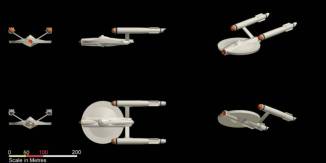
Design of what became the Bonaventure II Class began as far back as 2163, it built on a number of different design concepts (including the Bonaventure I Class of 2166). In many ways this blending of the NX, Daedalus and Bonaventure I design can be seen as the starting point for the Heavy Cruiser design concept which led ultimately to the Pyotr Velikiy Class of 2241 and Constitution Class of 2245.

The Class ship was christened USS Bonaventure following the loss of the previous USS Bonaventure in 2169 on her third mission. The Bonaventure (II) Class ultimately met the multirole mission profile devised by Starfleet which the Dragon Class (qv) was unable to meet.

  • Class: X
  • Year: 2174
  • Ship Source: Ships of the Line Calendar (2006)
  • Ship Datasheet: Coming Soon

ncc1000-70

2166 – Dragon (Modified)

After the end of the Romulan war, most ships in the  Starfleet were small, lightly armed exploratory cruisers (such as the former UESN Daedalus and Comet classes). Most of the UESN’s heavy cruisers (Conqueror class) and fighter-carriers (Yorktown class) had been mothballed, repurposed, scrapped, or sold off to local defense forces, with only a small number entering service with Starfleet.

To meet any potential remaining Romulan  threat, Starfleet needed to replace its Conqueror-class heavy cruisers.  The large crew complements and offensive mission profile made them poorly suited for a more defensive role.

In April 2163 Starfleet issued a request for proposals for the Dragon class of border-defense heavy cruisers. The requirement was for firepower (both missile and beam weaponry) at least 33% greater than that of Conqueror. Cruising and maximum speeds were wf 3.4 and wf 4.5,again an improvement over the Conqueror. Displacement was planned to be 150,000 tons or less with a crew of 430 officers – both approximately a third of those of Conqueror. These ships were planned to be less expensive to design, construct, and operate, but still  be more effective for border defence than the wartime Cruisers. 20 Ships were planned, to commission for 2166 onwards. This baseline ship is shown as the Dragon Mk1 on the Data sheet.

The successful design was in essence a scaled up Daedalus, using some Comet style components as well. Construction of the  class began in August 2164, but problems were encountered as the first Dragon began to be fitted out with various components supplied by subcontractors. The challenging requirements led to many of these systems being designed specifically for the Dragon class, and also to these systems having an impact on the overall design. In addition Starfleet Intelligence threat analysis led to a requirement for across-the-board performance increases for all ship’s systems. Accordingly, the damage and ranges of all weaponry were to be increased by an average of 25%;  and cruising and maximum speeds were increased to wf 3.6 and wf 4.7. This improvement was to be delivered from just a 10% increase in crew size and displacement.

To meet the new performance requirements, numerous changes were made. To increase the cruising and maximum speeds, a more powerful warp drive with larger reactor  was installed requiring the addition of a separate “reactor hull”. In addition, the 129-m-long nacelles were replaced by 157-m-long units. As well as the increase in firepower the missile load was increased, and the shuttle bay enlarged.  These  changes further decreased the space that could be used for crew quarters, stores, and life-support systems. Dragon was now 257 m long, with an estimated displacement of 180,000 tons, and the various technical issues were still to be overcome. This is the Mk2 configuration.

In December 2165, Hull #1 was christened USS Fafnir (NCC-213) and launched to begin trials despite the ongoing integration problems. Upon commencement of trials  construction was authorized to begin on the next 3 ships of the class. However the trials of Fafnir quickly revealed numerous problems. The most severe being that the firing of a full missile salvo from the forward missile tubes at attack speed  caused the mounts for the p forward deflector and targeting sensors to become misaligned. This was resolved by structural reinforcement. High speed warp runs revealed harmonic flexing from the nacelle supports propagating throughout the length of the ship – these vibrations played havoc with navigation, weapons targeting, and prevented Fafnir from reaching design speeds. In the longer term these vibrations would lead to fatigue failure possibly resulting in the catastrophic loss of spaceframe integrity. To resolve these issues it was necessary to shorten and thicken the neck connecting the primary and secondary hulls and adding redundant supports for the nacelles on the reactor hull. Fafnir was now 247 m long but displaced 194,000 tons

By October 2166 most of the outstanding problems were being solved: the lead ship, USS Fafnir, was commissioned. Unfortunately by  2167 Starfleet’s requirements had changed, and the defensive posture of the Dragon meant they were ill suited for use in a exploration role. The lack of internal space owing to the level of equipment and weaponry fitment meant that there was no space for the installation of laboratories, scientific equipment, crew quarters, common areas, and long-term life-support systems. With the Romulan threat in abeyance, the Dragon had become a costly and immobile white elephant, and  in November 2167 Starfleet cancelled the final 10 ships of the class before construction had begun.

Despite these problems the 10 completed Dragons proved to be rugged and reliable ships –  however, all Dragons were withdrawn from front-line service by 2180 without ever having fired a shot in anger.

The Dragon-class heavy cruiser USS Jörmungandr (NCC-218) is on display in the Starfleet Museum.

Class: X-XII
Year: 2166
Ship Source: Starfleet Museum
Ship Datasheet: Coming Soon

Dragon Mk3 Configuration:

dragon3_70b

Commissioned Ships

  • USS Fafnir NCC-213
  • USS Ddraig Goch NCC-214
  • USS Xiuhcoatl NCC-215
  • USS Zmey Gorynych NCC-216
  • USS Tianlong NCC-217
  • USS Jörmungandr NCC-218
  • USS Ryūjin NCC-219
  • USS Aži Dahāka NCC-220
  • USS Sirrush NCC-221
  • USS Zilant NCC-222

2158 – Yorktown

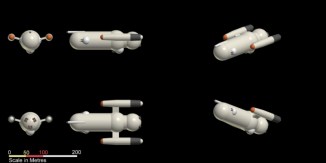
Introduced in June 2158, the Minotaur fighter and the M/AM-powered Yorktown Class carrier were an attempt to overcome the operational limitations of early M/AM ships by combining the speed and range M/AM-powered warp flight with the maneuverability of high-impulse fighters. Yorktown was based on the Pioneer class cruiser, which had entered service in 2154 and had itself been developed from the Bison-class transport. YORKTOWN carried a new M/AM reactor and four paired EFTL-7A warp nacelles. The impulse drive and its fusion reactor were moved to the extreme stern.

At the front of the cylindrical hull, which had been lengthened by some 20 m, were the ship’s sensors and navigational deflector, as well as command centers, the computer core, crew facilities, and life-support machinery. In the center section were docking cradles for 5 Minotaur long-range fighters. In the aft section were auxiliary deuterium tanks, the missile room, and support facilities for the fighters. With a displacement of some 670,000 tons, Yorktown was by far the largest Earth-designed warship produced to that time and would not be surpassed until the Ambassador class was launched in the 2330s.

After the war, many Yorktowns were converted to fast transports and tankers or sold

The YORKTOWN-class carrier UES SARATOGA and the MINOTAUR fighter Gwendoline are now on display at the Starfleet Museum.

  • Class: XX
  • Year: 2158
  • Ship Source: The Starfleet Museum
  • Ship Datasheet: Download PDFyorktown_large

Commissioned Ships

  • UES Yorktown CVM-5
  • UES Lexington CVM-6
  • UES Langley CVM-7
  • UES Nimitz CVM-8
  • UES Ranger CVM-9 **
  • UES Monterey CVM-10
  • UES Essex CVM-11**
  • UES Hornet CVM-12
  • UES Cowpens CVM-13
  • UES Boxer CVM-14
  • UES Kitty Hawk CVM-15
  • UES Prince of Wales CVM-16
  • UES Enterprise CVM-17 **
  • UES Intrepid CVM-18 **
  • UES Dwight D. Eisenhower CVM-19
  • UES Midway CVM-20
  • UES Franklin D. Roosevelt CVM-21 **
  • UES Douglas MacArthur CVM-22
  • UES Harry S Truman CVM-23
  • UES Bunker Hill CVM-24
  • UES Sherman CVM-25
  • UES Yamato CVM-26
  • UES Saratoga CVM-27
  • UES Antietam CVM-29
  • UES Valley Forge CVM-30
  • UES Triumph CVM-31
  • UES Akagi CVM-32
  • UES Hood CVM-33
  • UES Potemkin CVM-34
  • UES Franklin CVM-35
  • UES Winston Churchill CVM-36
  • UES Repulse CVM-37
  • UES Exeter CVM-38
  • UES Bataan CVM-39 **
  • UES Independence CVM-40
  • UES Randolph CVM-41 **
  • UES Forrestal CVM-42
  • UES Rabin CVM-43
  • UES Ticonderoga CVM-44
  • UES Bismarck CVM-45
  • UES Fearless CVM-46
  • UES Coral Sea CVM-47
  • UES Oriskany CVM-48
  • UES Kearsarge CVM-49
  • UES Bonhomme Richard CVM-50

** Denotes Lost or missing ship

2168 – Juggernaut

The Juggernaut uniquely represents one of the major intelligence triumphs of the Romulan War, and one of the major engineering failures of the post war era.

Snatched from it’s Romulan builders prior to completion by operation ‘Golden Pheasant’ in 2157, the ship was docked safely at Andor. It was stripped of its equipment by Intelligence and Engineering personnel in a bid to learn as much as possible about Romulan Technology. The ship was to be refitted with Earth and Andorian technology and turned loose against it’s former owners.

In the event, the war ended before the ship was completed, and work was slowed to such an extent that the ship was not completed until 2168. After competitive trials against the USS Goliath (a Federation prototype battle cruiser) she was quietly decommissioned as an expensive failure (as was the Goliath, as the new technology used was not yet mature enough to allow these ships to operate efficiently). Later she was moved to Memory Alpha as a museum ship, were she remained for almost a century until Orion pirates hijacked her.

Juggernaut was recovered, but not before the Orions had carried out considerable work in upgrading the shipboard systems and weapons to 23rd century standards. As a result Starfleet Corps of Engineers completed the work began by the Orions, and the ship was finally commissioned, over a century after being commenced, to act as a Training ship attached to the Academy at Andor. In 2295, the ship was again decommissioned, and rededicated as a memorial to lives lost on both sides in the Romulan War.

  • Class: XIV
  • Year: 2168
  • Ship Source: FASA
  • Ship Datasheet: Coming Soon

juggernaut-e_side

2168 – Goliath

“During the darkness of the Romulan War, when the prospect of prolonged hostility seemed only too real, Star Fleet Command ordered this battle cruiser prototype built and feasibility tested, However the ship proved tremendously unwieldy and never entered active service. Its failure to perform to specification was a major reason why both the Horizon and Marshall classes enjoyed such an extended commissioned life.”

The 2168 Battle Cruiser program was intended to produce a new generation ship to replace the aging Romulan war era vessels. Although the design was in principle excellent experience in testing showed that the ship was chronically underpowered. Additionally the cost of the ship was deemed to be prohibitive and the design was cancelled.


  • Class:XIV
  • Year:2168
  • Ship Source:Space Flight Chronology
  • Ship Datasheet: Download PDF

cb_proto_large


2159 – Conqueror

The Conqueror Class battle cruisers were the final Bison class based ships to be built during the Romulan war

These cruisers, introduced in 2159, were basically improved Tannhauser class ships with the new more powerful EFTL-9 Warp drive with nacelles mounted outboard above the centerline, and an upgraded sensor suite.

New weapons included a forehead-mounted, high-velocity “missile rifle” with a rotary feed system for the ET-4 missile, and a ship-to-ship version of the ELC-2 Electron laser cannon first used in the Farragut class.

These immense cruisers gave invaluable service during the last year of the war, particularly at the battle of Cheron, where their steady missile barrages helped batter the Romulan fleet into submission. UES Charger was the flagship of Task Force 41, which led the final drive towards the Romulan Homeworlds.

However, when peace came in 2160 the class proved prohibitively expensive to maintain and crew, and accordingly all were retired by 2163.

The Conqueror class battlecruiser UES Charger is now on display at the Starfleet Museum.


Class: XVII Year: 2159
Ship Source: The Starfleet Museum Ship Datasheet: Download PDF

conqueror_large_sideCommissioned Ships

  • UES Conqueror CHM-69
  • UES Dominator CHM-70
  • UES Devastator CHM-71
  • UES Charger CHM-72
  • UES Liberator CHM-73 **
  • UES Avenger CHM-74
  • UES Damocles CHM-75
  • UES Leviathan CHM-76
  • UES Excalibur CHM-77
  • UES Victory CHM-78 (NCC-82)
  • UES Hercules CHM-79 (NCC-83)
  • UES Executor CHM-80
  • UES Champion CHM-81
  • UES Protector CHM-82 (NCC-84)
  • UES Vindicator CHM-83** denotes lost or missing ships.

2157 – Tannhauser

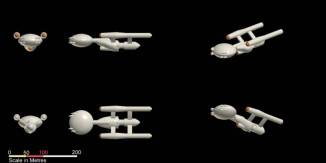
When the first mass produced M/AM starship reactors were finally certified in March 2157, several existing classes of fusion-powered ships had already been redesigned and adapted to make use of the new technology. The smaller Krechet class was the first class to enter service, in April 2157. The Krechet was developed from the fusion powered Amarillo class.

Derivatives of Bison type hulls soon followed. The Tannhauser class battlecruiser (CHM-55) was the first of these. The first ship of the class, UES Tannhauser, entered service only 1 month after the UES Krechet.

The Tannhauser class cruiser were essentially lengthened Pioneer class ships. The design was further modified to use the new EFTL-4 warp dirve system, which had been designed for ships with displacements greater than 300,000 tons.

As with the Krechet class, the smaller amount of deuterium that needed to be carried for the far more efficient M/AM reactor system allowed a larger payload, including both weaponry and more powerful sensors and deflectors.

One notable feature of the class was the extreme forward placement of the nacelles in a “hammerhead” arrangement, which was done in an ultimately unsuccessful attempt to increase maneuverability at warp speeds.

The first three ships of the class, UES Tannhauser, UES Vicksburg and UES Marathon, commissioned into the fleet in May 2157, and all three participated in the Battle of Hell’s Gate in October 2157.

The 14 Tannhuaser class ships built continued to serve effectively throughout the war but were relegated to secondary roles when UESN became the basis of Starfleet in 2161.

The Tannhauser class heavy cruiser UES Hastings (CHM-58) is now on display at the Starfleet Museum.

  • Class: XVII
  • Year: 2157
  • Ship Source: The Starfleet Museum Ship
  • Datasheet: Download PDF

tannhauser_side_large

Commissioned Ships

  • UES Tannhäuser CHM-55
  • UES Waterloo CHM-56
  • UES Vicksburg CHM-57 **
  • UES Hastings CHM-58
  • UES Agincourt CHM-59
  • UES Marathon CHM-60
  • UES Trafalgar CHM-61
  • Teutoburger Wald CHM-62 **
  • UES San Jacinto CHM-63 **
  • UES Little Bighorn CHM-64
  • UES Thermopylae CHM-65
  • UES Gettysburg CHM-66 **
  • UES Badr CHM-67
  • UES Shiloh CHM-68

** denotes lost or missing ships.

2154 – Pioneer

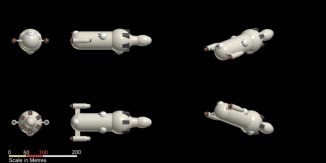
The Pioneer Class was adapted from the Bison class cargo vessel, and at the Outbreak of the Romulan war was the Earth’s premier combat vessel. Despite her extreme size, caused by the massive fuel tanks, like all fusion powered ships she lacked range and relied on refuelling when on any long duration missions. The class performed valiantly during the early stages of the war.

  • Class: XVII
  • Year: 2154
  • Ship Source: The Starfleet Museum Ship
  • Datasheet: Download PDF

pioneer_side_large