
2205 – Lancaster

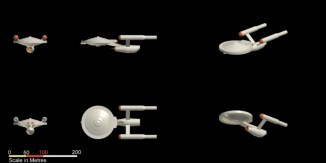
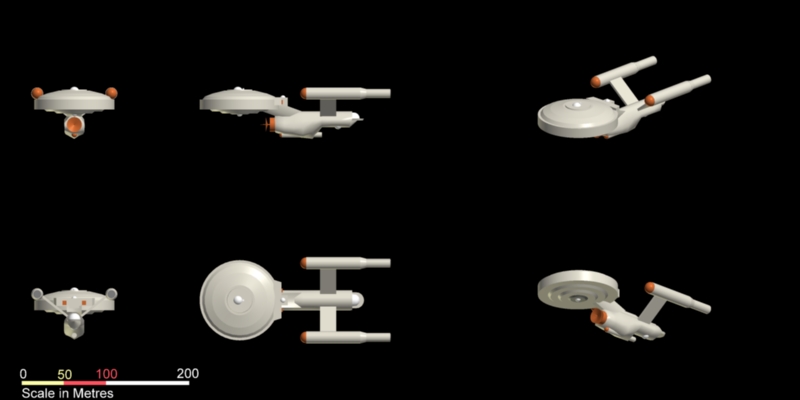
The Lancaster class, although not as attractive as the contemporary Asia class was beloved by its crews as it had the reputation of being a ship that got you home no matter what damage it suffered. The class served as the basis for both the Siegfried class dreadnought and Belleau Wood class assault ship.

The USS Lancaster is generally considered to be one of the first “modern” starship with all primary facilities in the same general positions as in current vessels, for example the bridge was placed in the top of the primary hull. Although this position has been criticized as reckless and unnecessary, it symbolizes the bridge’s command of the entire ship. Despite being compared to a “warp-capable brick” because of its stark, almost brutal, contours and thick, relatively short warp nacelles the Lancaster class inspired a loyalty amongst its crews that few other Starship classes could match.

USS Lancaster commissioned in February 2205, and the next 15 vessels followed in the subsequent 24 months. The new class was hailed as a significant advance in starship engineering. However, perhaps the best measure of a ship’s success is the opinions of their crews, and the Lancaster class ships were loved by their crews. This fierce loyalty was reflected by the perversely prideful nicknames, such as “Thunderhog” (USS Olympia) and “Death Slab” (USS Texas), that they gave their ships. These ships were often decorated with unofficial hull “nose art” and kill markings. In fact, many crews were reluctant to give their ships up when newer classes entered service.

One reason for their popularity was that they were the most powerful warships of their time, with the highest speeds, strongest shields, and greatest firepower. Because of their reputations as superb fighting ships, the class tended to attract many Starfleet’s finest personnel. Lancaster class captains were probably the most aggressive in the history of Starfleet, however, this leadership style perfectly suited the spirit of the times and Starfleet fulfilled its popular mandate to protect Federation citizens from danger. As such ,the Lancaster ships were constantly in action throughout their careers. The class was refitted with modern weapons and shields in 2248, and saw much action in the four years war.

After an illustrious career, the Lancaster class was withdrawn in 2264. The last to retire, USS Unicorn, the recipient of 7 battle stars is now on display at the Starfleet Museum.


Class: X Year: 2205
Ship Source: The Starfleet Museum Ship Datasheet: Download PDF

100lancaster_large

Commissioned Ships

USS Lancaster NCC-1209
USS Merkwürdigliebe NCC-1210
USS Ticonderoga NCC-1211
USS Poole NCC-1212
USS Colossus NCC-1213
USS Invincible NCC-1214
USS Ceres NCC-1215
USS Olympia NCC-1216
USS Wolfe NCC-1217
USS The Tracys NCC-1218
USS Mustang NCC-1219
USS Pearson NCC-1220
USS Haldeman NCC-1221
USS Giraud NCC-1222
USS Valiant NCC-1223
USS Capek NCC-1224
USS Antietam NCC-1225
USS Eisenhower NCC-1226
USS Whittle NCC-1227
USS Alexander Nevsky NCC-1228
USS Thunderbolt NCC-1229
USS Ursus NCC-1230
USS Aristarchus NCC-1231
USS Hector NCC-1232
USS Franz Joseph NCC-1233
USS Unicorn NCC-1234
USS Chaffee NCC-1235
USS Lindbergh NCC-1236
USS Kosciuszko NCC-1237
USS Jakarta NCC-1238
USS Koryu NCC-1239
USS Venkman NCC-1240
USS London NCC-1241
USS Burroughs NCC-1242
USS Illustrious NCC-1243
USS Oppenheimer NCC-1244
USS Phoenix NCC-1245
USS Chandrasekhar NCC-1246
USS Neptune NCC-1247
USS Przhevalsky NCC-1248
USS Singapore NCC-1249
USS Arronax NCC-1250
USS Alfred T Mahan NCC-1251
USS Texas NCC-1252
USS Churchill NCC-1253
USS Spitfire NCC-1254
USS Amundsen NCC-1255
USS Phantom NCC-1256
USS India NCC-1257
USS Spaulding NCC-1258

2204 – Asia

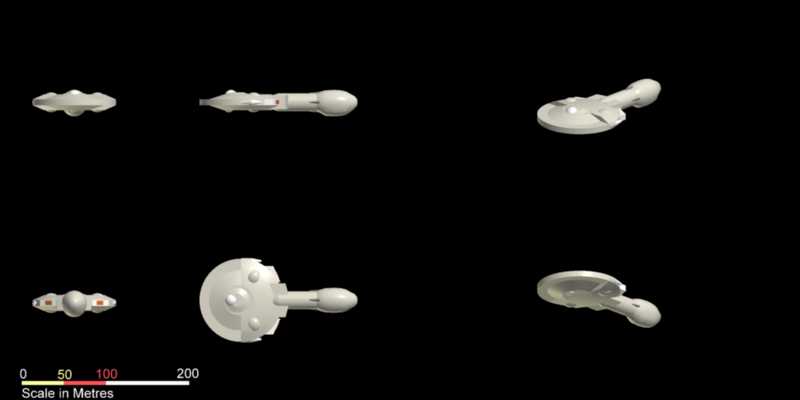
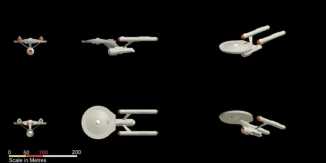
In many ways the Asia class is the first modern Heavy cruiser. Only 9 ships were built, and 4 of these received extensive refits between 2262 and 2265, the last of these refitted ships did not decommission until 2287. One ship of the class, in its original configuration served as an Academy training ship until 2298.

In 2190 Starfleet Command proposed a new Cruiser which had twice the volume of the Moskva class. In 2192 development of the new class which was to be optimised for long-term exploration missions began.USS Asia was launched on April 23, 2204, but had an inauspicious entry into service due to a severe maladjustment developed in the antimatter containment field of the matter/antimatter reactor which prevented the warp core from being safely activated for a full year. Once the adjustment problem was solved the new warp core performed extremely well and set the standard for design for the next two centuries. The second ship, USS America commissioned in 2206, and the three other “continental” ships were commissioned in the following year.

Although the class carried the most advanced technology of their time, they were intended for a primarily exploration role, as such the weapons fit was light. On either side of the saucer were two banks of FEL-5 lasers, and the primary hull also held four missile launch bays.

The Asia class was one of the first to be fully equipped with subspace radio and celerotronic computer technology. The class also introduced significant advances in computer, life support, and power systems; these improved systems were soon also adopted on the more military roled Cruiser classes. During the 2210’s it became clear that the Asia class was much better suited for exploration missions than relatively less expensive contemporary, the Lancaster class, which was being developed.

Ships of this class operated mostly around the Federation border in the Alpha Quadrant, as this area was deemed to be safer than the Beta Quadrant for these relatively lightly armed vessels. In 2219 the USS America was ambushed by two Klingon D-3 cruisers and became the only ship of the class that suffered heavy battle damage, she was retired from service as a result.

Four ships of the Asia class were reconstructed from 2262 to 2265. This reconstruction of the ASIA class paved the way for the later refit program for the Constitution class as it was just as in depth. Only the internal arrangement of the secondary hull and the core of the primary hull remained substantially unchanged. A novel, more-efficient warp drive was installed and the ships were fitted with phasers and photon torpedo tubes. The Refitting was successful in that it was 50% less expensive than building a completely new starship and almost as capable. Ultimately, even the reconstructed ships could not compete with newer designs for long and the last Asia class ship was decommissioned in 2287.

USS Thule was the last of the class to enter service, and was retired in 2255. As a result she was never refitted, she subsequently saw service as an Academy training ship until 2298, before being scrapped due to to her poor condition. The only surviving Asia class ship, USS Europe is now on display at the Starfleet Museum.

  • Class: X
  • Year: 2204
  • Ship Source: The Starfleet Museum
  • Ship Datasheet: Download PDF

asia_large

Commissioned Ships

  • NCC-945 USS Asia
  • NCC-991 USS America
  • NCC-1002 USS Africa
  • NCC-1003 USS EUROPE
  • NCC-1004 USS AUSTRALIA
  • NCC-1073 USS JEFFERSON
  • NCC-1074 USS MANHATTAN
  • NCC-1105 USS YUKON
  • NCC-1106 USS THULE

2210 – Sigma

“Because of the failure of the Tritium class, concern for defence capabilities results in the building of an advanced prototype battle cruiser. This ship doesn’t become part of the fleet, but many of its improvements do.”

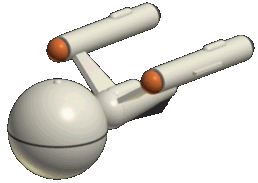
The 2210 Battle Cruiser (Sigma Class) was another attempt to produce a front line combatant. Again the design was excellent in principle, but was again found to be underpowered. This time however the basic design (in terms of systems) was used, as it was integrated into the design of the Quetzalcoatl class semi Dreadnought.


Class: XIV Year: 2210
Ship Source: Space Flight Chronology/Starfleet Tactical Database II Ship Datasheet: Download PDF

cb_sigma_side_large

Quetzalcoatl

2215 – Quetzalcoatl

The Quetzalcoatl class marked the start of the evolution process of the Dreadnoughts. Building from features of  the abortive Battle cruiser projects of 2168 and 2210 the Quetzalcoatl class ships were the largest to enter service since the end of the Romulan War. The class differed from later Dreadnoughts in two ways, firstly it had a dual role as a Carrier, and secondly the third nacelle was only a small unit installed in the lower secondary hull. The class taught many valuable lessons used in later Dreadnought designs.


Class: XIV Year: 2215
Ship Source: The Starfleet Museum Ship Datasheet: Download PDF

Quetzlcoatl