2249 – Diligent

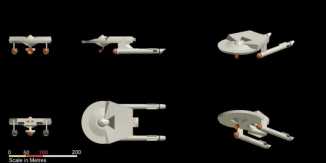
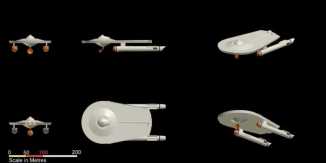
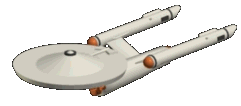
The Diligent Class Combat Support Tender commissioned in 2249, the ships were intended to provide frontline support to damaged ships, towing them out of the battlefield with the powerful tractors, then assisting them with repairs.

The Class was based on the Coventry Class hull, but with a vertically enlarged rear hull which housed the massive spare part storage bins and the enlarged hanger bays. The Twin FTB-1 Tractors (also fitted in the aft hull) could each haul 300,000 mt. The maximum mass that the Mark 1 could haul was 330,250mt (this covered all class 14 ships, and some class 15), where as the later Mark 2 could haul 480,250mt (including all ships up to class 17, and the majority of class 18 ships as well).

The ships were armed with 4 FL-6 lasers which were meant to give a measure of self defence, in fact coupled with the state of the art shielding the Diligent was a surprisingly capable combat vessel, capable of a very robust defence. With the advent of the four years war these ships were plunged into action. They were initially used in there intended role of recovering crippled Federation ships, but their role developed as the war continued.

In 2255 the USS Stevenson and USS Brunel were employed in a most unorthodox operation, a Klingon Z-3 Station had been placed in a position where it could easily monitor Starfleet Traffic. All previous attacks on a Z-3 had failed as insufficient ships were available locally to push home the attack. The two Diligent class ships were tasked to pull the Z-3 out of its stable orbit and start it moving down towards the planet’s surface, a a Federation Task group was simultaneously attacking the station to prevent it diverting power to its station keeping thrusters. The operation succeeded, but the losses on the Federation side were such that the exercise was not repeated, the losses included the USS Brunel.

2256 saw a more daring but more conventional mission, Starfleet Intelligence learnt of a crippled Klingon D-10 with only a skeleton crew aboard in the vicinity of ‘Malta Station’ within Klingon controlled space that was awaiting recovery. The USS Diligent, the USS Sir Lancelot (an Eagle class Troop ship) and an escort squadron of Baton Rouge class cruisers crossed into Klingon space and successfully captured the vessel, then towed it back to the Federation at the painful speed of warp six. This was the first intact D-10 captured by the Federation and was the source of much valuable intelligence. In all 8 ships of this class were lost or destroyed during the war, but they recovered an estimated 4.5 million mt worth of ships from the battlefields to fight another day.

Class: VIII Year: 2249
Ship Source: Steve Bacon, based on Coventry from Ships of the Starfleet. Ship Datasheet: Download PDF

diligent_large

2249 – Delta

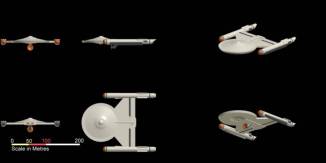
The Delta Class was an off shoot from the Perimeter Action Ship program, initially designed n response to the requirement that led to the building of the Kiaga class PA, the design was put into limited production as a light frigate. The Delta was a relatively small vessel, with a very flat side profile which was intended to increase the stealthiness of the design. Only 12 Deltas were built, but they were intended for gathering intelligence in locations were the use of a specialist intelligence gathering ship was not possible for political or tactical reasons.

  • Class:TBC
  • Year:2249
  • Ship Source:Steve Bacon,
  • Ship Datasheet:Coming Soon

pa4-70

2249 – Canopus

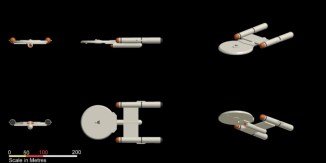
The Canopus Class Research Cruisers were designed to carry out the first detailed survey work on the Sagittarian arm of the Galaxy. 24 Ships of the class were proposed, the design was lightly armed, but to compensate was equipped with state of the art FSI trinary shielding.

15 Ships were produced in this initial configuration, but only 12 actually entered full service with Galaxy Exploration Command, the final three ships were refitted while working up to the new Mk3 configuration. The Mk 1 served until 2258 when the last vessel was refitted and upgraded. Two ships of this mark are known to have been destroyed, while a third USS Capricornus vanished without trace in December 2255.

The intention had been to introduce the Mk2 in 2253, with upgraded FWE-2 Warp drives, but no additional weapons. However, events were to cause Starfleet to require a very different type of cruiser. The outbreak of the four years war led to the modification of the design to produce the Mk3, which mounted more powerful lasers in more mounts, as well as accelerator cannon. The high speed, and excellent shielding of the Canopus design making it an ideal long range reconnaissance cruiser. The prototype Mk2 was renamed USS Centurion, and entered service in 2253 as the first Mk3, and was followed by a further 5 new build ships. Three recently completed Mk1s were pulled back from working up and upgraded to the new standard. Three additional Mk1s were upgraded as they returned from their missions.

Mark 3 Canopus class vessels frequently operated on their own, deep inside enemy territory, the small profile of the design linked to classified ECM systems making them virtually impossible for the inferior Klingon sensors to detect. As a result of this high risk mission, 5 Mk3 ships of the 12 built or converted were lost during the war.

The 22nd and last production vessel USS Cavalier was completed as a Mk4 with Phasers and a single photon torpedo launcher. The ship commissioned just in time to catch the end of the war. All of the 13 surviving Mk1 and Mk3 ships were refitted to the Mk4 standard between 2257 and 2263, but 8 proposed new build Mk4s were cancelled as production of additional Constitution class ships was deemed preferable. Post war the class returned to its scientific mission profile, but the enhanced weapons were retained.

The class continued in service until 2286, although numbers were steadily reduced from 2275 onwards by a intense program of scrapping and sales. The reasons for this was a combination of the craft being too small to operate effectively in a long range exploration role or to be equipped with modern sensors, conversely they were too large and crew intensive to operate in a short range exploration role in a military configuration. Despite this, civilian research groups now own a number of Mk4s, as the removal of the weapons upon sale permitted a major reduction in crew complement and released the space for the fitment of modern sensors.

In 2290 it was realized that not a single ship had been retained for the Starfleet museum, as a result the former USS Canopus was repurchased at scrap prices in a very poor condition, and is now being restored to its former glory.

Class: VIII Year: 2249
Ship Source: Space Flight Chronology Ship Datasheet: Download PDF

canopus_side_large

Commissioned Ships

B1 – Built as Mk1, B3 – Built as Mk3, B4 – Built as Mk4, R3 – Refit to Mk3, R4 – Refit to Mk4, D – Destroyed, Sc – Scrapped, M – Missing

1570 Canopus

B1-2249, R4 2256, SOLD 2277

1580 Coriolanus

B1-2253, R4 2261, SC 2277

1590 Cambria

B3-2256, D2257

1571 Castor

B1-2249, R3 2253, R4 2257, SC 2275

1581 Corsair

B1-2253, R4 2257, SC 2280

1591 Cavalier

B4-2256, SOLD 2286

1572 Capella

B1-2250, R3 2253, D2255

1582 Ceres

B1-2253, R3 2253, R4 2257, SC 2278

1592 Camilla

CANCELLED 2256

1573 Capricornus

B1-2250, M 2255

1583 Centaurus

B1-2254, R3 2253, R4 2257, SC 2279

1593 Corinna

CANCELLED 2256

1574 Caledonia

B1-2251, R3 2253, D 2256

1584 Cambria

B1-2254, R3 2253, D 2256

1594 Calpurnia

CANCELLED 2256

1575 Cassiopeia

B1-2251, R4 2261 SC 2275

1585 Centurion

B3-2254, R4 2261, SOLD 2283

1595 Cameronian

CANCELLED 2256

1576 Calypso

B1-2251, D 2255

1586 Caledonia

B3-2255, R4 2263, SC 2285

1596 Cathay

CANCELLED 2256

1577 Catalina

B1-2252, R4 2258 SC 2275

1587 Cleopatra

B3-2255, D 2255

1597 Cabot

CANCELLED 2256

1578 Caribou

B1-2252, R4 2257 SC 2276

1588 Circe

B3-2255, R4 2262, SC 2280

1598 Courtier

CANCELLED 2256

1579 Clipper

B1-2252, D 2254

1589 Challenger

B3-2256, R4 2258, SOLD 2285

1599 Columbia

CANCELLED 2256


2249 – Tyrannis

Recognising the issues with the stress around the secondary hull connector of the Vagabond class, Starfleet took a radical approach in resolving the problem.

The USS Tyrannis, the planned 15th ship of the Vagabond class was modified while under construction to have two ventrally mounted warp nacelles and no secondary hull. The primary hull was largely unchanged from the Vagabond except for the nacelle mounts.

The Tyrannis class resolved the problems in the Vagabond class, and proved to be an effective exploration cruiser, supplementing the new Anton class.

Like the Anton class these ships proved to be too lightly armed, and with the advent of the four years war construction was curtailed at 14 vessels in 2254.

After the war, four Vagabond class ships were converted to this configuration, making good the four vessels lost during the war.

The Tyrannis class received a refit in 2261-63 gaining phasers and photon torpedoes, which gave the ships the ability to mount a more robust defence. The ships survived in until 2290, and many were sold onto the private sector.

Class: X Year: 2249
Ship Source: P.T.Riley Ship Datasheet: Coming Soon

tyrannis_large

2249 – Kiaga

The Kiaga (PA-820) Class was the first specialist Perimeter action class to commission in Starfleet. Building on the lessons learnt from the interim Gorgon class, the Kiaga was a smaller vessel, with a very flat side profile which was intended to increase the stealthiness of the design.

Unlike the larger Gorgon, the Kiaga was designed to optimise forward firepower, mounting four smaller accelerator cannons, all firing forward in specially designed twin launchers each side of the primary hull. The FL5 lasers were arranged with banks covering f/p, f/s and aft arcs of fire, it was realised that this left the aft vulnerable, so an additional FL4 was crammed in firing aft.

Weight was always an issue on the Kiaga, and the theoretical weapons load could have been almost double, but the engines would not permit the carriage of such a mass of weaponry. 35 Kiagas were produced, and all saw active combat, a number being lost in the Four Years war. The class was not modified until Photon Torpedoes and Phasers became available, and the Kiaga was the last PA class to begin refitting (well after the war had ended).

In Mk1 form the Kiaga had always been outperformed by its smaller sibling, the Agilis, but the Mk2 Kiaga could finally carry the maximum weapons fit that the M1 allowed, and as a result of this, and the upgraded FWB2 warp drive, the class finally outperformed the Agilis, even the new Mk2. For this reason additional construction was ordered to make up the vessels lost during the war. The Kiaga continued in service, but was always in the shadow of the later Agilis Class, despite this they were preferred by PA crews in peacetime as they were far roomier, but in wartime the Agilis was still the class of choice due to its far tougher construction.

Class: VI Year: 2249
Ship Source: Aridas Sofias/ Ships of the Starfleet Vol 1 Ship Datasheet: Download PDF
Please note that this PDF requires updating in terms of images, the stats are correct


2249 – Heston

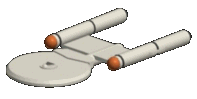
The Heston class, although now largely forgotten, was the leading Cruiser type in the four years war. Although not as powerful as the Constitution in terms of engines, it made up for that with its greater firepower and overlapping arcs of fire.

Advances in Klingon Ship design and weaponry capability led to concerns amongst some elements of Starfleet in the early 2240s. It was planned that the Constitution class would form the vanguard of Starfleet’s strength after they began commissioning in 2245, but the dual role nature of the design led to the military capabilities being reduced to allow for science and exploration capability. Additionally the advanced sensors and science instrumentation fitted meant that the class was prohibitively expensive to procure in quantity.

To counter this problem Military Operations Command pushed for a cheaper military roled heavy cruiser, which would dispense with th e extensive science equipment of the Constitution class, this ship became the Heston class. The first Heston class ship commissioned in 2249; it was in many ways a more heavily armed variant of the Constitution class design. Superficially, the ships looked similar, but externally, and internally there were a number of changes.

The Heston mounted the FWD-1 warp drive, as opposed to the FWC-1 of the Constitution. The only way to fit the required weapon load in the class was use the lighter warp drive which additionally was 20% cheaper than the FWC-1. of the ship. The cost of this change was that the Heston class was always short of power, but to remedy this the class was fitted with the revolutionary FSI shield generator, the first trinary shield generator. Because of leaving out the science facilities of the Constitution class, the ships had the capability to carry 200 marines as well as fighter craft and assault shuttles. It had been planned to make the ship larger, but suitable impulse drives were not available to power ships of more than class XI until 2256.

The Mark 2 Heston of 2253 was perhaps the ultimate laser equipped warship to serve in Starfleet. She adopted the new FWE-2 warp drive, which allowed additional structural reinforcing due to its lower weight, as well as being both more efficient and more powerful. All 7 surviving Mk 1s were upgraded to this standard. The Mark 2 was designed purely to counter the D10 class Cruiser.

Postwar the ships were deemed obsolete due to their reliance on lasers, and the lower power of the warp drives. Additionally the single role nature of the vessels meant that they could not be redeployed on exploration duties, which made them less attractive for refits than the Constitution class ships.

In another blow to the future of the Heston class, the Federation Class usurped the military role of the class, the Federation class was essentially a Heston class hull with the addition of a third nacelle. A limited refit was carried out in 2257, when three ships gained FWD-2 warp drives, but this was only a temporary reprieve, as the lasers and accelerator cannons were not replaced. USS Heston became flagship of the Federation reserve fleet in 2258, just 9 years after commissioning. Subsequently it was decided that the Heston class spaceframes could be most effectively used if refitted to Federation Class Dreadnought specifications.

To this end, all 13 surviving vessels were mothballed or in reserve by 2260. From 2266 onwards 12 of the 13 survivors were stripped back to their spaceframes with the intention of being be rebuilt to Federation class specifications, however when the Federation class production was halted early these hull were scrapped or expended as targets.

The USS Heston (NCC-1685) was the only ship not scrapped, and was later allocated for display purposes. She is still in the Starfleet Museum today.

  • Class: XI
  • Year: 2249
  • Ship Source: Based on Federation Class From Starfleet Technical Manual, Name Reference FASA
  • Ship Datasheet: Download PDF

heston_large