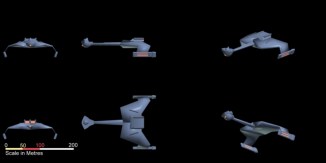
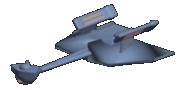
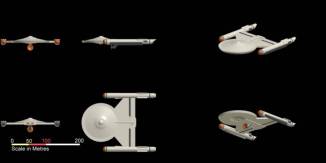
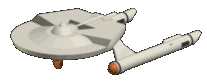
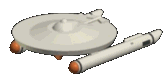
2241 – D7A ‘Painbringer’ Class

The Immortal D7 cruiser, which became an enduring symbol of Klingon military power in the second half of the 23rd century, was rushed into service in the early 2250s to fulfil roles of offense, defense, and diplomacy. The design was a scaled up version of the D-1 cruiser of almost 100 years earlier. The D-7A was the first of the lighter more agile family of D-7 variants that ultimately led to the D-7M k’t’inga.

  • Class:VIII
  • Year:2241
  • Ship Source:Paramount Pictures/ FASA
  • Ship Datasheet:Coming Soon

d7a-100


2240 – XD7

The Original intention was for the D-7 to have dorsal mounted Warp engines. Limited production of this variant took place, but trials showed the layout was inferior to the traditional low nacelle layout.

Class: TBC Year: 2240
Ship Source: The Art of Star Trek/ Matt Jeffries Ship Datasheet: Coming Soon

xd7-100

2243 – Cassard

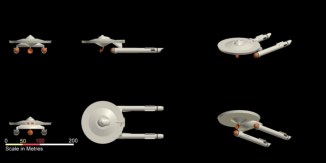
The Cassard class Missile Destroyer was designed in 2242 to provide the fleet with accelerator cannon support.

The USS Cassard commissioned in mid 2243, and made use of the recently introduced M-1 control computer.

The Cassard served well in the skirmishes and conflicts with the Klingon Empire over the from 2243 until 2288. The first time they were really tried in combat was in 2248. In this encounter near Federation Outpost 1 a Klingon task force of three D-7A’s and six D-16’s  attacked six ships from the 6th fleet. Four Cassard class ships led a counter attack by eight other ships of the 6th fleet, making full use of their accelerator cannons. The Klingon flagship was destroyers by the opening volleys, and the Cassards then continued to attack the other ships in turn. The battle ended 30 minutes later with the loss of three Federation vessels, while the Klingons all but three of the D-16’s. The Cassards  continued to perform well in fleet actions when used in concert with other starships providing beam weapon suppor, but when used without such support they were found to be extremely vulnerable. As a result the Cassard class was redeployed  from independent patrol duties and mainly assigned to fleet support duties..

In 2258 the MK II version was introduced, this version mounted the new Photon Torpedoes, but the beam weapons remained weak. It was not until 2268 when the MK III version entered service that the beam weapons were finally upgraded. Until the class left service it retained the ‘classic’ design and PB series circumferential warp nacelles.

Starfleet decommissioned the last units of the Cassard class in 2288, when the remaining ships where mothballed.  26  of these ships were sold to the Affiliation of Outer Free Worlds in 2304. The USS Cassard was placed into the Starfleet museum in 2305.

Class: VI Year: 2243
Ship Source: Bill Colley Ship Datasheet: Available at tacticalstarshipcombat.com

cassard_side

2249 – Delta

The Delta Class was an off shoot from the Perimeter Action Ship program, initially designed n response to the requirement that led to the building of the Kiaga class PA, the design was put into limited production as a light frigate. The Delta was a relatively small vessel, with a very flat side profile which was intended to increase the stealthiness of the design. Only 12 Deltas were built, but they were intended for gathering intelligence in locations were the use of a specialist intelligence gathering ship was not possible for political or tactical reasons.

  • Class:TBC
  • Year:2249
  • Ship Source:Steve Bacon,
  • Ship Datasheet:Coming Soon

pa4-70

2247 – Surya

The Surya class was designed as a Frigate counterpart for the the Constitution class. The ships had useful hanger capacity in the rear of the primary hull, and, along with the Miranda class, set the basics for classes to follow from the Coventry through to the Avenger/Reliant.

Class: IX Year: 2247
Ship Source: Ships of the Starfleet Volume 1 Ship Datasheet: Download PDF

surya_large

2246 T2 Vastagor Lattam (Death Talon)

Introduced about Stardate 1/8905 and assigned as groups to various fleets in the Romulan navy, the T-2s were designed for escort and patrol duties.  Though they had no room to spare for leisure, and though the quarters and work areas were quite cramped, the class is considered to be roomy and comfortable by early standards.

After Stardate 1/9902, vessels appeared in which the hull had been modified to hold a plasma weapon.  After Stardate 2/0001, the first Type 3s appeared, with increased length, weight, and crew complement.  The firepower of the new type was more than double its original configuration, and the newer shields gave a combat efficiency three times greater than the Type 1.  After several years of service, the destroyers began undergoing minor changes to the hull configuration and interior layout, and, beginning with the Type 6, the weapons mountings were increased from four to six.

The Type 7, with this new weapons arrangement, a more powerful impulse engine, and more efficient shields, made its appearance about Stardate 2/0803.  A cloaking device also was installed on the Type 7.  Reports from the Klingons indicate these were useful in escort duties.  Many times, Klingon long-range sensor scans of Romulan convoys would show few escort vessels, but actual contact would reveal five to ten T-2s materializing from nowhere, making the supposed easy Klingon victory and prize a mere dream.
Of the approximately 250 T-2s built, about 150 are in reserve fleets and another 20 are being used as training vessels.  Only five of these ships have been sold to the civil sector, all of which operate in the the Triangle or along Federation borders; it is not known if any of these are armed.
The class is named from the Romulan vastagor lattam (death talon), a reference to the Mogari, a large carnivorous bird native to Romulus.  These man-sized birds are reported to swoop down on their prey at speeds up to 120 mph and inflict fatal blows with their long talons.

2248 – V2 Hathos (Hunter)

The V-2 Class, first encountered by Project Grey Ghost, is believed to have been built for research missions, much like the Federation research cruisers are.  Reportedly, spacious laboratory facilities and shuttlebays for cargo storage make this ship an oddity in the Romulan navy.  Several recent combat encounters with the Klingons and forces to the coreward have proved the vessel to be undergunned and unsuitable for combat.

Several attempts were made to up-gun the ship, with the last being the introduction of the Type 5, approximately Stardate 2/00.  This version is reported to carry a small plasma weapon and improved impulse drive system.  Even so, the V-2 did not prove popular, and has been replaced by the V-5 and V-6 cruisers.

Of the approximately 70 Hunters built, about half are reported to be in reserve fleets and about 20 are reportedly working as research vessels for private firms.  This vessel has not yet been scanned at close range, and plans given are highly speculative.  The ship is named from the RomuIan hathos (hunter), likely in reference to its mission in the Exploration Division.

2245 – V1 Vadaso Stelri (Star Glider)

Soon after its introduction into exploratory service, the V-1 vessels were found to be unsuitable for their mission.  The cramped quarters and work areas would not permit extensive onboard research and testing, which meant that the ships were compelled to land on most worlds to carry out their studies.  Not only were such atmospheric operations difficu It, but the exposure of the entire ship to unknown environments put them in constant danger.  These risks were unacceptable to the Romulan High Command, so the class was reassigned as cruisers to supplement the fleets.  It evidently saw no greater success in this role, for it was removed from active service about Stardate 2/0806.  The Type 2 mounted better, bank-mounted weaponry and a more powerful impulse drive.

Of the approximately 100 built, half are assigned to reserve fleets.  Eighteen have been sold to the civil sector, where they are used as private research vessels; two operate exclusively within the Triangle.

The class is named for Vadaso Stelri (glider in the stars), an asteroid in the Romulan home system.  Ancient legend is reported to state that this glider was a returning message from the gods, directing the Romulans to follow it on its road through the stars.

2247 – V4A Vastam cl’Vangas (Wing of Vengeance)

The V-4 class has, by far, the most unusual design to come from Romulan engineers; fashioned like a giant wing, it was created not only for aesthetics but for combat.  When the vessels were first introduced, they were intended to lead an expansion effort, but the war between the Klingons and Federation caused them to be sent to patrol the Klingon border.  The Type 2 mounted a more powerful impulse drive system and improved disruptors, which accounted for its greater combat efficiency.

The V-4s were painted by crewmembers in a variety of patterns.  These ships, though popular with their crews, were removed from service sometime after Stardate 2/16 for more powerful designs.  Of the approximately 135 built, about 65 are in reserve fleets.  Six are reported to be used as training vessels, and two are used as spaceborn museums, one each stationed at Remus and at Corill.  Eighteen are known to be operating in the civil sector.

On Stardate 1/9611, nine of these vessels are known to have been sent into the Triangle to liberate a small system from the Klingons.  The Romulans pressed the attack against the three D-7s protecting the system, immediately destroying two and driving the other away.  Flushed with victory, the Romulan commander sent five of his group after the fleeing enemy, but they encountered nine D-7s and three D-10s arriving to reinforce the area.  The Romulans flew into a classic trap laid by the Klingon battlegroup, and three were destroyed before getting off one shot.  The remaining Romulans miraculously crippled four of the Klingon vessels before one was crippled itself and the remaining vessel fled.  The Klingons abandoned the effort and withdrew from the area.

This battle caused a stir in the Klingon High Command, as the ship had never before been encountered.  Because the stories told of its abilities were inflated to make the Klingon fleet commander look good, the V-4s enjoyed an undeserved notoriety amongst the Klingons for many years.

The class is named from the Romulan vastam cl’vangas (wing of vengeance), in reference to the vessel’s combat capabilities.

Class: Year:
Ship Source: FASA Ship Datasheet: Coming Soon

v4-short-100