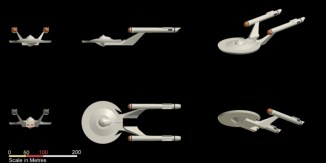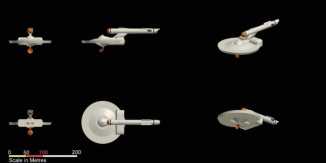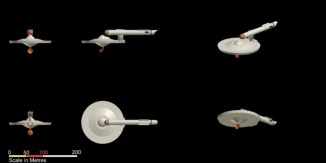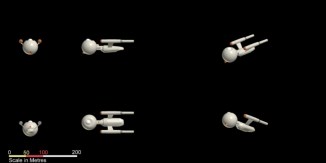
2243 – Loknar

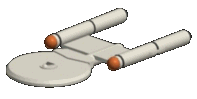
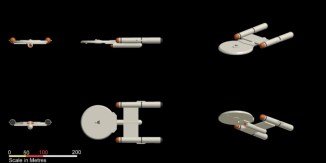
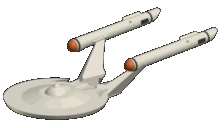
The Loknar Class frigates were built during “The Great Awakening”, a period of expansion by the Federation. During this time, many research and exploration vessels were designed and built to aid in the efforts to solidify an enlarged and growing United Federation of Planets. Also during this period, a smaller number of warships were built. The Loknar, the most noted of these warships, is still in service to this day, a tribute to the quality of the Andorian design.

Soon after the Federation Appropriations Committee granted Starfleet the funds necessary to construct fleets to expand and patrol the limits of the UFP, Andorian factions began pushing for warship construction. The basic Andorian philosophy was that, in expanding, the Federation might come upon races as hostile as the Romulans and Klingons, leading to another protracted war for which the Federation and Starfleet were unprepared. The Andorians argued that, were this to happen or were the Klingons or Romulans to escalate hostilities, Starfleet needed to be better prepared and would need ships to protect the new borders and colonies. The Andorian arguments were successful, and Starfleet began a limited build- up of warships. Several ship building facilities were constructed by Andorian firms to design and manufacture these warships, the most notable of these on Sol IV and Salazaar, the largest and most productive in the Federation.

Introduced in October of 2247 (1/90), the Loknar class frigate mounted the new, but already proven, FWE-1 warp drive, in Starfleet’s inventory for only two years. The FIC-2 impulse engine was introduced on the Loknar and has since proven itself to be one of the most reliable of all production. The Loknar Mk I was considered a ‘muscle’ ship because of its four heavy lasers and single accelerator cannon, making it equal to all but the largest Klingon vessels and more powerful than any ship in the Romulan navy. In addition, the Loknar mounted FSH shield generators, more efficient than any used by the enemies of the Federation.

During the Four Years War, the Loknar saw more action than any other vessel in Starfleet. As the war dragged on however, Starfleet realized the need for vessels with more firepower. When they could be spared, Loknars began being refitted at forward supply and repair stations. The Mk Ib Loknar mounted two additional laser cannons and an aft accelerator cannon. The lasers were banked to provide more flexibility in combat. Late in the war, the Mk Ic was introduced. This version of the Loknar mounted a curious blend of old and new technologies; it retained the lasers of its predecessors, but replaced the accelerator cannons with FP-1 photon torpedoes.

Although it was considered to be successful, the Andorian designers felt a need to improve the Loknar. The FWE-2 warp drive systems, still being tested, would produce 60% more power than the FWE-1 and would increase the ship’s overall performance. The Mk II was commissioned into service in January of 2256 (1/98) mounting the FWE-2, even though this engine was not officially adopted by Starfleet until February of 2259 (2/00).

The most significant advance in starship technology came with the phaser and photon torpedo. The phaser delivered more firepower at longer ranges, weighed less, and required less structural reinforcing than the laser. The newly developed photon torpedo delivered the same explosive power at 75% less power requirement, was considerably lighter and required less structural reinforcement than the accelerator cannon. Eight FH-5 phasers and new photon torpedo technology were incorporated into the Mk II, making it more powerful than anything in the Klingon fleet with the exception of the D-10. The Mk II also mounted an upgraded binary shield generator, the FSK, giving 33% more protection at the same output level as the earlier system. The Mk IIa Loknars were refits from surviving Mk Ic’s- no new builds occurred of this version. The Mk IIb mounted 3 FP-3 photon torpedoes forward and 1 aft (the FP-3 was experimental when first mounted to the Loknar). This arrangement favored redundancy: during the Four Years War, several Loknars were placed at a severe disadvantage when their single forward missile weapon was damaged during combat. The Mk IIa’s were refitted to Mk IIb standard by 2260 (2/03). Both versions saw limited action in the Four Years War.

The next major change in the Loknar’s design came with the introduction of the FWD-2 warp drive to the Mk IV. Along with the FIC-3 impulse drive, this increased the power output and overall performance by 40%. Furthermore, this model replaced the 4 FP-3 photon launchers with the FP-1. The Mk V is the latest model of the Loknar class and is armed with FP-6 torpedoes.

Loknar class frigates have served Starfleet faithfully for over 40 years and will remain in the inventory for many years to come. A major push was begun by the Andorians to create the next generation of Loknar- the Mk VI. However, with four newer frigate designs already being produced, Starfleet Appropriations did not accept the proposal. The final Loknar was constructed in May of 2288 (2/24). Loknars were produced at the Salazaar and Sol IV facilities at a rate of 2 ships per year, including refits. At the behest of the Andorian government, all Loknars are to be refitted to Mk V standard and retained in active service.

Historical Notes:

The Loknar class frigates are named after cities and provinces of the Federation. More than half of these vessels are crewed by Andorians and the majority of these are assigned to the ‘Blue Fleet’, ships whose officer contingent and crew are entirely Andorian. The USS Loknar was the first ship commissioned into the Blue Fleet, serving as the flagship for many years.

The infamous IKSV Staav’e Mara (Slave Of Justice), was originally the USS Morgan City, a Loknar Class frigate captured by Admiral Kamato’s forces during the Four Years War and later used in Kamato’s abortive coup attempt on the Klingon throne. After failing, Kamato retreated into the Triangle, taking the Loknar class frigate with him. From their location in the Triangle, the Klingon rebels began attacking unprotected convoys and merchant vessels by using the Staav’e Mara to lure them in. This ruse lasted for several years, then a general recall of all Loknar class vessels made it difficult for the Klingon vessel to operate as though it were from Starfleet. The IKS Admiralty then decided to have the vessel painted in the standard steel-gray color of their Navy. The Staav’e Mara still operates with the IKS Navy and has been seen as recently as January 2287 (2/23).


Class: VIII Year: 2243
Ship Source: FASA Ship Datasheet: Download PDF

loknar_side

2243 – Siva (William Howe)

The Siva class destroyer mounted the best in Federation technology for its size at the time it was built. First commissioned in 2243, it mounted the M-1 computer, FWB-1 warp engine, FIC-1 impulse engine and FSA shield generator. A controversial military design due to its accelerator cannon arrangement, the Siva was unique in that it possessed only one laser cannon mounted aft purely for defensive purposes.

The Siva was assigned to Military Operations as a light missile destroyer to be used offensively with fleet support. The ships were designed to work together in groups of three. In these squadrons, they were to attack an enemy vessel while it was engaged in combat with a larger friendly vessel.

Until the Four Years War, the Siva class did not see any combat action. However, at the outbreak of the war, Sivas were some of the first vessels deployed in combat. Starfleet was conscious of the limited combat mission the Siva could perform and did not dispatch Sivas alone. Starfleet deployed them as designed when suitable capital vessels could be mustered (which proved quite a chore in the early days of the war).

As the war stabilized and the urgency of ship allocation lessened, the Siva class came into its own. Working mainly with Coventry class frigates and Heston class cruisers, a squadron of Sivas would be assigned to a single larger vessel. After a space battle had occurred in which a Klingon task force had been splintered or largely destroyed, a single Heston or Coventry would engage any lone, surviving Klingon capital ships. Staying well away from the larger Starfleet vessel so as not to be detected, the Sivas would lie in wait until the capital vessels engaged in combat. The Sivas would fly in a perpendicular path to the enemy vessel, avoiding any hostile forward weapons. The Sivas would fire their forward accelerator cannons at optimum range and then fly-by their target. Then, they would release their aft cannons and keep on going until out of range of the enemy vessel. Here they would turn around and line up for another attack. It took great skill and power management to perform the maneuver safely and effectively.

Usually captained by young Lieutenant Commanders, these ships and their crews were especially noted for their “e’sprit de corp”. This was especially the case with the Siva crews, since the entire complement of ten vessels were always assigned to the same fleet. Since their combat duties were limited by their design, they often served as scouts, pairing up with one another for safety.

It was no secret that the Siva was severely under-powered. Due to the limitations of its design and the technology of the era, no additional models of the ship were constructed and no other builds took place. The power limitations also left Sivas vulnerable, especially to Klingon gunboats and escorts that protected capital ships. Of the ten Siva class destroyers built, four were destroyed in the Four Years War. Two were damaged beyond repair and scrapped. The surviving four were assigned to Starfleet Training Command after the war where they served until being scrapped in 2269. One vessel, the USS William Howe, NCC 3216, participated in the evacuation of the Alerian homeworld in 2268 (2/11).

The USS Siva was amongst amongst those severely damaged, and the hulk was used as the prototype for the more conventional Siva subclass of the Saladin class in 2248. Upon the recommissioning of the Siva in this new configuration the former class was renamed the William Howe class.

  • Class: V
  • Year: 2243
  • Ship Source: FASA
  • Ship Datasheet: Download PDF

apache_large

2246 – Monoceros I

The Monoceros class scout was designed to provide Starfleet with a light scout which was cheap and easy to build. First commissioned in 2246 (1/89), further ship production was delayed after a design flaw in the warp field balance coil was discovered. At high warp speeds, the ship tended to “rise” out of its own warp field, causing the ship to violently exit warp. The problem was corrected by reconfiguring the control computer software.

The Monoceros II was also designed to act as a demonstrator for the improved generation of linear warp drives then in development. The SCNN nacelle and reactor arrangement adopted for the single FWB-1 warp engine was lighter than the equivalent PB series installation. Fitment of a full-blown linear drive assembly with hull mounted warp core was dismissed in this design on safety grounds. It would be a further 10 years before work began on a class mounting such a system.

The experience gained in operating the SCNN equipped Monoceros II class paved the way directly for later SCNN engined vessels (such as the Endeavour class) and also demonstrated the benefits that ships equipped with linear drives had compared to those with circumferential warp drives. Of the 16 ships commissioned, not a single vessel was lost to warp drive related problems, but some nine vessels were lost to enemy action. The decommissioning of the class in 2257 (1/99) was the result of the need to continue the testing of the new engines on the few surviving ships of the class. Accordingly all seven survivors continued to be operated as test-beds by both the engine manufacturers and the Starfleet Corps of Engineers, the last not being retired until 2272 (2/17).

The Monoceros did see action in the Four Years War, albeit limited. In 2253 (1/95), the USS Vulpecula was responsible for inflicting minor damage on several unescorted Klingon G-4 transports. The captain and crew of the Vulpecula received Starfleet’s highest commendations for this action. Most ships of this class, however, served as sentry ships for assembled fleets.

An interesting footnote to the ship’s history is the origin of the class name. It has been told that Commodore Charles Tatum, who was overseeing the design of the proposed scout, was studying the ship schematics at home when his seven year old daughter became curious as to her father’s work. The commodore light-heartedly asked his daughter what the ship should be called, and she promptly answered, “Unicorn!” Impressed, the commodore (after changing the name to its Latin derivative) submitted the name and it was eventually approved.

Class: IV Year: 2246
Ship Source: Starfleet Technical Manual/Lee Wood Ship Datasheet: Download PDF

new_monoceros-pb-100

2242 – Nightingale

Based on the ubiquitous Ptolemy Class Transport Hull, the Nightingale entered service in 2242 replacing the obsolete Mercy class. Compared to a standard Ptolemy, the class has improved shielding and internal modifications to make the class more suitable for the medical role. Due to these modifications Nightingale class ships are rarely used in standard transport duties, and are virtually permanently attached to their medical pod. The two Mk 1 Nightingales are based on the Ptolemy hull and systems, the single Mk 2 is based on a Keppler hull.

With the outbreak of the four years war, five Ptolemy’s taken up from mercantile service were also modified to Nightingale standards, as Mk 3s. The other three ships were also modified to this common standard.


Class: VII Year: 2242
Ship Source: Based on Ptolemy class from Star Fleet Technical Manual Ship Datasheet: Coming Soon

nightingale-70

2249 – Canopus

The Canopus Class Research Cruisers were designed to carry out the first detailed survey work on the Sagittarian arm of the Galaxy. 24 Ships of the class were proposed, the design was lightly armed, but to compensate was equipped with state of the art FSI trinary shielding.

15 Ships were produced in this initial configuration, but only 12 actually entered full service with Galaxy Exploration Command, the final three ships were refitted while working up to the new Mk3 configuration. The Mk 1 served until 2258 when the last vessel was refitted and upgraded. Two ships of this mark are known to have been destroyed, while a third USS Capricornus vanished without trace in December 2255.

The intention had been to introduce the Mk2 in 2253, with upgraded FWE-2 Warp drives, but no additional weapons. However, events were to cause Starfleet to require a very different type of cruiser. The outbreak of the four years war led to the modification of the design to produce the Mk3, which mounted more powerful lasers in more mounts, as well as accelerator cannon. The high speed, and excellent shielding of the Canopus design making it an ideal long range reconnaissance cruiser. The prototype Mk2 was renamed USS Centurion, and entered service in 2253 as the first Mk3, and was followed by a further 5 new build ships. Three recently completed Mk1s were pulled back from working up and upgraded to the new standard. Three additional Mk1s were upgraded as they returned from their missions.

Mark 3 Canopus class vessels frequently operated on their own, deep inside enemy territory, the small profile of the design linked to classified ECM systems making them virtually impossible for the inferior Klingon sensors to detect. As a result of this high risk mission, 5 Mk3 ships of the 12 built or converted were lost during the war.

The 22nd and last production vessel USS Cavalier was completed as a Mk4 with Phasers and a single photon torpedo launcher. The ship commissioned just in time to catch the end of the war. All of the 13 surviving Mk1 and Mk3 ships were refitted to the Mk4 standard between 2257 and 2263, but 8 proposed new build Mk4s were cancelled as production of additional Constitution class ships was deemed preferable. Post war the class returned to its scientific mission profile, but the enhanced weapons were retained.

The class continued in service until 2286, although numbers were steadily reduced from 2275 onwards by a intense program of scrapping and sales. The reasons for this was a combination of the craft being too small to operate effectively in a long range exploration role or to be equipped with modern sensors, conversely they were too large and crew intensive to operate in a short range exploration role in a military configuration. Despite this, civilian research groups now own a number of Mk4s, as the removal of the weapons upon sale permitted a major reduction in crew complement and released the space for the fitment of modern sensors.

In 2290 it was realized that not a single ship had been retained for the Starfleet museum, as a result the former USS Canopus was repurchased at scrap prices in a very poor condition, and is now being restored to its former glory.

Class: VIII Year: 2249
Ship Source: Space Flight Chronology Ship Datasheet: Download PDF

canopus_side_large

Commissioned Ships

B1 – Built as Mk1, B3 – Built as Mk3, B4 – Built as Mk4, R3 – Refit to Mk3, R4 – Refit to Mk4, D – Destroyed, Sc – Scrapped, M – Missing

1570 Canopus

B1-2249, R4 2256, SOLD 2277

1580 Coriolanus

B1-2253, R4 2261, SC 2277

1590 Cambria

B3-2256, D2257

1571 Castor

B1-2249, R3 2253, R4 2257, SC 2275

1581 Corsair

B1-2253, R4 2257, SC 2280

1591 Cavalier

B4-2256, SOLD 2286

1572 Capella

B1-2250, R3 2253, D2255

1582 Ceres

B1-2253, R3 2253, R4 2257, SC 2278

1592 Camilla

CANCELLED 2256

1573 Capricornus

B1-2250, M 2255

1583 Centaurus

B1-2254, R3 2253, R4 2257, SC 2279

1593 Corinna

CANCELLED 2256

1574 Caledonia

B1-2251, R3 2253, D 2256

1584 Cambria

B1-2254, R3 2253, D 2256

1594 Calpurnia

CANCELLED 2256

1575 Cassiopeia

B1-2251, R4 2261 SC 2275

1585 Centurion

B3-2254, R4 2261, SOLD 2283

1595 Cameronian

CANCELLED 2256

1576 Calypso

B1-2251, D 2255

1586 Caledonia

B3-2255, R4 2263, SC 2285

1596 Cathay

CANCELLED 2256

1577 Catalina

B1-2252, R4 2258 SC 2275

1587 Cleopatra

B3-2255, D 2255

1597 Cabot

CANCELLED 2256

1578 Caribou

B1-2252, R4 2257 SC 2276

1588 Circe

B3-2255, R4 2262, SC 2280

1598 Courtier

CANCELLED 2256

1579 Clipper

B1-2252, D 2254

1589 Challenger

B3-2256, R4 2258, SOLD 2285

1599 Columbia

CANCELLED 2256


2243 – Miranda

What eventually became one of the most common and longest lived Starship designs started with this vessel.

USS Miranda (NCC-1833) was launched on 10/1/2243, and was the precursor to a range of classes (Anton, Surya, Coventry).

The Miranda class eventually numbered 15 vessels, which served well in the conventional cruiser role, unlike the majority of ships of this configuration which filled the Frigate role.

The Miranda was refitted to become a Cruiser variant of what was then known as the Avenger (Frigate) or Reliant (Research cruiser) in 2283. However a change in Starfleet policy following the Khitomer accords and the reductions in the military role focussed frigate fleet saw the Avenger class frigates redesignated as being a Cruiser as part of the Miranda class. Over the following decades as refit programs progressed the Avengers (and indeed the Reliants) all became full members of the Miranda class as each refit program covered ships from the various predecessor classes.

  • Class:X
  • Year:2243
  • Ship Source: Class Name CBS/Paramount, USS Bombay from ST:Vanguard, Miranda Registry Alex Rosenzweig
  • Ship Datasheet:Coming Soon

anton_large

Commissioned Ships of this class included:

Bombay, Achilles, Equinox, Miranda, Rutherford, Lantree

2244 – Anton

The Anton Class shared its basic design concept with the Coventry class frigate, but in terms of equipment there were major differences as the Anton was equipped as a Research Cruiser with roughly half the weapons capability of the Coventry class. The Anton class having an enhanced science fit instead as befitted its role as a research cruiser.

First commissioned in 2244 during the period known as “The Great Awakening”, the Anton Class cruiser was in the forefront of that expansion effort. At the time, Star Fleet itself was expanding in response to the changing and expanding economic and political goals of the UFP. To meet the demand of a larger navy, the Military Appropriations Committee authorized the development and testing of hundreds of vessel types, the Anton among them.

During this same period, the concepts of ship design were rapidly evolving and becoming more sophisticated, and the technology to build and operate starships was going through an industrial revolution. Advances in all facets of the technology required to construct, maintain, and operate a starship was changing so rapidly that some ships were obsolete before they were completed. The Anton design was changed no fewer than 12 times before the tooling and machining was begun. Even so, the ship required some alterations during its trials and was to see many more changes after its commissioning, the last of which was the refitting to the Reliant Class.

When these new cruisers were launched, they were only capable of performing 3-year missions with re-supply at 1-year intervals. This made their dual-purpose role of research cruiser harder to perform. With the great distances that had to be traveled, they could not get more than 6-months travel time from a friendly outpost. This meant they could only advance as fast as the frontier was expanding.

Class: X Year: 2244
Ship Source: Based on FASA Anton Ship Datasheet: Download PDF

fasa_anton_100

2230 – Antares

The Antares class survey cruiser was designed for longer range duties than her recent predecessors, the relatively large secondary hull giving greater storage capacity for consumables and fuel, as well as an ample supply of survey drones. The class gained a reputation for toughness and reliability as the simple no frills design served well for almost 60 years despite the loss of the class ship.

The USS Antares,  lead-ship of this class was lost with all hands on March 30th 2239. The name was next given to a freighter which was lost with all hands in 2266.

Class: TBC Year: 2230
Ship Source: Star Trek Concordance Ship Datasheet: Coming Soon

antares_70


2226 – Kremlin

The Kremlin Class was based on the primary hull of the earlier Asia class to reduce development time. Although well equipped with sensors the weapons fit was not sufficient for the ship to protect itself in a unfriendly area, and four of the class were lost in the 2260s, and the remainder were pulled back to safer areas

Class: V Year: 2226
Ship Source: Ex Astris Scientia/ Bernd Schnieder Ship Datasheet: Download PDF

kremlin_large_side

Commissioned Ships

  • USS Kremlin NCC-1433
  • USS Topaz NCC-1437
  • USS Courageous NCC-1438
  • USS Montana NCC-1510
  • USS Rio Grande NCC-1511
  • USS Bordeaux NCC-1512
  • USS Wolf NCC-1513
  • USS Nemesis NCC-1543
  • USS Kronstadt NCC-1544
  • USS Dauphin NCC-1545
  • USS Mesopotamia NCC-1638
  • USS Potomac NCC-1639
  • USS New Berlin NCC-1640
  • USS Archanis NCC-1641
  • USS Zulu NCC-1686
  • USS Dragon NCC-1687