2249 – Tyrannis

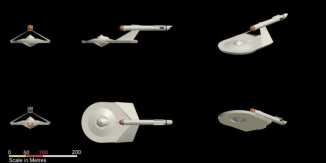
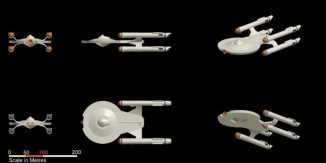
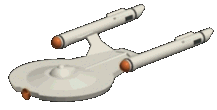
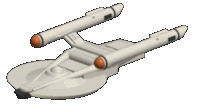
Recognising the issues with the stress around the secondary hull connector of the Vagabond class, Starfleet took a radical approach in resolving the problem.

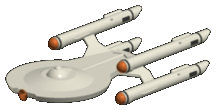
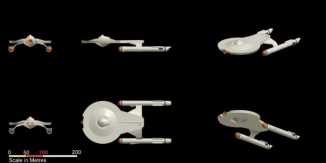
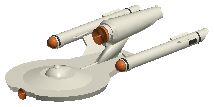
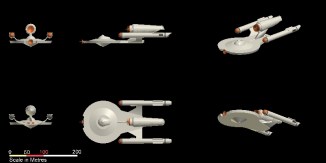
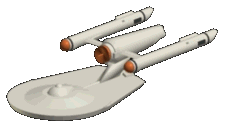
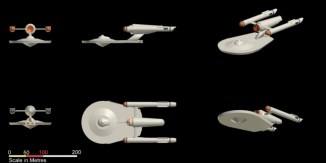
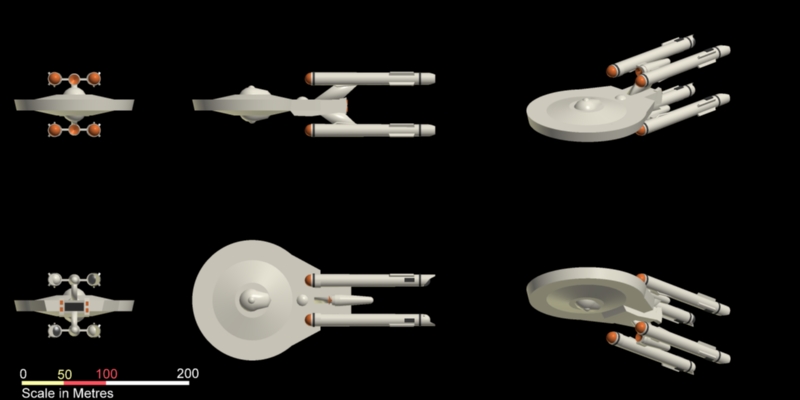
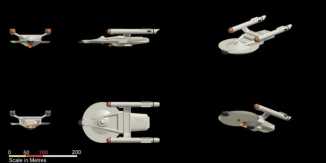
The USS Tyrannis, the planned 15th ship of the Vagabond class was modified while under construction to have two ventrally mounted warp nacelles and no secondary hull. The primary hull was largely unchanged from the Vagabond except for the nacelle mounts.

The Tyrannis class resolved the problems in the Vagabond class, and proved to be an effective exploration cruiser, supplementing the new Anton class.

Like the Anton class these ships proved to be too lightly armed, and with the advent of the four years war construction was curtailed at 14 vessels in 2254.

After the war, four Vagabond class ships were converted to this configuration, making good the four vessels lost during the war.

The Tyrannis class received a refit in 2261-63 gaining phasers and photon torpedoes, which gave the ships the ability to mount a more robust defence. The ships survived in until 2290, and many were sold onto the private sector.

Class: X Year: 2249
Ship Source: P.T.Riley Ship Datasheet: Coming Soon

tyrannis_large

2245 – Twin Wayfarer

The Wayfarer class  cruisers built upon the lessons of the Antares class, providing an affordable cruiser design which was well suited for independent patrol and exploration duties.

The design by the independent designer, P.T.Riley was a compact looking ship with a deflector mounted in a recess in the front of the saucer section, with a tapering elongated primary hull with upward swept nacelle supports.

In 2245 USS Pathfinder had additional hybrid nacelles mounts added to produce a four engine variation of the class,  following the trials of the USS Nelson. The smaller size of the Wayfarer and its more warp dynamic design meant that recently developed M1 could provide the required level of computer power. After successful trials four additional craft were converted to the configuration for use as long range exploration cruisers entering service from 2248 onwards.

wayfarer4

2241 – Wayfarer (Pathfinder refit)

The Wayfarer class  cruisers built upon the lessons of the Antares class, providing an affordable cruiser design which was well suited for independent patrol and exploration duties.

The design by the independent designer, P.T.Riley was a compact looking ship with a deflector mounted in a recess in the front of the saucer section, with a tapering elongated primary hull with upward swept nacelle supports.

Compared to the Antares class it was far more warp dynamic, giving much better cruising range despite utilising the same power plant.

In 2241  USS Pathfinder (NCC-1541) had its nacelle mounts flipped over as part of trials which led to the Anton, Tyrannis, Surya and Coventry classes. Pathfinder retained these mounts until 2245

wayfarer_l

2238 – Wayfarer (Wanderer Refit)

The Wayfarer class  cruisers built upon the lessons of the Antares class, providing an affordable cruiser design which was well suited for independent patrol and exploration duties.

The design by the independent designer, P.T.Riley was a compact looking ship with a deflector mounted in a recess in the front of the saucer section, with a tapering elongated primary hull with upward swept nacelle supports.

Compared to the Antares class it was far more warp dynamic, giving much better cruising range despite utilising the same power plant.

In 2238  USS Wanderer (NCC-1512) was fitted with a secondary hull in the dorsal position for use in trials of the design intended for the Vagabond class, the ship retained this hull until she was lost without trace in 2253

wanderer

2235 – Wayfarer

The Wayfarer class  cruisers built upon the lessons of the Antares class, providing an affordable cruiser design which was well suited for independent patrol and exploration duties.

The design by the independent designer, P.T.Riley was a compact looking ship with a deflector mounted in a recess in the front of the saucer section, with a tapering elongated primary hull with upward swept nacelle supports.

Compared to the Antares class it was far more warp dynamic, giving much better cruising range despite utilising the same power plant.

USS Wayfarer commissioned as NCC-1535 as the ranges of construction contract numbers were spread across four yards, meaning the highest numbered batch actually commissioned first.

The Wayfarer was notable for a wide range of variations of the design:

2238 – USS Wanderer (NCC-1512) was fitted with a secondary hull in the dorsal position for use in trials of the design intended for the Vagabond class, the ship retained this hull until she was lost without trace in 2253

2241 – USS Pathfinder (NCC-1541) had its nacelle mounts flipped over as part of trials which led to the Anton, Tyrannis, Surya and Coventry classes. Pathfinder retained these mounts until 2245

2245 – USS Pathfinder had additional hybrid nacelles mounts added to produce a four engine variation of the class,  following the trials of the USS Nelson Four additional craft were converted to the configuration for use as long range exploration cruisers.

wayfarer


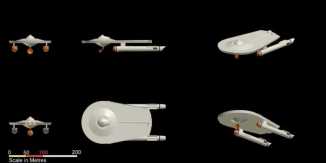
2240 – Vagabond

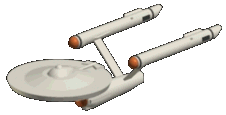
The Vagabond design shared many concepts with the later Constitution class, they were designed in tandem, but the Vagabond entered service first due to the use of lower risk components in the design, where the Constitution pushed the envelope of many of the technologies. The secondary hull of the Vagabond was tested on the USS Wanderer of the earlier Wayfarer class (also designed by P.T.Riley).

The elongated saucer of the Vagabond was utilised for laboratories and an enhanced planetary sensor suite. In service the Vagabond proved useful, and when pressed into combat was manoueverable and a useful addition to the fleet. However the elongated saucer was found to be prone to stress around the primary hull connector owing to the stresses caused by the propulsion system being dependent on the same connector unlike the configuration of the Wanderer.

  • Class: X
  • Year: 2240
  • Ship Source: Riley Dynamics
  • Ship Datasheet: Coming Soon

100vagabond

Commissioned Ships (include)

  • USS Vagabond NCC-1671
  • USS Gypsy NCC-1672

2239 – Nelson

Starfleet commissioned the USS Nelson (NX1432) in 2239 as an experimental design, being the first mainstream starship design to mount four warp nacelles since the Yorktown of almost 80 years earlier.

The ship performed well in trials in the designed role as a long range explorer, and was put into service for a test 5 year mission commencing in 2240. The Nelson failed to complete her mission, having encountered warp field balance problems after the ship had been in service for a period. Starfleet Corps of Engineers (SCE) assessed the ship and determined that the warp field needed a full rebalance after every 100 hours of warp flight until more advanced computers became available to manage the field more efficiently. As a result the Nelson was decommissioned and put into service as a static Engineering training ship as the overall technology was representative of current classes despite the unusual configuration

The Class name was reused in 2243 for the Nelson class scout.

In 2254, given early losses in the four years war, Starfleet was desperately short of cruisers, and SCE staff assessed a large number of mothballed and decommissioned ships which could be returned to service, amongst these was the Nelson which was rapidly re-equipped with an M1 computer which largely resolved the warp balance issues. Unusually, but owing to a superstitious Admiral, the old Nelson was not renamed, leading to Starfleet possessing two USS Nelsons at once. The old Nelson was deployed near Tholian space taking the place of newer ships deployed to the Klingon border.

In 2254, the Nelson was part of a task force of Starfleet ships patrolling the disputed border of Tholian Assembly space. The task force, led by the USS Enterprise, picked up a distress call from the Federation Theta Kalyb colony and went to investigate but were attacked by a Chakuun war fleet. The Nelson and the Enterprise were the only Starfleet ships to survive, but the Nelson’s senior staff were killed during the battle. (Nelson mission details from Memory Beta).

Repaired and with a minor refit, Nelson re-entered service in 2255, and remained in service until 2259 when she was lent to the AOFW to supplement their fleet. She was returned to Starfleet in 2265 but did not recommission, and once again become a static engineering training ship until she was donated to the AOFW in 2272.

The Nelson, although a one off, did lead to a number of other four engine ships, the five ships of the Twin Wayfarer exploration cruiser class of 2245 being the first, and these were followed by the Iron Duke of 2256, the Cheetah class of 2273 and  the Constellation class of 2275. In 2277, when the last Twin Wayfarer (USS Sojourner) was to be retired to the Starfleet Museum, the AOFWS Nelson provided an escort for her in the company of the USS Stargazer and USS Cheetah to provide a rare site of four different four nacelle ships in flight together. On that final flight for the Sojourner, the four ships flew past the Iron Duke in its storage berth while she was held in reserve, and thence past the UES Saratoga at the Starfleet Museum.

The Nelson continues in AOFW service.

Class: XII Year: 2239
Ship Source: Star Trek: The Early Voyages Ship Datasheet: Coming Soon

proto_constellation_100


2247 – Marklin

The Marklin class, despite some limitations, gained an impressive combat record. This is largely due to the Actions of Captain Garth of Izar aboard his command the USS Xenophon. The lightest of the 2240-50 Destroyers, the Marklin was used extensively in an independent role as the twin engine design was deemed to be more survivable than the single engine design of most of its contemporaries.

For its time, the Marklin class destroyer was one of Starfleet’s most capable light offensive vessels. Having good power output and excellent maneuverability, it was a favorite with Military Operations. However, the design was also a victim of politics and only 20 were built.

The Marklin, an Andorian design, was first proposed to Starfleet by Chiokis Starship Construction in 2239 (1/82). Chiokis believed it could construct a light vessel which could serve in a military role, but also double as a solid platform for routine scientific study, much like the role of Starfleet’s cruisers. Impressed with the possibility of having a capable combat vessel and modest research vessel for the cost of a destroyer, Starfleet ordered 20 Marklins for immediate production.

Although the design had been approved, the controversy was just beginning. One week after the USS Marklin began construction, a lawsuit was filed against Chiokis Starship Construction and Starfleet Procurement by M’Yengh Yards for corporate conspiracy. M’Yengh Yards accused Starfleet Procurement (mainly one member in particular who had financial interests in Chiokis) with accepting Chiokis’ design without competition or bidding for the purpose of individual and corporate financial gain. This created a firestorm within Starfleet and the corporate world and the case was fast-tracked through the Federation Judiciary.

Eighteen months later, the Federation Tribunal overturned Quadrant One’s Appellate Court verdict and ruled against M’Yengh Yards in principle. The court determined that Starfleet could entertain solicitations from firms in confidence, without announcing the details of the proposal. Chiokis was, the court determined, acting in the best interests of its shareholders and company when it proposed the Marklin to Starfleet.

The court also determined that Starfleet could not, however, enter into an exclusive contract with Chiokis, meaning that most of the components used to build the Marklin would have to be open to bid. In addition, the court recommended that members of the board at Starfleet Procurement should relinquish any financial interests or other possible conflicts of interests when serving on the board. This policy was accepted and is still in place today.

In 2245, Starfleet announced that it would not order any more Marklins over the initial 20. Starfleet cited lower than expected performance for the decision, but those involved with the Marklin project were shocked. Many still believe that Starfleet decided to cut the Marklin project to repair its public image after the M’Yengh lawsuit.

Although tarnished by politics, the Marklin would serve with distinction throughout the Four Years War. It was one of her number, the USS Xenophon commanded by Captain Garth of Izar, which played the crucial role in the First and Second Battles of Axanar. All surviving Marklin class vessels were decommissioned shortly after the Four Years War.


Class: V Year: 2247
Ship Source: Based on FASA Image Ship Datasheet: Download PDF

marklin_large

2243 – Larson

The Larson Class was one of the large numbers of Destroyers that commissioned in the 2240s. Although not as powerful as the Saladin class it was still built in large numbers. It was generally employed as an escort vessel for larger fleets.

Designed at the same time as the Nelson class scouts and the Constitution class cruisers, Larson class destroyers shared many of the same physical features of these ships. An efficient ship that served well, it was intended to perform the same tasks as other dual-function vessels, namely both research and defense. Even so, most of the existing Larsons in service were employed by Starfleet’s Military Operations Command, with several serving in the Galaxy Exploration Command.

Destroyers such as the Larson frequently were employed on patrol duty along the frontier areas. In time of war or other military emergencies, such destroyers were assigned to escort convoys or used as scouts by squadrons or small fleets. This methodology is still practiced today with Starfleet’s modern destroyers. With its array of weapons, the Larson was a fine combat vessel, though not as powerful as a cruiser or larger ship.

As can be seen by reviewing the statistics, the Larson Mk I was introduced into service in January 2245 (1/8801), remaining unchanged until the outbreak of the Four Years War in 2253 (1/95). After several fierce battles with Klingon forces, it was evident that the Larson was weaker than their Klingon counterparts. As quickly as possible, all Larsons were scheduled to be upgraded to Mk Ib standard. This provided the Larson with more efficient shielding, allowing more power for its new FL-3 lasers and existing FAC-1 accelerator cannons.

Finally in early 2256 (1/98), the first Mk II Larsons were produced. The production schedule was split into two lines: the Mk IIa and the Mk IIb. All Mk Ia Larsons upgraded during the conflict were upgraded to Mk IIa standard and all Mk Ibs became Mk IIbs. This helped speed up the turn around time for upgrades because only the weaponry and single warp engine, now upgraded to the FWC-2, changed on the vessels.

The Mk IIa mounted the FP-2 photon torpedo system, still in its prototype stage. The Mk IIb mounted the powerful FP-1 system. Starfleet was split on this issue, however: Larsons were seeing heavy action, but they were vulnerable ships. If mounted with the FP-1, the Larson’s firepower would increase, but at the sake of exposing the FP-1 photon technology to the Klingons if a Larson were captured in battle. In addition and unforeseen in static tests, the superstructure of the relatively light Larson was not strong enough to absorb the shock of repeated firings of the two FP-1 launchers. In rare cases, some firings caused structural damage to the starship. This problem was never fully resolved and in the later Mks, all Larsons mounted the smaller FP-2. All Mk I vessels were refitted with new weapons by September of 2258 (2/0109). Several small interior changes were also made, but these did not affect the combat performance of the vessel until the introduction of the Mk VI.

The Mk VI mounted improved phaser weapons and the more efficient FSD shield generators. The Mk VII, introduced in March of 2269 (2/1403), mounted the newer style engine nacelle and a more powerful impulse drive system. This increased the overall power output by 25% and extended the service life of the Larson class by several years. By May 2285 (2/2205), all Larsons in active service at that time had been upgraded to the Mk VI, and several had been modified to
Mk VIIs.

Production of the Larson class was halted in August of 2281 (2/1808) with the commissioning of the USS Juno. In October 2291 (2/2710), the last Larson class destroyer in service, the USS Tana Re, returned from its duty station and moored at Starbase 24. With this, the end of the Larson class era fell upon Starfleet Destroyer Command and all Larsons were placed in reserve fleets. As a part of Starfleet’s reserve fleet budget, a project has been underway since 2293 (2/29) to slowly upgrade all remaining Mk VI Larsons to Mk VII standard.

No ships sold to the private sector have been refit, and most retain the characteristics they had at the time of sale. All vessels sold were disarmed by Starfleet, though the weapon-mounting hardpoints usually were left intact.

Larsons were named for military leaders and battles of Terran origin. The class vessel is named for Admiral William G. Larson, hero of the battle at Gamma Hydra during the Romulan War. The only exception to this naming convention is NCC 4305, the USS Thelenth, which is named after an Andorian admiral who defeated the Klingons in a pitched battle at Donovan’s Star at the cost of his own ship and crew.
Historical Notes:

The ships Hammurabi and Troy were both destroyed while escorting a convoy of merchant ships bound for a frontier area. During this battle, seventeen freighters were destroyed and an additional four were taken as prizes by the Klingons. Of the five ships that survived the encounter, all reported that the Hammurabi destroyed two Klingon D-7 cruisers and crippled two others before being destroyed itself. The Troy apparently was disabled in the initial exchange of fire and left for dead. When a Klingon cruiser ventured too close to the derelict, however, it opened fire and destroyed the enemy vessel in a single volley. Of course, without maneuvering power, the Troy was later easily dispatched.

In August 2259 (2/0208), the Bolivar led a small detachment consisting of the Normandy, Alesia, Babur, and Tecumseh into an uncontrolled area near the Romulan Neutral Zone. The task force maintained radio silence and failed to report back at its scheduled time. When extensive communications attempts were made unsuccessfully, a rescue group was dispatched to the last reported position of the task force. Upon arrival, nothing was to be found, and an extensive search was begun, ultimately discovering the engine nacelle of the Alesia adrift in an unknown asteroid cluster. At the time no determination was made as to what had caused the loss of the ships, but it was suspected by many that the Romulans had ambushed the group and successfully destroyed them before they were able to send a call for aid. This theory was never proved, and no action was ever taken against the Romulans, largely because it was felt that the Romulans could not have crossed the Neutral Zone unnoticed. Since the discovery of the Romulan cloaking capability, the theory has been given new weight.

In February 2270 (2/1502), the USS Richtofen was recalled for an engine refit and scheduled maintenance to shipboard systems. As the ship’s refit and maintenance checks neared completion, spirited Ensigns and sympathetic workers painted it bright red in honor of its namesake. Starfleet Command decided to leave the ship this color despite the breach of regulations, though all Ensigns were mildly disciplined. The vessel was assigned to the Klingon sector.

On its maiden flight, the USS Sheridan experienced a critical overload in its warp drive system. All backup systems failed to correct the problem. It was decided to jettison the engine pod because an uncontrolled matter anti-matter mix was underway and could not be stopped. The systems used to eject the engine also failed, and the ship was totally destroyed in the subsequent explosion. Three crewmembers who had taken refuge in a shuttle survived.

The Larson class destroyers were produced at the Sol V and Proxima shipyards.

Class: VII Year: 2243
Ship Source: FASA Ship Datasheet: Download PDF

larson_large

2245 – Constitution


The Legendary Constitution class needs no real introduction. However the class did not become the dominant force it later was until the introduction of the Phaser equipped Mark 2. The earlier Mark 1 was lightly armed compared to the best ships of the Klingon empire largely as a result of mass constraints. As such the Mark 1 was incrementally upgraded as new technology became available in an effort to make the class as capable as possible.

The Constitution class cruisers are the most renowned vessels of their time. Serving as both a research vessel and a cruiser, these ships have performed their duties to perfection for the last 50 years. The Constitution class ships were an integral part of the buildup during “The Great Awakening,” from the outset the most versatile of all ships built for the expansion efforts.

The original construction contract called for 13 vessels to be built that would serve as cruisers, have complete research facilities, and be capable of operating on 5-year research and exploration missions. In January of 2245 (1/8801), the first of these vessels, the USS Constitution, was commissioned, followed by one more each month for five months. As soon as these vessels were completed and commissioned, they were sent on 2-year shakedown cruises. Over the next five years, the remaining 7 cruisers were built. As scheduling allowed, the ships were upgraded with new technology, particularly with binary shield generators, which led to the Mk Ib and Ic. The construction program came to a halt with the commissioning of the USS Defiant.

When the Four Years War broke out, Starfleet decided to produce warships instead of the dual-purpose cruisers that devoted large areas of their space to research and laboratories. Even though the Constitution class was not put into production for the war effort, four of the ships- in the form of the Mk Id- saw action. Each distinguished itself in battle time and again, soon gaining the nickname “The Queens of Starfleet.” After-action reports continued to show the combat ability of this ship to be superior to any other ship in the fleets, save for the combat-dedicated Heston class, and so the decision to produce more of them was finally issued in November of 2254 (1/9611).

The ship that would be produced was the Mk II version, mounting the new phaser weaponry and photon torpedoes. Because of these modifications to the original design, construction did not begin until September of 2255 (1/9709) and the first ship did not come off the line until January of 2257 (1/9901), 7 months after the end of the war. Starfleet decided to continue the production of the Constitution class cruisers and expanded the proposed total number to 42 vessels.

In April of 2258 (2/0104), the FWF-1 warp drive engine was brought into the inventory and all Constitution class ships were recalled to be refit as Mk IIIs. By October of 2263 (2/0510), the refitting was complete and the Constitution class remained the most advanced starship of its time. One Mk III, the USS Ark Royal, still serves in Starfleet, exploring the rimward areas and acting as ongoing proof of this class’ successful record. Duty on the Ark Royal is awarded as a special training tour to Starfleet cadets. It is the only Constitution class vessel still in active service.

After the first successful test firing of the FP-5 photon torpedo, Starfleet ordered that 12 Constitution class ships be modified to fire it. In February of 2269 (2/1202), the USS Discovery, USS Saratoga, USS El Dorado and USS Kitty Hawk were sent into service as Mk IVs, mounting not only the new torpedo system, but also more powerful impulse engine and shield generators.

The Mk IV was the last version of the Constitution class to be built, but not the last to use that particular hull style. The Enterprise class cruiser was originally built from older Constitution hulls and retains its general appearance. Constitution class ships were constructed at the Sol IV shipyards.

Class: XI Year: 2245
Ship Source: Paramount Pictures Ship Datasheet: Download PDF

constitution_large

Commissioned Ships (FASA)

  •  Constellation NCC-1017
  •  Republic NCC-1371
  •  Intrepid NCC-1631
  •  Farragut NCC-1647
  •  Excalibur NCC-1664
  •  Exeter NCC-1672
  •  Constitution NCC-1700
  •  Enterprise NCC-1701
  •  Potemkin NCC-1702
  •  Hood NCC-1703
  •  Bismark NCC-1704
  •  Yamato NCC-1705
  •  Lexington NCC-1709
  •  Valiant NCC-1709
  •  Kongo NCC-1710
  •  Challenger NCC-1715
  •  Yorktown NCC-1717
  •  Valiant NCC-1718
  •  Essex NCC-1719
  •  Saratoga NCC-1720
  •  El Dorado NCC-1724
  •  Kent  NCC-1725
  •  Littorio NCC-1727
  •  Ticonderoga  NCC-1736
  •  Eagle NCC-1738
  •  Santissima Trinidad NCC-1742
  •  Marseille NCC-1744
  •  Langley NCC-1749
  •  Richelieu NCC-1750
  •  Forrestal NCC-1751
  •  Kitty Hawk NCC-1754
  •  Chikuma NCC-1759
  •  Victory NCC-1760
  •  Defiant NCC-1764
  •  Rivoli NCC-1765
  •  Bonhomme Richard NCC-1776
  •  Endeavour NCC-1777
  •  Hornet NCC-1778
  •  Akagi NCC-1779
  •  Kaga NCC-1780
  •  Ark Royal NCC-1791
  •  Radetsky NCC-1792
  •  Discovery NCC-1798

Commissioned Ships (Starfleet Museum)

USS Constitution NCC-1700
USS Enterprise NCC-1701
USS Potemkin NCC-1702
USS Hood NCC-1703
USS Yorktown NCC-1704
USS Excalibur NCC-1705
USS Exeter NCC-1706
USS Valiant NCC-1707
USS Intrepid NCC-1708
USS Lexington NCC-1709
USS Constellation NCC-1710
USS Farragut NCC-1711
USS Bonhomme Richard NCC-1712
USS Monitor NCC-1713
USS Hornet NCC-1714
USS Virginia NCC-1715
USS Kongo NCC-1716
USS Defiant NCC-1717
USS Endeavour NCC-1718
USS Eagle NCC-1719
USS LaFayette NCC-1720
USS Wasp NCC-1721
USS El Dorado NCC-1722
USS Ari NCC-1723
USS Saratoga NCC-1724 USS Tori NCC-1725
USS Krieger NCC-1726
USS Essex NCC-1727
USS Ranger NCC-1728
USS Bunker Hill NCC-1729
USS Lion NCC-1730
USS Implacable NCC-1731
USS Glory NCC-1732
USS Theseus NCC-1733
USS Triumph NCC-1734
USS Ark Royal NCC-1735
USS Warrior NCC-1736
USS Magnificent NCC-1737
USS Argus NCC-1738
USS Bonaventure NCC-1739
USS Clemenceau NCC-1740
USS De Gaulle NCC-1741
USS Foch NCC-1742
USS Arromanches NCC-1743
USS Jeanne D’Arc NCC-1744
USS Vikrant NCC-1745
USS Zuikaku NCC-1746
USS Shokaku NCC-1747
USS Kiev NCC-1748
USS Minsk NCC-1749