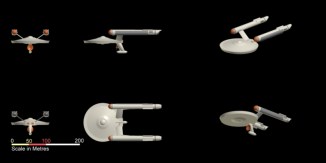

2252 – Predator

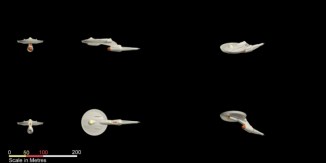
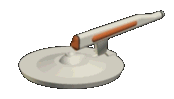
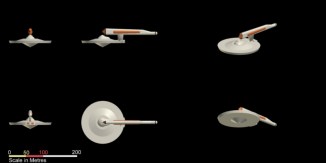
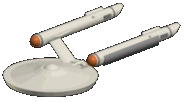
In the late 2240’s a need was identified for smaller combatants which were designed to be extremely fast, well-armed, stealthy, and inexpensive to construct and operate. To meet this need, two different classes were proposed, the long range, powerfully armed, twin-nacelled Avenger class, and shorter ranged, less powerfully armed, single-nacelle  Predator class. In total the requirement was for one hundred ships of each design to be built at yards throughout the Federation. A number of new technologies developed for the Constitution and Pyotr Velikiy classes were to be used in these new classes, out notably including a scaled down version of the Pyotr Velikiy’s main sensor suite.

Design work on Avenger and Predator in late 2250. Although a smaller design, the configuration of the Predator was much like that of the physically larger Hermes/Saladin class of the 2240’s.

The warp power plant for both of new ships was  the new FWB-1 warp drive, coupled to the powerful FIB3 Impulse drive. The use of the same drive systems across both design resulted in further construction and cost efficiencies, and also led to the ships being provided with a good blend of power and manoeuvrability.

The primary hulls of both classes were nearly identical, and were 77-m in diameter. The primary  hulls held the bridge, the M1 computer core,  crew quarters, life support machinery, and cargo holds. The hull’s dorsal bulge housed the twin accelerator cannons (FAC3 on both designs. Unlike the larger Constitution and Pyotr Velikiy classes the bridge module was slightly submerged and slightly forward of the hull’s centre. Mounted either side of the bridge were emitters for the FSF shield system, these were mounted in this unconventional external position because of the small size of the hull. The rear of the primary hull housed the shuttlecraft bay, which extended along the connecting dorsal. Embedded in the rim of the primary hull was an emission suppression system which formed a key part of the  stealth capabilities of the designs.

To the rear of the primary hull was a thick, deep connecting dorsal structure. In Avenger, the neck held the FIB3 impulse drive, and deuterium tanks. Beneath the neck was the small secondary hull mounting the FWB1 warp system with the distinctive Bulldog warp nacelles attached to either side. In Predator, the connecting dorsal was occupied mainly by engineering spaces for the impulse deck, the FWB1 warp drive connecting directly to the single centerline Bulldog warp nacelle. The single engine configuration of the Predator decreased the range and maximum warp speed but improved performance at impulse.

The the large numbers of ships ordered meant that construction was shared among six shipyards throughout the Federation, despite this all ships were built to the same exacting standards with many important subsystems manufactured at Mars and shipped to the yards for assembly.  The six yards competed to construct ships most quickly or with the fewest flaws, the best performance being that of Andor’s Shesshik 7 facility which assembled and launched USS Drummer (NCC-D124) in 22 days.

USS Predator (NCC-D200) commissioned in early 2252, with USS Avenger (NCC-D100) following late the same year. Both classes immediately found use in a wide range of roles. In many cases they were used for policing duties, including anti smuggling and piracy patrols. Such actions freed larger ships, such as those of the Valley Forge, Constitution, and Pyotr Velikiy classes for duties in the burgeoning four years war. These ships were also used in a defensive role in areas away from the Klingon frontier, again to release larger combatants for service elsewhere. The Avenger class in particular also saw military usage in the Klingon theatre of operations.

Post war these ships were occasionally based at the borders of Federation territory in a pure defensive role, but more frequently they used to lead and escort survey, mining and colonisation vessels following in the wake of Starfleet heavy cruisers. The latter part of the war saw many these ships rearmed with FH2 phasers and FP1 photon torpedoes, which effectively doubled the combat efficiency of both designs.

A definitive refit program in 2258 saw the adoption of the new FWB2 in both designs, further improving performance and giving these classes an appreciable boost in available power.

To their crews and to Starfleet, the Avenger and Predator classes truly lived up to the description applied to a class of destroyer 300 years ago on Earth: “magnificent in appearance, majestic in movement, menacing in disposition.” These destroyers continued to serve in Starfleet until 2302, following life-extension refits in the early 2280s.

The Avenger-class destroyer USS Matador (NCC-D141) and the Predator-class destroyer USS Berserker (NCC-D208) are on display at the Starfleet Museum.

  • Class: VI
  • Year: 2252
  • Ship Source: Starfleet Museum
  • Ship Datasheet: Download PDF

masao-dd1-196-100

Commissioned Ships
USS Predator NCC-D200
USS Aggressor NCC-D201
USS Ambusher NCC-D202
USS Annihilator NCC-D203
USS Archer NCC-D204
USS Attacker NCC-D205
USS Basher NCC-D206
USS Battler NCC-D207
USS Berserker NCC-D208
USS Biter NCC-D209
USS Blaster NCC-D210
USS Blazer NCC-D211
USS Blocker NCC-D212
USS Bombardier NCC-D213
USS Boomer NCC-D214
USS Brawler NCC-D215
USS Breaker NCC-D216
USS Bruiser NCC-D217
USS Buccaneer NCC-D218
USS Cannoneer NCC-D219
USS Charger NCC-D220
USS Charioteer NCC-D221
USS Chevalier NCC-D222
USS Conqueror NCC-D223
USS Crusader NCC-D224
USS Crusher NCC-D225
USS Cuirassier NCC-D226
USS Devastator NCC-D227
USS Disrupter NCC-D228
USS Dominator NCC-D229
USS Enforcer NCC-D230
USS Executor NCC-D231
USS Fencer NCC-D232
USS Fighter NCC-D233
USS Freebooter NCC-D234
USS Gladiator NCC-D235
USS Grenadier NCC-D236
USS Growler NCC-D237
USS Gunner NCC-D238
USS Hunter NCC-D239
USS Hurler NCC-D240
USS Hussar NCC-D241
USS Infiltrator NCC-D242
USS Interceptor NCC-D243
USS Intimidator NCC-D244
USS Invader NCC-D245
USS Jäger NCC-D246
USS Jouster NCC-D247
USS Lancer NCC-D248
USS Marauder NCC-D249
USS Mauler NCC-D250
USS Musketeer NCC-D251
USS Persecutor NCC-D252
USS Preserver NCC-D253
USS Privateer NCC-D254
USS Provocateur NCC-D255
USS Punisher NCC-D256
USS Pursuer NCC-D257
USS Raider NCC-D258
USS Ranger NCC-D259
USS Raptor NCC-D260
USS Rattler NCC-D261
USS Ravager NCC-D262
USS Resister NCC-D263
USS Rocketeer NCC-D264
USS Roughrider NCC-D265
USS Sapper NCC-D266
USS Scorcher NCC-D267
USS Sharpshooter NCC-D268
USS Sidewinder NCC-D269
USS Signaller NCC-D270
USS Skirmisher NCC-D271
USS Slasher NCC-D272
USS Slayer NCC-D273
USS Slinger NCC-D274
USS Smasher NCC-D275
USS Smiter NCC-D276
USS Snapper NCC-D277
USS Sniper NCC-D278
USS Spanker NCC-D279
USS Spiker NCC-D280
USS Spoiler NCC-D281
USS Stalker NCC-D282
USS Stinger NCC-D283
USS Striker NCC-D284
USS Terminator NCC-D285
USS Thrasher NCC-D286
USS Thriller NCC-D287
USS Thruster NCC-D288
USS Thumper NCC-D289
USS Thunderer NCC-D290
USS Tormentor NCC-D291
USS Trapper NCC-D292
USS Trooper NCC-D293
USS Trouncer NCC-D294
USS Usurper NCC-D295
USS Vanquisher NCC-D296
USS Vindicator NCC-D297
USS Warrior NCC-D298
USS Wrestler NCC-D299
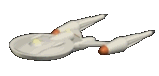
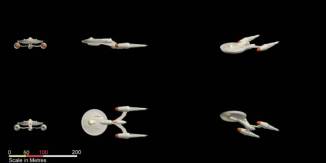
2252 – Avenger

In the late 2240’s a need was identified for smaller combatants which were designed to be extremely fast, well-armed, stealthy, and inexpensive to construct and operate. To meet this need, two different classes were proposed, the long range, powerfully armed, twin-nacelled Avenger class, and shorter ranged, less powerfully armed, single-nacelle  Predator class. In total the requirement was for one hundred ships of each design to be built at yards throughout the Federation. A number of new technologies developed for the Constitution and Pyotr Velikiy classes were to be used in these new classes, out notably including a scaled down version of the Pyotr Velikiy’s main sensor suite.

Design work on Avenger and Predator in late 2250. Although a smaller design, the configuration of the Predator was much like that of the physically larger Hermes/Saladin class of the 2240’s.

The warp power plant for both of new ships was  the new FWB-1 warp drive, coupled to the powerful FIB3 Impulse drive. The use of the same drive systems across both design resulted in further construction and cost efficiencies, and also led to the ships being provided with a good blend of power and manoeuvrability.

The primary hulls of both classes were nearly identical, and were 77-m in diameter. The primary  hulls held the bridge, the M1 computer core,  crew quarters, life support machinery, and cargo holds. The hull’s dorsal bulge housed the twin accelerator cannons (FAC3 on both designs. Unlike the larger Constitution and Pyotr Velikiy classes the bridge module was slightly submerged and slightly forward of the hull’s centre. Mounted either side of the bridge were emitters for the FSF shield system, these were mounted in this unconventional external position because of the small size of the hull. The rear of the primary hull housed the shuttlecraft bay, which extended along the connecting dorsal. Embedded in the rim of the primary hull was an emission suppression system which formed a key part of the  stealth capabilities of the designs.

To the rear of the primary hull was a thick, deep connecting dorsal structure. In Avenger, the neck held the FIB3 impulse drive, and deuterium tanks. Beneath the neck was the small secondary hull mounting the FWB1 warp system with the distinctive Bulldog warp nacelles attached to either side. In Predator, the connecting dorsal was occupied mainly by engineering spaces for the impulse deck, the FWB1 warp drive connecting directly to the single centerline Bulldog warp nacelle. The single engine configuration of the Predator decreased the range and maximum warp speed but improved performance at impulse.

The the large numbers of ships ordered meant that construction was shared among six shipyards throughout the Federation, despite this all ships were built to the same exacting standards with many important subsystems manufactured at Mars and shipped to the yards for assembly.  The six yards competed to construct ships most quickly or with the fewest flaws, the best performance being that of Andor’s Shesshik 7 facility which assembled and launched USS Drummer (NCC-D124) in 22 days.

USS Predator (NCC-D200) commissioned in early 2252, with USS Avenger (NCC-D100) following late the same year. Both classes immediately found use in a wide range of roles. In many cases they were used for policing duties, including anti smuggling and piracy patrols. Such actions freed larger ships, such as those of the Valley Forge, Constitution, and Pyotr Velikiy classes for duties in the burgeoning four years war. These ships were also used in a defensive role in areas away from the Klingon frontier, again to release larger combatants for service elsewhere. The Avenger class in particular also saw military usage in the Klingon theatre of operations.

Post war these ships were occasionally based at the borders of Federation territory in a pure defensive role, but more frequently they used to lead and escort survey, mining and colonisation vessels following in the wake of Starfleet heavy cruisers. The latter part of the war saw many these ships rearmed with FH2 phasers and FP1 photon torpedoes, which effectively doubled the combat efficiency of both designs.

A definitive refit program in 2258 saw the adoption of the new FWB2 in both designs, further improving performance and giving these classes an appreciable boost in available power.

To their crews and to Starfleet, the Avenger and Predator classes truly lived up to the description applied to a class of destroyer 300 years ago on Earth: “magnificent in appearance, majestic in movement, menacing in disposition.” These destroyers continued to serve in Starfleet until 2302, following life-extension refits in the early 2280s.

The Avenger-class destroyer USS Matador (NCC-D141) and the Predator-class destroyer USS Berserker (NCC-D208) are on display at the Starfleet Museum.

  • Class: VI
  • Year: 2252
  • Ship Source: Starfleet Museum
  • Ship Datasheet: Download PDF

masao-dd-196-70

Commissioned Ships

USS Avenger NCC-D100
USS Advisor NCC-D101
USS Ambassador NCC-D102
USS Arbiter NCC-D103
USS Aviator NCC-D104
USS Barker NCC-D105
USS Bounder NCC-D106
USS Bustler NCC-D107
USS Challenger NCC-D108
USS Chancellor NCC-D109
USS Chaser NCC-D110
USS Commander NCC-D111
USS Confounder NCC-D112
USS Conjurer NCC-D113
USS Contender NCC-D114
USS Counselor NCC-D115
USS Courier NCC-D116
USS Dancer NCC-D117
USS Darter NCC-D118
USS Dasher NCC-D119
USS Dazzler NCC-D120
USS Defender NCC-D121
USS Detector NCC-D122
USS Dodger NCC-D123
USS Drummer NCC-D124
USS Engineer NCC-D125
USS Explorer NCC-D126
USS Flasher NCC-D127
USS Flyer NCC-D128
USS Forester NCC-D129
USS Galloper NCC-D130
USS Governor NCC-D131
USS Harbinger NCC-D132
USS Harvester NCC-D133
USS Highlander NCC-D134
USS Igniter NCC-D135
USS Inquisitor NCC-D136
USS Inspector NCC-D137
USS Liberator NCC-D138
USS Marcher NCC-D139
USS Mariner NCC-D140
USS Matador NCC-D141
USS Mentor NCC-D142
USS Messenger NCC-D143
USS Navigator NCC-D144
USS Observer NCC-D145
USS Outlander NCC-D146
USS Pathfinder NCC-D147
USS Patroller NCC-D148
USS Peacemaker NCC-D149
USS Persuader NCC-D150
USS Pioneer NCC-D151
USS Piper NCC-D152
USS Prancer NCC-D153
USS Predictor NCC-D154
USS Protector NCC-D155
USS Provider NCC-D156
USS Questor NCC-D157
USS Racer NCC-D158
USS Reporter NCC-D159
USS Rescuer NCC-D160
USS Responder NCC-D161
USS Revolver NCC-D162
USS Roarer NCC-D163
USS Rover NCC-D164
USS Runner NCC-D165
USS Saviour NCC-D166
USS Schneider NCC-D167
USS Searcher NCC-D168
USS Seeker NCC-D169
USS Senator NCC-D170
USS Skydiver NCC-D171
USS Sorcerer NCC-D172
USS Spangler NCC-D173
USS Sparkler NCC-D174
USS Speaker NCC-D175
USS Speeder NCC-D176
USS Spinner NCC-D177
USS Springer NCC-D178
USS Sprinter NCC-D179
USS Stargazer NCC-D180
USS Strider NCC-D181
USS Strummer NCC-D182
USS Surveyor NCC-D183
USS Temblor NCC-D184
USS Tracker NCC-D185
USS Trailblazer NCC-D186
USS Traveller NCC-D187
USS Trekker NCC-D188
USS Trumpeter NCC-D189
USS Tusker NCC-D190
USS Upholder NCC-D191
USS Venturer NCC-D192
USS Victor NCC-D193
USS Volunteer NCC-D194
USS Voyager NCC-D195
USS Wanderer NCC-D196
USS Windjammer NCC-D197
USS Winner NCC-D198
USS Wrangler NCC-D199

2252 – Portsmith

“The Portsmith class was a small cheap destroyer designed for mass production. During the four years war vast numbers were built to act in numerous roles. Despite its size and low cost, the class was amongst the more powerful destroyers in service during the war. Post war the class was not fitted with phasers as the cost of conversion would have exceeded the cost of construction.”

The Mk1 Portsmith Class entered service in 2246 as a cheap simple customs cutter, and was produced at numerous merchant and military shipyards throughout the Federation. The design had no weapons save for four lasers, and was powered by the heavy but effective FWH-1 warp drive system, In all some 300 were built between 2246 and 2252.

The growing hostilities prior to the advent of the Four Years war in 2252 found the Federation desperately short of effective escorts. A program was instituted to design a new escort destroyer class for mass production. It was realised that designing a new class from scratch would take a number of years. It was suggested that the existing Portsmith class could form the basis for a very capable Light Destroyer.

The FWH-1 engines of the Mk1 were replaced by the new FWA-2, and the ship had three accelerator cannons crammed into the former cargo hold. The resultant ship was a revelation to Starfleet Commanders, the more efficient Warp Drive, coupled to the heavy weapon load (for the size of vessel) meant that the Mk2 had a combat efficiency better than full size destroyers, and indeed better than some cruisers.

The price paid for this efficiency was two fold, the range of the Portsmith could not compare to that of the larger destroyers, and the superstructure, although reinforced compared to the Mk1 was not as resilient as that of the larger destroyers. However when deployed in groups escorting convoys the capabilities of the Portsmith meant that they were a force to be reckoned with. Some 360 Mk2s were built, and a large number of Mk1s were upgraded.

Postwar, the Portsmith class had no real role, although a large number were retained in reserve fleets until the 2270’s. A large number of these ships were sold onto planetary defence forces, or onto the civil sector after being disarmed.

Class: IV Year: 2252
Ship Source: Spaceflight Chronology Ship Datasheet: Download PDF

portsmith_large

2252 – Monoceros II

The Monoceros class scout was designed to provide Starfleet with a light scout which was cheap and easy to build. First commissioned in 2246 (1/89), further ship production was delayed after a design flaw in the warp field balance coil was discovered. At high warp speeds, the ship tended to “rise” out of its own warp field, causing the ship to violently exit warp. The problem was corrected by reconfiguring the control computer software.

The Monoceros II was also designed to act as a demonstrator for the improved generation of linear warp drives then in development. The SCNN nacelle and reactor arrangement adopted for the single FWB-1 warp engine was lighter than the equivalent PB series installation. Fitment of a full-blown linear drive assembly with hull mounted warp core was dismissed in this design on safety grounds. It would be a further 10 years before work began on a class mounting such a system.

The experience gained in operating the SCNN equipped Monoceros II class paved the way directly for later SCNN engined vessels (such as the Endeavour class) and also demonstrated the benefits that ships equipped with linear drives had compared to those with circumferential warp drives. Of the 16 ships commissioned, not a single vessel was lost to warp drive related problems, but some nine vessels were lost to enemy action. The decommissioning of the class in 2257 (1/99) was the result of the need to continue the testing of the new engines on the few surviving ships of the class. Accordingly all seven survivors continued to be operated as test-beds by both the engine manufacturers and the Starfleet Corps of Engineers, the last not being retired until 2282 ((2/27).

The Monoceros did see action in the Four Years War, albeit limited. In 2253 (1/95), the USS Vulpecula was responsible for inflicting minor damage on several unescorted Klingon G-4 transports. The captain and crew of the Vulpecula received Starfleet’s highest commendations for this action. Most ships of this class, however, served as sentry ships for assembled fleets.

An interesting footnote to the ship’s history is the origin of the class name. It has been told that Commodore Charles Tatum, who was overseeing the design of the proposed scout, was studying the ship schematics at home when his seven year old daughter became curious as to her father’s work. The commodore light-heartedly asked his daughter what the ship should be called, and she promptly answered, “Unicorn!” Impressed, the commodore (after changing the name to its Latin derivative) submitted the name and it was eventually approved.

Class: IV Year: 2246
Ship Source: Starfleet Technical Manual/Lee Wood Ship Datasheet: Download PDF

new_monoceros-scnn-100

2252 – Agilis

The Agilis (PA-820) Class was the most common Perimeter action class in Starfleet between the 2250’s and 2280’s. A simple twin engine design, the Agilis was notable in mounting a pair of high powered accelerator cannons in a ventral pod, giving the vessel impressive firepower both fore and aft. A third accelerator cannon was mounted separately in the primary hull, to ensure that it was not possible to knock out the bulk of the ship’s firepower with a single hit.

The Agilis used the simple and tested FWH-1 warp drive, although many felt an engine such as FWA-1 was a better choice, it was felt that the load carrying capability of the FWH-1 would allow the carriage of the maximum possible weapon load. The engines as fitted to the Agilis varied from the standard FWH-1, in that top line speed was massively boosted, at the expense of 50% poor fuel efficiency, however this was felt to be acceptable given the mission profile of the Agilis. In service the Mk1 was a revelation in that it outperformed both of the larger PA classes, and in total 155 Mk1 ships entered service, and saw considerable combat during the four years war.

The class was refiited postwar with phasers and photon torpedoes, but the lighter weights of these systems meant that the Kiaga could finally carry a full weapon load, while the computer system of the Agilis meant that the already large weapon load could not be increased by a similar amount. As such the Mk2 Agilis, was slightly less combat efficient than the Mk2 Kiaga. Throughout its career, he Agilis was cramped and uncomfortable for crews, but the rugged simplicity and toughness of the craft endeared it to the crews who served aboard.

  • Class: VI
  • Year: 2252
  • Ship Source: Steve Bacon, name and basic history from Ships of the Starfleet Vol 1, design inspired by Akyazi class.
  • Ship Datasheet: Download PDF

pa3-100