2155 – Fireball

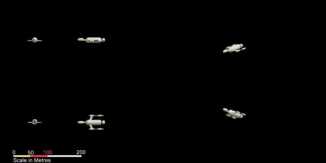
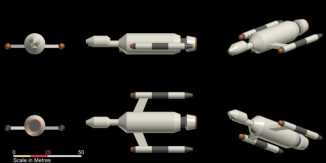
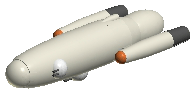
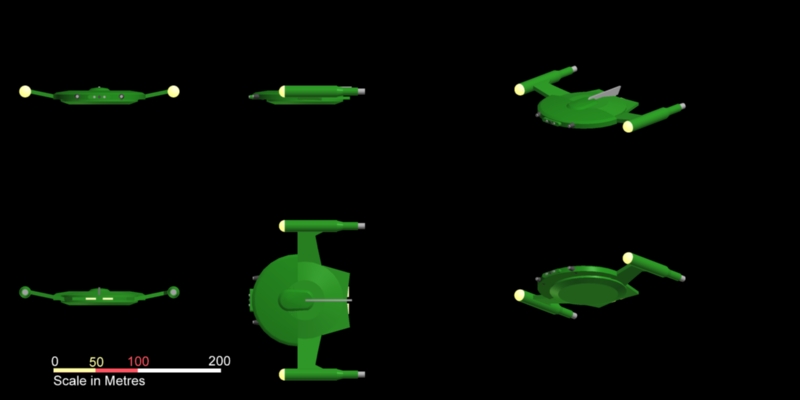
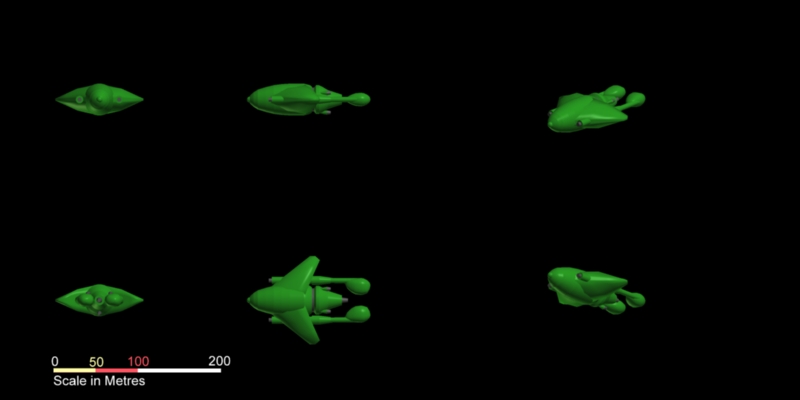
The Fireball class was created as an experimental cruiser type that was intended to test new technologies and new warp field configurations. In early Engineers speculated that dividing a spacecraft’s enveloping warp field into a smaller forward “penetrating” lobe and a larger trailing lobe would decrease subspace resistance and increase warp efficiency. The Fireball class was designed with the innovative feature of a small command hull separated by a thin neck from the larger engineering hull to test this theory. Another change from most recent designs of the era was that the Warp nacelles were raised above the hull, this was again in an effort to boost warp efficiency.

The Fireball class used the new FFTL-2A warp drive system. This drive as much power as the old EFTL-5, but at less than half the mass, this allowed the Fireball class to be far smaller than the previous generation of cruisers. The Fireball and her sister ship Rocket had originally been planned to just be technology demonstrators, but the design was to successful that an armed variant was ordered in late 2158, this became the Comet class.

These two ships continued to be as test beds in the development of the second-generation of M/AM-powered ships. In 2165, at the conclusion of their research careers they were allocated to Starfleet and served as couriers until 2193.

USS Fireball is now on display at the Starfleet Museum.

The Experimental NG (New Generation) engines and shield systems were redesignated as part of the Federation Designation System in 2161.

comet_side_large


2160 – Scimater

The Scimater class was the ultimate development of the Battle Cruiser concept during the Romulan War. The collapse of Romulan resistance in 2159 led to the decision to cancel the construction of the Scimater class, and the related Elephant class in 2160. The incomplete hull of the UES Scimater was scrapped in 2161.

scimater

2165 – Dragon (as built)

After the end of the Romulan war, most ships in the  Starfleet were small, lightly armed exploratory cruisers (such as the former UESN Daedalus and Comet classes). Most of the UESN’s heavy cruisers (Conqueror class) and fighter-carriers (Yorktown class) had been mothballed, repurposed, scrapped, or sold off to local defense forces, with only a small number entering service with Starfleet.

To meet any potential remaining Romulan  threat, Starfleet needed to replace its Conqueror-class heavy cruisers.  The large crew complements and offensive mission profile made them poorly suited for a more defensive role.

In April 2163 Starfleet issued a request for proposals for the Dragon class of border-defense heavy cruisers. The requirement was for firepower (both missile and beam weaponry) at least 33% greater than that of Conqueror. Cruising and maximum speeds were wf 3.4 and wf 4.5,again an improvement over the Conqueror. Displacement was planned to be 150,000 tons or less with a crew of 430 officers – both approximately a third of those of Conqueror. These ships were planned to be less expensive to design, construct, and operate, but still  be more effective for border defence than the wartime Cruisers. 20 Ships were planned, to commission for 2166 onwards. This baseline ship is shown as the Dragon Mk1 on the Data sheet.

The successful design was in essence a scaled up Daedalus, using some Comet style components as well. Construction of the  class began in August 2164, but problems were encountered as the first Dragon began to be fitted out with various components supplied by subcontractors. The challenging requirements led to many of these systems being designed specifically for the Dragon class, and also to these systems having an impact on the overall design. In addition Starfleet Intelligence threat analysis led to a requirement for across-the-board performance increases for all ship’s systems. Accordingly, the damage and ranges of all weaponry were to be increased by an average of 25%;  and cruising and maximum speeds were increased to wf 3.6 and wf 4.7. This improvement was to be delivered from just a 10% increase in crew size and displacement.

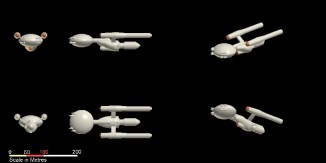
To meet the new performance requirements, numerous changes were made. To increase the cruising and maximum speeds, a more powerful warp drive with larger reactor  was installed requiring the addition of a separate “reactor hull”. In addition, the 129-m-long nacelles were replaced by 157-m-long units. As well as the increase in firepower the missile load was increased, and the shuttle bay enlarged.  These  changes further decreased the space that could be used for crew quarters, stores, and life-support systems. Dragon was now 257 m long, with an estimated displacement of 180,000 tons, and the various technical issues were still to be overcome. This is the Mk2 configuration.

In December 2165, Hull #1 was christened USS Fafnir (NCC-213) and launched to begin trials despite the ongoing integration problems. Upon commencement of trials  construction was authorized to begin on the next 3 ships of the class. However the trials of Fafnir quickly revealed numerous problems. The most severe being that the firing of a full missile salvo from the forward missile tubes at attack speed  caused the mounts for the p forward deflector and targeting sensors to become misaligned. This was resolved by structural reinforcement. High speed warp runs revealed harmonic flexing from the nacelle supports propagating throughout the length of the ship – these vibrations played havoc with navigation, weapons targeting, and prevented Fafnir from reaching design speeds. In the longer term these vibrations would lead to fatigue failure possibly resulting in the catastrophic loss of spaceframe integrity. To resolve these issues it was necessary to shorten and thicken the neck connecting the primary and secondary hulls and adding redundant supports for the nacelles on the reactor hull. Fafnir was now 247 m long but displaced 194,000 tons

By October 2166 most of the outstanding problems were being solved: the lead ship, USS Fafnir, was commissioned. Unfortunately by  2167 Starfleet’s requirements had changed, and the defensive posture of the Dragon meant they were ill suited for use in a exploration role. The lack of internal space owing to the level of equipment and weaponry fitment meant that there was no space for the installation of laboratories, scientific equipment, crew quarters, common areas, and long-term life-support systems. With the Romulan threat in abeyance, the Dragon had become a costly and immobile white elephant, and  in November 2167 Starfleet cancelled the final 10 ships of the class before construction had begun.

Despite these problems the 10 completed Dragons proved to be rugged and reliable ships –  however, all Dragons were withdrawn from front-line service by 2180 without ever having fired a shot in anger.

The Dragon-class heavy cruiser USS Jörmungandr (NCC-218) is on display in the Starfleet Museum.

Class: XI
Year: 2165
Ship Source: Starfleet Museum
Ship Datasheet: Coming Soon

Dragon Mk2 Configuration:
dragon2

Commissioned Ships

  • USS Fafnir NCC-213 completed in this configuration, but was modified during trials

2164 – Dragon (Design)

After the end of the Romulan war, most ships in the  Starfleet were small, lightly armed exploratory cruisers (such as the former UESN Daedalus and Comet classes). Most of the UESN’s heavy cruisers (Conqueror class) and fighter-carriers (Yorktown class) had been mothballed, repurposed, scrapped, or sold off to local defense forces, with only a small number entering service with Starfleet.

To meet any potential remaining Romulan  threat, Starfleet needed to replace its Conqueror-class heavy cruisers.  The large crew complements and offensive mission profile made them poorly suited for a more defensive role.

In April 2163 Starfleet issued a request for proposals for the Dragon class of border-defense heavy cruisers. The requirement was for firepower (both missile and beam weaponry) at least 33% greater than that of Conqueror. Cruising and maximum speeds were wf 3.4 and wf 4.5,again an improvement over the Conqueror. Displacement was planned to be 150,000 tons or less with a crew of 430 officers – both approximately a third of those of Conqueror. These ships were planned to be less expensive to design, construct, and operate, but still  be more effective for border defence than the wartime Cruisers. 20 Ships were planned, to commission for 2166 onwards. This baseline ship is shown as the Dragon Mk1 on the Data sheet.

The successful design was in essence a scaled up Daedalus, using some Comet style components as well. Construction of the  class began in August 2164, but problems were encountered as the first Dragon began to be fitted out with various components supplied by subcontractors. The challenging requirements led to many of these systems being designed specifically for the Dragon class, and also to these systems having an impact on the overall design. In addition Starfleet Intelligence threat analysis led to a requirement for across-the-board performance increases for all ship’s systems. Accordingly, the damage and ranges of all weaponry were to be increased by an average of 25%;  and cruising and maximum speeds were increased to wf 3.6 and wf 4.7. This improvement was to be delivered from just a 10% increase in crew size and displacement.

To meet the new performance requirements, numerous changes were made. To increase the cruising and maximum speeds, a more powerful warp drive with larger reactor  was installed requiring the addition of a separate “reactor hull”. In addition, the 129-m-long nacelles were replaced by 157-m-long units. As well as the increase in firepower the missile load was increased, and the shuttle bay enlarged.  These  changes further decreased the space that could be used for crew quarters, stores, and life-support systems. Dragon was now 257 m long, with an estimated displacement of 180,000 tons, and the various technical issues were still to be overcome. This is the Mk2 configuration.

In December 2165, Hull #1 was christened USS Fafnir (NCC-213) and launched to begin trials despite the ongoing integration problems. Upon commencement of trials  construction was authorized to begin on the next 3 ships of the class. However the trials of Fafnir quickly revealed numerous problems. The most severe being that the firing of a full missile salvo from the forward missile tubes at attack speed  caused the mounts for the p forward deflector and targeting sensors to become misaligned. This was resolved by structural reinforcement. High speed warp runs revealed harmonic flexing from the nacelle supports propagating throughout the length of the ship – these vibrations played havoc with navigation, weapons targeting, and prevented Fafnir from reaching design speeds. In the longer term these vibrations would lead to fatigue failure possibly resulting in the catastrophic loss of spaceframe integrity. To resolve these issues it was necessary to shorten and thicken the neck connecting the primary and secondary hulls and adding redundant supports for the nacelles on the reactor hull. Fafnir was now 247 m long but displaced 194,000 tons

By October 2166 most of the outstanding problems were being solved: the lead ship, USS Fafnir, was commissioned. Unfortunately by  2167 Starfleet’s requirements had changed, and the defensive posture of the Dragon meant they were ill suited for use in a exploration role. The lack of internal space owing to the level of equipment and weaponry fitment meant that there was no space for the installation of laboratories, scientific equipment, crew quarters, common areas, and long-term life-support systems. With the Romulan threat in abeyance, the Dragon had become a costly and immobile white elephant, and  in November 2167 Starfleet cancelled the final 10 ships of the class before construction had begun.

Despite these problems the 10 completed Dragons proved to be rugged and reliable ships –  however, all Dragons were withdrawn from front-line service by 2180 without ever having fired a shot in anger.

The Dragon-class heavy cruiser USS Jörmungandr (NCC-218) is on display in the Starfleet Museum.

Class: X
Year: 2164
Ship Source: Starfleet Museum
Ship Datasheet: Coming Soon

Dragon Mk1 Configuration:

dragon1

Commissioned Ships

  • USS Fafnir NCC-213 was commenced in this configuration but was modified before commissioning,

2257 – V8 Vas Hatham (Bird of Prey) (“Cricket”)

On Stardate 2/0710 (2266), a V-8 was encountered by a Star Fleet cruiser patrolling the Neutral Zone, the first such contact in over 100 years and the very first visual contact with a Romulan war vessel.  The incursion into Federation space obviously was intended to test UFP defenses, and the V-8 destroyed several listening posts and bases before being heavily damaged by the Federation vessel and self-destructing to avoid capture.  Because of this incident, and because these ships were encountered in increasing numbers afterward, this vessel, more than any other, has been identified with Romulan military actions.  For many years, these vessels were believed to be the mainstay of the Romulan fleet, but improved intelligence reveals that this was a misconception.

The vessel was designed to carry the RPL-2 plasma weapon; because of its size and bulk, the Type 1 ships–136 meters long–actually were built around the 110-foot-Iong weapon.  The other major feature of the Type 1 was the use of new shielding technology.  The Type 4, with upgraded disruptors, was introduced to overcome the inadequate firepower of earlier models.

Of the approximately 100 ships built, about 40 are assigned to reserve fleets.  Six have been modified and sold to the civil sector, including two Type 1s, one each of Type 2 and Type 3, and two Type 4s, all of which operate in and out of the Triangle.

The class is named for the Romulan vas hatham (bird of prey), in reference to a huge, flying predator reportedly native to Romulus, but so revered that they have been transplanted to several of the conquered worlds in the empire.  Living for nearly 100 years, these avians can reach nearly giant proportions, some having wingspans as wide as 50 feet and weighing as much as 400 pounds.

Class: IX Year: 2257
Ship Source: The Starfleet Museum FASA Ship Datasheet: Coming Soon

v8-100

2159 – U25 Tyrannus Class (“Clavicle”)

The introduction of matter/anti-matter power plants into the majority of new Earth Alliance ship designs from 2158 onwards meant that in virtually every confrontation the Romulans were outmatched.

The Romulan fleet had invested heavily into developing artificial quantum singularities as a power source, to try to counter these new power plants. This meant however that they neglected research into the far simpler matter/anti-matter source, and only put limited funds into improving their fusion reactor systems, meaning that no significant improvements occurred in this field until very late in the war.

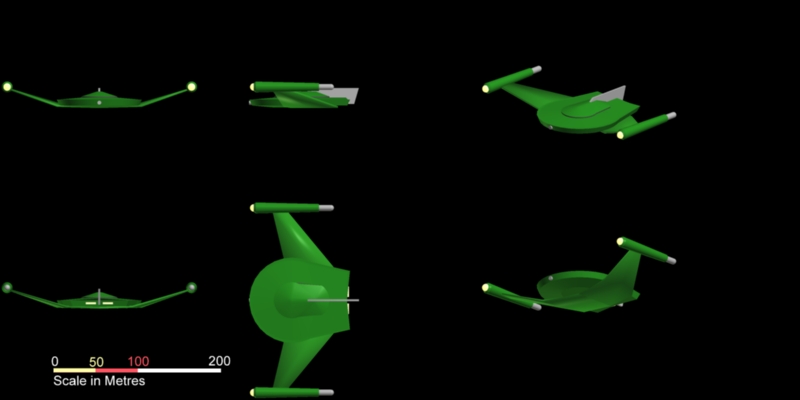
The U-25A (codenamed ‘Clavicle’), which entered service in 2159, benefited from the new fusion reactor research, and was the first Romulan cruiser that could match most Earth vessels in a confrontation since the advent of matter/anti-matter power in the Earth Alliance ships. The U-25A returned to the flatter shape of pre-war ships, as the Romulan fleet acknowledged that the increase in production time and cost was far outweighed by the improved warp dynamics it offered. The combination of this improved shape and the new power plant gave a top speed in excess of warp 4.2.

The use of Fusion, which relied on ample supplies of deuterium fuel, limited the range, but as with the U-24, the Romulan fleet was now fighting within range of its home bases, so this was no longer a priority. Firepower was still a priority; the U-25A carried an impressive mixed and balanced arsenal. When used cleverly the U-25A was a good as most opposition it would face. In a chase, the weaknesses of the limited range would soon show, but when used to ambush enemy forces the class was devastating. Even in an ambush situation, the U-25A had to destroy its target before reinforcements arrived, as full speed would soon exhaust the fuel supply if pursued.

The other factor about the U-25A that weakened it was the power plant itself. The technical achievement in almost doubling the power output was impressive, but the penalty was that if pushed too hard the reactor could easily overload. Reactor explosion, rather than enemy fire, accounted for half of all U-25A losses. 25 U-25A were built in total, of which 15 saw Romulan war service, and of these 11 were destroyed. The limited numbers produced, and the lateness of the introduction into service meant that the U-25 had only limited influence on the outcome of the war. It did, however, reassert the Romulan style of ship design that later became synonymous with all their vessels.

Post-war improved U-25B and C variants saw service, some of these ships survived in the fleet until 2200. The U-25B (2165) introduced improved shields (a major lesson learnt from the war) and an improved plasma cannon. The final version, U-25C changed the balance of the design by mounting more, less powerful starbombs, to compensate for the fitting of a second plasma cannon, as well as enhanced beam weapons.

u25-100