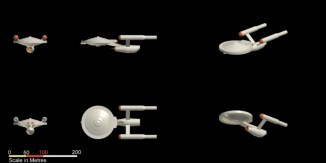

2205 – Lancaster

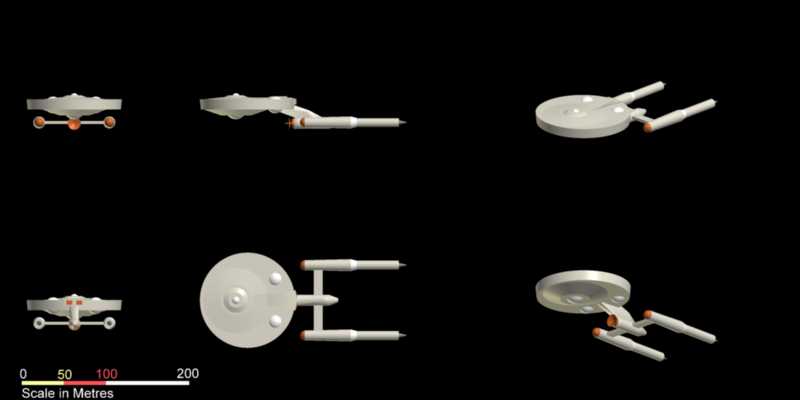
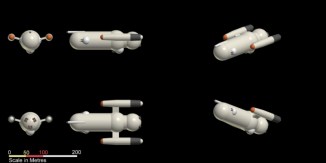
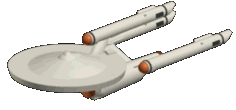
The Lancaster class, although not as attractive as the contemporary Asia class was beloved by its crews as it had the reputation of being a ship that got you home no matter what damage it suffered. The class served as the basis for both the Siegfried class dreadnought and Belleau Wood class assault ship.

The USS Lancaster is generally considered to be one of the first “modern” starship with all primary facilities in the same general positions as in current vessels, for example the bridge was placed in the top of the primary hull. Although this position has been criticized as reckless and unnecessary, it symbolizes the bridge’s command of the entire ship. Despite being compared to a “warp-capable brick” because of its stark, almost brutal, contours and thick, relatively short warp nacelles the Lancaster class inspired a loyalty amongst its crews that few other Starship classes could match.

USS Lancaster commissioned in February 2205, and the next 15 vessels followed in the subsequent 24 months. The new class was hailed as a significant advance in starship engineering. However, perhaps the best measure of a ship’s success is the opinions of their crews, and the Lancaster class ships were loved by their crews. This fierce loyalty was reflected by the perversely prideful nicknames, such as “Thunderhog” (USS Olympia) and “Death Slab” (USS Texas), that they gave their ships. These ships were often decorated with unofficial hull “nose art” and kill markings. In fact, many crews were reluctant to give their ships up when newer classes entered service.

One reason for their popularity was that they were the most powerful warships of their time, with the highest speeds, strongest shields, and greatest firepower. Because of their reputations as superb fighting ships, the class tended to attract many Starfleet’s finest personnel. Lancaster class captains were probably the most aggressive in the history of Starfleet, however, this leadership style perfectly suited the spirit of the times and Starfleet fulfilled its popular mandate to protect Federation citizens from danger. As such ,the Lancaster ships were constantly in action throughout their careers. The class was refitted with modern weapons and shields in 2248, and saw much action in the four years war.

After an illustrious career, the Lancaster class was withdrawn in 2264. The last to retire, USS Unicorn, the recipient of 7 battle stars is now on display at the Starfleet Museum.


Class: X Year: 2205
Ship Source: The Starfleet Museum Ship Datasheet: Download PDF

100lancaster_large

Commissioned Ships

USS Lancaster NCC-1209
USS Merkwürdigliebe NCC-1210
USS Ticonderoga NCC-1211
USS Poole NCC-1212
USS Colossus NCC-1213
USS Invincible NCC-1214
USS Ceres NCC-1215
USS Olympia NCC-1216
USS Wolfe NCC-1217
USS The Tracys NCC-1218
USS Mustang NCC-1219
USS Pearson NCC-1220
USS Haldeman NCC-1221
USS Giraud NCC-1222
USS Valiant NCC-1223
USS Capek NCC-1224
USS Antietam NCC-1225
USS Eisenhower NCC-1226
USS Whittle NCC-1227
USS Alexander Nevsky NCC-1228
USS Thunderbolt NCC-1229
USS Ursus NCC-1230
USS Aristarchus NCC-1231
USS Hector NCC-1232
USS Franz Joseph NCC-1233
USS Unicorn NCC-1234
USS Chaffee NCC-1235
USS Lindbergh NCC-1236
USS Kosciuszko NCC-1237
USS Jakarta NCC-1238
USS Koryu NCC-1239
USS Venkman NCC-1240
USS London NCC-1241
USS Burroughs NCC-1242
USS Illustrious NCC-1243
USS Oppenheimer NCC-1244
USS Phoenix NCC-1245
USS Chandrasekhar NCC-1246
USS Neptune NCC-1247
USS Przhevalsky NCC-1248
USS Singapore NCC-1249
USS Arronax NCC-1250
USS Alfred T Mahan NCC-1251
USS Texas NCC-1252
USS Churchill NCC-1253
USS Spitfire NCC-1254
USS Amundsen NCC-1255
USS Phantom NCC-1256
USS India NCC-1257
USS Spaulding NCC-1258

2204 – Asia

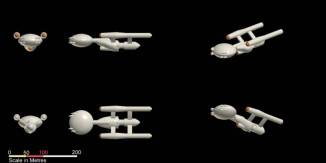
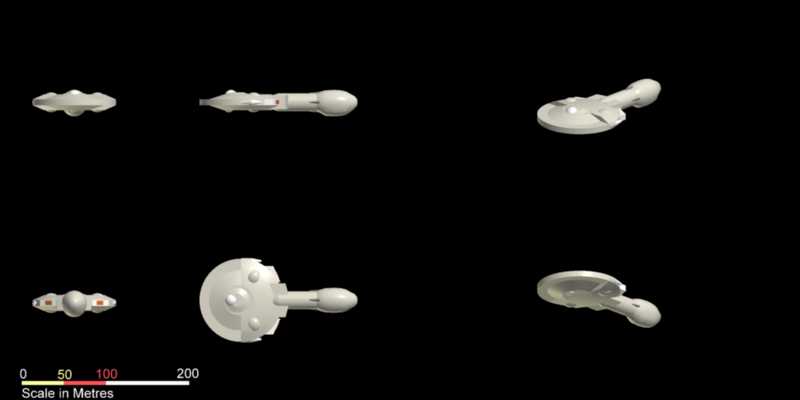
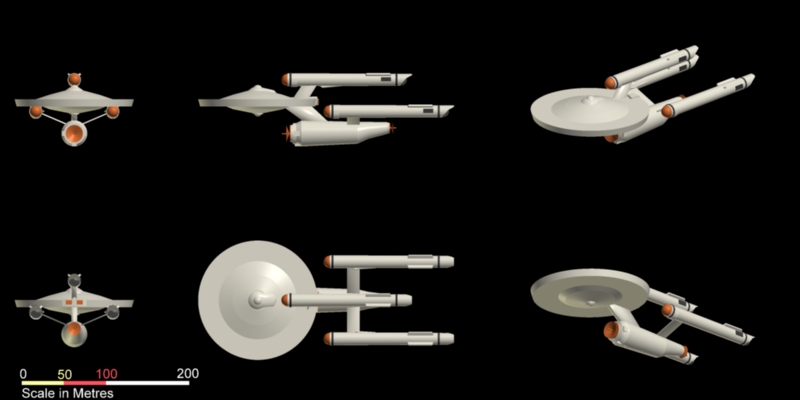
In many ways the Asia class is the first modern Heavy cruiser. Only 9 ships were built, and 4 of these received extensive refits between 2262 and 2265, the last of these refitted ships did not decommission until 2287. One ship of the class, in its original configuration served as an Academy training ship until 2298.

In 2190 Starfleet Command proposed a new Cruiser which had twice the volume of the Moskva class. In 2192 development of the new class which was to be optimised for long-term exploration missions began.USS Asia was launched on April 23, 2204, but had an inauspicious entry into service due to a severe maladjustment developed in the antimatter containment field of the matter/antimatter reactor which prevented the warp core from being safely activated for a full year. Once the adjustment problem was solved the new warp core performed extremely well and set the standard for design for the next two centuries. The second ship, USS America commissioned in 2206, and the three other “continental” ships were commissioned in the following year.

Although the class carried the most advanced technology of their time, they were intended for a primarily exploration role, as such the weapons fit was light. On either side of the saucer were two banks of FEL-5 lasers, and the primary hull also held four missile launch bays.

The Asia class was one of the first to be fully equipped with subspace radio and celerotronic computer technology. The class also introduced significant advances in computer, life support, and power systems; these improved systems were soon also adopted on the more military roled Cruiser classes. During the 2210’s it became clear that the Asia class was much better suited for exploration missions than relatively less expensive contemporary, the Lancaster class, which was being developed.

Ships of this class operated mostly around the Federation border in the Alpha Quadrant, as this area was deemed to be safer than the Beta Quadrant for these relatively lightly armed vessels. In 2219 the USS America was ambushed by two Klingon D-3 cruisers and became the only ship of the class that suffered heavy battle damage, she was retired from service as a result.

Four ships of the Asia class were reconstructed from 2262 to 2265. This reconstruction of the ASIA class paved the way for the later refit program for the Constitution class as it was just as in depth. Only the internal arrangement of the secondary hull and the core of the primary hull remained substantially unchanged. A novel, more-efficient warp drive was installed and the ships were fitted with phasers and photon torpedo tubes. The Refitting was successful in that it was 50% less expensive than building a completely new starship and almost as capable. Ultimately, even the reconstructed ships could not compete with newer designs for long and the last Asia class ship was decommissioned in 2287.

USS Thule was the last of the class to enter service, and was retired in 2255. As a result she was never refitted, she subsequently saw service as an Academy training ship until 2298, before being scrapped due to to her poor condition. The only surviving Asia class ship, USS Europe is now on display at the Starfleet Museum.

  • Class: X
  • Year: 2204
  • Ship Source: The Starfleet Museum
  • Ship Datasheet: Download PDF

asia_large

Commissioned Ships

  • NCC-945 USS Asia
  • NCC-991 USS America
  • NCC-1002 USS Africa
  • NCC-1003 USS EUROPE
  • NCC-1004 USS AUSTRALIA
  • NCC-1073 USS JEFFERSON
  • NCC-1074 USS MANHATTAN
  • NCC-1105 USS YUKON
  • NCC-1106 USS THULE

2157 – Krechet

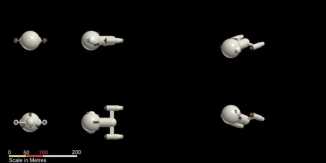
The Krechet class, with its matter/antimatter power plant, added range to the admirable qualities of the earlier Amarillo class. Additionally the class was the first since the experimental NX class to use matter/antimatter propulsion.

The first Krechet class ships entered service in 2157. They were the first ships to serve in the fleet with matter/antimatter reactors since the experimental (and expensive) NX class of 6 years earlier. The reversion to matter/antimatter reactors was caused by the need to give combat vessels a far greater range as a result of the need to undertake offensive rather than defensive operations. The Krechet class had a range of 1000 hours at warp, 5 times that of the Amarillo. Otherwise performance was similar to the earlier class, although total power and speed were slightly higher

The command hull was based on that of the Amarillo, the main structural change being the relocation of the Warp nacelles to front of the vessel in an attempt to improve warp field dynamics and efficiency

August 2157, UES Krechet and UES Bowen, were on patrol in sector 23, 10 light years from the nearest starbase or outpost. Because of their longer ranges and higher speeds, the Krechet class was able to monitor what had previously been a potential route of invasion. On August 23, UES Bowen detected a high interstellar deuterium concentration. The cruisers tracked the deuterium to three Romulan tankers. Remaining out of sensor range to avoid alerting the tankers, they fired a message torpedo towards starbase 44 then continued along the tanker’s projected course until they found the Romulan invasion fleet 1 light year inside UE Alliance space. After reinforcements, including Tannhauser class heavy cruisers, arrived and engaged the Romulans near Hell’s Gate, the remnants of the badly mauled and surrounded invasion fleet self-destructed to avoid capture.

In all just eight Krechet class ships were built, of which only two were lost. Although the Krechet class was a transitional design that was not effective across the entire performance spectrum, it did allow the fleet to gain valuable experience in maintaining and operating M/AM powered vessels under wartime conditions. As the UE Alliance went on the offensive in mid- 2158, Krechets were largely relegated to secondary roles by the newer and more capable Conqueror and Powhatan classes.

The KRECHET-class cruiser UES FEUERSTEIN (CCM-4) is now on display at the Starfleet Museum.

Class: IX Year: 2157
Ship Source: The Starfleet Museum Ship Datasheet: Download PDF

krechet_large

Commissioned Ships

  • UES Krechet CCM-1
  • UES Bowen CCM-2 **
  • UES Rattler CCM-3
  • UES Feuerstein CCM-4
  • UES Panther CCM-5
  • UES Blazer CCM-6
  • UES Shturmovikh CCM-7
  • UES Oguma CCM-8 **** denotes lost or missing ships

2152 – Amarillo

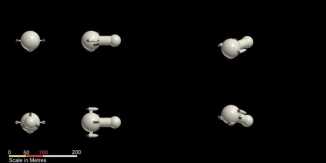
The Amarillo Class fusion powered Heavy cruiser served in the Fleet at the outbreak of the Romulan War. Although eclipsed by the far larger battle cruisers that served during the war, it can be argued that the Amarillo class marked the start of the proud tradition of Starfleet Heavy Cruisers.

The first 5 Amarillo Class ships entered service in 2152. At the time of the outbreak of the Romulan War they were still the most advanced Cruiser Class in service.

The ships compared well to the far larger Pioneer Class they served alongside, they had a similar power output and were far easier to handle in combat due to their smaller size. The Amarillo having similar firepower, but less combat persistence due to its limited number of missile relaods.

As with all ships of the period the Spherical Command hull held virtually all of the ship’s vital functions and crewed areas. The Design was also notable for starting the tradition, long maintained by Federation ships of mounting all of its weapons to cover the forward firing arcs.

Technically the only real flaw with the design lay in its power generation system. The ship was powered by Fusion reactors, although this did not generate less power than later Matter/Antimatter reactors it did use far more fuel, hence the operational range of these ships was only 100 hours at warp speed.

Despite this the class took the brunt of the early fighting in the Romulan War, and served alongside the later Krechet class (which basically added an antimatter generator to the same basic design) until finally replaced in 2158 by the Powhatan, Torsk and Conqueror classes. In all 16 of the 25 ships of this class were lost in action during the conflict, this should not be taken as a failure on the part of the design, more as a failure of Earth’s defensive preparations. The class performed as well as any could have hoped, but in the face of overwhelming opposition suffered inevitable losses at the hands of the Romulan Fleet.

The AMARILLO-class cruiser UES WOLVERTON (CC-47) is now on display at the Starfleet Museum.

Class: X Year: 2152
Ship Source: The Starfleet Museum Ship Datasheet: Download PDF

amarillo_large

Commissioned vessels

  • UES Amarillo CC-33 **
  • UES Shikoku CC-34 **
  • UES Kursk CC-35 **
  • UES St. Petersburg CC-36 **
  • UES London CC-37 **
  • UES Kamina CC-38 **
  • UES Syracuse CC-39
  • UES Celebes CC-40 **
  • UES Sarajevo CC-41 **
  • UES Portland CC-42 **
  • UES Wilmington CC-43
  • UES Xiaguan CC-44
  • UES Cairo CC-45
  • UES Jakarta CC-46 **
  • UES Wolverton CC-47
  • UES Milan CC-48 **
  • UES Charleston CC-49
  • UES Bozeman CC-50 **
  • UES Stockholm CC-51 **
  • UES Kinshasa CC-52
  • UES Melbourne CC-53 **
  • UES Bremen CC-54 **
  • UES Johannesburg CC-55 **
  • UES Agata CC-56
  • UES New Orleans CC-57

** denotes lost or missing ships.

2166 – Dragon (Modified)

After the end of the Romulan war, most ships in the  Starfleet were small, lightly armed exploratory cruisers (such as the former UESN Daedalus and Comet classes). Most of the UESN’s heavy cruisers (Conqueror class) and fighter-carriers (Yorktown class) had been mothballed, repurposed, scrapped, or sold off to local defense forces, with only a small number entering service with Starfleet.

To meet any potential remaining Romulan  threat, Starfleet needed to replace its Conqueror-class heavy cruisers.  The large crew complements and offensive mission profile made them poorly suited for a more defensive role.

In April 2163 Starfleet issued a request for proposals for the Dragon class of border-defense heavy cruisers. The requirement was for firepower (both missile and beam weaponry) at least 33% greater than that of Conqueror. Cruising and maximum speeds were wf 3.4 and wf 4.5,again an improvement over the Conqueror. Displacement was planned to be 150,000 tons or less with a crew of 430 officers – both approximately a third of those of Conqueror. These ships were planned to be less expensive to design, construct, and operate, but still  be more effective for border defence than the wartime Cruisers. 20 Ships were planned, to commission for 2166 onwards. This baseline ship is shown as the Dragon Mk1 on the Data sheet.

The successful design was in essence a scaled up Daedalus, using some Comet style components as well. Construction of the  class began in August 2164, but problems were encountered as the first Dragon began to be fitted out with various components supplied by subcontractors. The challenging requirements led to many of these systems being designed specifically for the Dragon class, and also to these systems having an impact on the overall design. In addition Starfleet Intelligence threat analysis led to a requirement for across-the-board performance increases for all ship’s systems. Accordingly, the damage and ranges of all weaponry were to be increased by an average of 25%;  and cruising and maximum speeds were increased to wf 3.6 and wf 4.7. This improvement was to be delivered from just a 10% increase in crew size and displacement.

To meet the new performance requirements, numerous changes were made. To increase the cruising and maximum speeds, a more powerful warp drive with larger reactor  was installed requiring the addition of a separate “reactor hull”. In addition, the 129-m-long nacelles were replaced by 157-m-long units. As well as the increase in firepower the missile load was increased, and the shuttle bay enlarged.  These  changes further decreased the space that could be used for crew quarters, stores, and life-support systems. Dragon was now 257 m long, with an estimated displacement of 180,000 tons, and the various technical issues were still to be overcome. This is the Mk2 configuration.

In December 2165, Hull #1 was christened USS Fafnir (NCC-213) and launched to begin trials despite the ongoing integration problems. Upon commencement of trials  construction was authorized to begin on the next 3 ships of the class. However the trials of Fafnir quickly revealed numerous problems. The most severe being that the firing of a full missile salvo from the forward missile tubes at attack speed  caused the mounts for the p forward deflector and targeting sensors to become misaligned. This was resolved by structural reinforcement. High speed warp runs revealed harmonic flexing from the nacelle supports propagating throughout the length of the ship – these vibrations played havoc with navigation, weapons targeting, and prevented Fafnir from reaching design speeds. In the longer term these vibrations would lead to fatigue failure possibly resulting in the catastrophic loss of spaceframe integrity. To resolve these issues it was necessary to shorten and thicken the neck connecting the primary and secondary hulls and adding redundant supports for the nacelles on the reactor hull. Fafnir was now 247 m long but displaced 194,000 tons

By October 2166 most of the outstanding problems were being solved: the lead ship, USS Fafnir, was commissioned. Unfortunately by  2167 Starfleet’s requirements had changed, and the defensive posture of the Dragon meant they were ill suited for use in a exploration role. The lack of internal space owing to the level of equipment and weaponry fitment meant that there was no space for the installation of laboratories, scientific equipment, crew quarters, common areas, and long-term life-support systems. With the Romulan threat in abeyance, the Dragon had become a costly and immobile white elephant, and  in November 2167 Starfleet cancelled the final 10 ships of the class before construction had begun.

Despite these problems the 10 completed Dragons proved to be rugged and reliable ships –  however, all Dragons were withdrawn from front-line service by 2180 without ever having fired a shot in anger.

The Dragon-class heavy cruiser USS Jörmungandr (NCC-218) is on display in the Starfleet Museum.

Class: X-XII
Year: 2166
Ship Source: Starfleet Museum
Ship Datasheet: Coming Soon

Dragon Mk3 Configuration:

dragon3_70b

Commissioned Ships

  • USS Fafnir NCC-213
  • USS Ddraig Goch NCC-214
  • USS Xiuhcoatl NCC-215
  • USS Zmey Gorynych NCC-216
  • USS Tianlong NCC-217
  • USS Jörmungandr NCC-218
  • USS Ryūjin NCC-219
  • USS Aži Dahāka NCC-220
  • USS Sirrush NCC-221
  • USS Zilant NCC-222

2158 – Yorktown

Introduced in June 2158, the Minotaur fighter and the M/AM-powered Yorktown Class carrier were an attempt to overcome the operational limitations of early M/AM ships by combining the speed and range M/AM-powered warp flight with the maneuverability of high-impulse fighters. Yorktown was based on the Pioneer class cruiser, which had entered service in 2154 and had itself been developed from the Bison-class transport. YORKTOWN carried a new M/AM reactor and four paired EFTL-7A warp nacelles. The impulse drive and its fusion reactor were moved to the extreme stern.

At the front of the cylindrical hull, which had been lengthened by some 20 m, were the ship’s sensors and navigational deflector, as well as command centers, the computer core, crew facilities, and life-support machinery. In the center section were docking cradles for 5 Minotaur long-range fighters. In the aft section were auxiliary deuterium tanks, the missile room, and support facilities for the fighters. With a displacement of some 670,000 tons, Yorktown was by far the largest Earth-designed warship produced to that time and would not be surpassed until the Ambassador class was launched in the 2330s.

After the war, many Yorktowns were converted to fast transports and tankers or sold

The YORKTOWN-class carrier UES SARATOGA and the MINOTAUR fighter Gwendoline are now on display at the Starfleet Museum.

  • Class: XX
  • Year: 2158
  • Ship Source: The Starfleet Museum
  • Ship Datasheet: Download PDFyorktown_large

Commissioned Ships

  • UES Yorktown CVM-5
  • UES Lexington CVM-6
  • UES Langley CVM-7
  • UES Nimitz CVM-8
  • UES Ranger CVM-9 **
  • UES Monterey CVM-10
  • UES Essex CVM-11**
  • UES Hornet CVM-12
  • UES Cowpens CVM-13
  • UES Boxer CVM-14
  • UES Kitty Hawk CVM-15
  • UES Prince of Wales CVM-16
  • UES Enterprise CVM-17 **
  • UES Intrepid CVM-18 **
  • UES Dwight D. Eisenhower CVM-19
  • UES Midway CVM-20
  • UES Franklin D. Roosevelt CVM-21 **
  • UES Douglas MacArthur CVM-22
  • UES Harry S Truman CVM-23
  • UES Bunker Hill CVM-24
  • UES Sherman CVM-25
  • UES Yamato CVM-26
  • UES Saratoga CVM-27
  • UES Antietam CVM-29
  • UES Valley Forge CVM-30
  • UES Triumph CVM-31
  • UES Akagi CVM-32
  • UES Hood CVM-33
  • UES Potemkin CVM-34
  • UES Franklin CVM-35
  • UES Winston Churchill CVM-36
  • UES Repulse CVM-37
  • UES Exeter CVM-38
  • UES Bataan CVM-39 **
  • UES Independence CVM-40
  • UES Randolph CVM-41 **
  • UES Forrestal CVM-42
  • UES Rabin CVM-43
  • UES Ticonderoga CVM-44
  • UES Bismarck CVM-45
  • UES Fearless CVM-46
  • UES Coral Sea CVM-47
  • UES Oriskany CVM-48
  • UES Kearsarge CVM-49
  • UES Bonhomme Richard CVM-50

** Denotes Lost or missing ship

2159 – Conqueror

The Conqueror Class battle cruisers were the final Bison class based ships to be built during the Romulan war

These cruisers, introduced in 2159, were basically improved Tannhauser class ships with the new more powerful EFTL-9 Warp drive with nacelles mounted outboard above the centerline, and an upgraded sensor suite.

New weapons included a forehead-mounted, high-velocity “missile rifle” with a rotary feed system for the ET-4 missile, and a ship-to-ship version of the ELC-2 Electron laser cannon first used in the Farragut class.

These immense cruisers gave invaluable service during the last year of the war, particularly at the battle of Cheron, where their steady missile barrages helped batter the Romulan fleet into submission. UES Charger was the flagship of Task Force 41, which led the final drive towards the Romulan Homeworlds.

However, when peace came in 2160 the class proved prohibitively expensive to maintain and crew, and accordingly all were retired by 2163.

The Conqueror class battlecruiser UES Charger is now on display at the Starfleet Museum.


Class: XVII Year: 2159
Ship Source: The Starfleet Museum Ship Datasheet: Download PDF

conqueror_large_sideCommissioned Ships

  • UES Conqueror CHM-69
  • UES Dominator CHM-70
  • UES Devastator CHM-71
  • UES Charger CHM-72
  • UES Liberator CHM-73 **
  • UES Avenger CHM-74
  • UES Damocles CHM-75
  • UES Leviathan CHM-76
  • UES Excalibur CHM-77
  • UES Victory CHM-78 (NCC-82)
  • UES Hercules CHM-79 (NCC-83)
  • UES Executor CHM-80
  • UES Champion CHM-81
  • UES Protector CHM-82 (NCC-84)
  • UES Vindicator CHM-83** denotes lost or missing ships.
Federaton

2259 – Modified Federation

The Federation Class Dreadnought was initially conceived prior to the Four Years as a variant of the Heston class heavy cruiser (which was itself a Military role variant of the Constitution). The design was shelved as the new dilithium energised engines were not yet available to power such a large vessel. After the war the design was modified to take account of the lessons of the War and put into production using the new FWF-1 engine.

The final three of the class were built to a modified design (shown above), substituting a large navigational deflector for the hanger bays of the standard version, the three ships built to this standard (NCC 2110 USS Directorate, NCC 2111 USS Organisation and NCC 2112 USS Star Union) were used for exploration roles along the Klingon Frontier. This modified design provided the basis for the later refit of the remainder of the class.

The three modified ships received a minor refit in 2275, but unlike their sister ships were not modified with the new linear warp drives. The 3 ships of this design were all placed in reserve by 2290, and decommissioned from 2300.

Class: XIV Year: 2257
Ship Source: Starfleet Technical Manual/The Starfleet Museum Ship Datasheet: Download PDF

Federation